
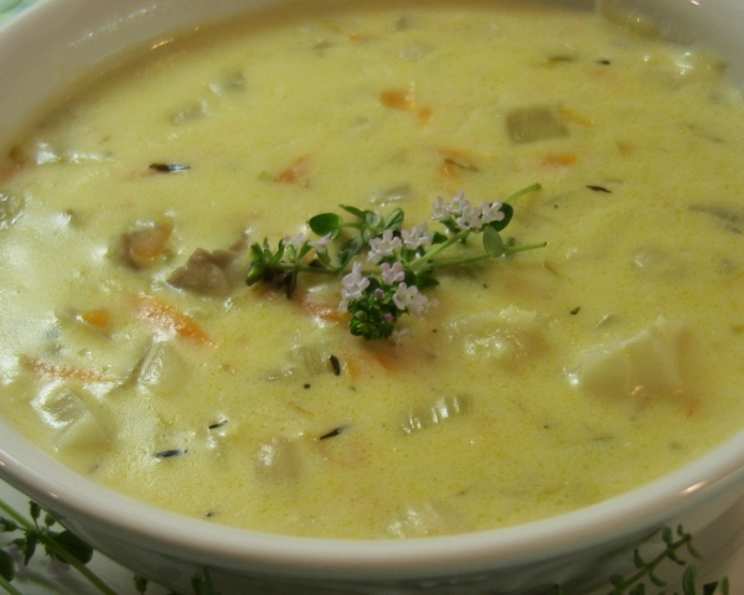
Perfect New England Fish Chowder
The scent alone takes me back. I remember standing on tiptoes, perched on a stool in my grandmother’s cozy kitchen, watching her stir a pot of this very chowder. The creamy, savory aroma, punctuated by the subtle sweetness of celery and the gentle hint of the sea, would fill the air, promising comfort and warmth on even the chilliest New England evenings. Every spoonful was a taste of home, a reminder of family, and a hug in a bowl.
Recipe Overview
- Prep Time: 15 minutes
- Cook Time: 20 minutes
- Total Time: 35 minutes
- Servings: 6
- Dietary Type: Pescatarian
Ingredients
- 1/3 cup extra virgin olive oil
- 1 large onion, chopped
- 1 1/2 cups chopped celery
- 1 large carrot, shredded
- 1/4 cup flour
- 2 (13 3/4 ounce) cans chicken broth
- 1 cup heavy cream
- 1 (1 lb) package frozen cod fish fillet, cut into 1 inch cubes while frozen
- 1/2 teaspoon thyme
- Salt and pepper to taste
Equipment Needed
- Large saucepan
- Measuring cups and spoons
- Cutting board
- Knife
- Stirring spoon
Instructions
-
In a large saucepan, heat the extra virgin olive oil over medium heat. Add the chopped onion, chopped celery, and shredded carrot. Sauté for about 5 minutes, or until the vegetables are lightly browned and softened. This step is crucial for building flavor, so don’t rush it.
-
Sprinkle the flour over the sautéed vegetables. Stir continuously for about 1 minute to create a roux. This will help thicken the chowder and give it that characteristic creamy texture. Ensure the flour is evenly distributed and cooked through to avoid a raw flour taste.
-
Gradually stir in the chicken broth, ensuring there are no lumps. Adding the broth slowly and stirring constantly is key to a smooth and creamy chowder base.
-
Bring the mixture to a simmer, then reduce the heat to low. Simmer for 10 minutes, or until the vegetables are tender. This allows the flavors to meld together beautifully.
-
Stir in the heavy cream and the frozen, cubed cod fish fillet. Make sure the fish is evenly distributed throughout the chowder.
-
Stir in the thyme.
-
Simmer for 5 minutes, or until the cubes of fish are cooked through and flake easily with a fork. Be careful not to overcook the fish, as it can become tough. The fish is done when it’s opaque and easily separates into flakes.
-
Season to taste with salt and pepper. Remember to taste and adjust the seasoning as needed. A little extra pepper can add a nice warmth.
-
Serve the chowder very hot with chowder crackers or a crusty baguette with butter. Garnish with fresh snipped lemon thyme, if desired, for a pop of fresh flavor and visual appeal.
Expert Tips & Tricks
- Don’t Overcook the Fish: Overcooked fish is rubbery and loses its delicate flavor. The fish is done when it’s opaque and flakes easily with a fork.
- Use Good Quality Olive Oil: The quality of the olive oil will affect the outcome of the chowder. Use a good, high-quality extra virgin olive oil for the best flavor.
- For a Thicker Chowder: If you prefer a thicker chowder, you can add a cornstarch slurry (1 tablespoon of cornstarch mixed with 2 tablespoons of cold water) during the last few minutes of cooking.
- Enhance the Flavor: A bay leaf added during simmering can deepen the flavor profile. Remove it before serving. A dash of hot sauce can also add a subtle kick.
- Make-Ahead Tip: The base of the chowder (before adding the cream and fish) can be made a day ahead and stored in the refrigerator. This allows the flavors to develop even further.
Serving & Storage Suggestions
Serve the New England Fish Chowder hot, garnished with fresh herbs like thyme or parsley. A sprinkle of paprika can also add a touch of color. It’s traditionally served with oyster crackers or a crusty baguette for dipping.
Leftover chowder can be stored in an airtight container in the refrigerator for up to 3 days. Reheat gently over low heat, stirring occasionally, until heated through. Avoid boiling, as this can cause the cream to separate. It is not recommended to freeze this chowder, as the texture of the fish and cream may change upon thawing.
Nutritional Information
| Nutrient | Amount per Serving | % Daily Value |
|---|---|---|
| Calories | 365 kcal | N/A |
| Calories from Fat | 253 g | N/A |
| Total Fat | 28.1 g | 43% |
| Saturated Fat | 11.2 g | 55% |
| Cholesterol | 86.9 mg | 28% |
| Sodium | 513.6 mg | 21% |
| Total Carbohydrate | 9.9 g | 3% |
| Dietary Fiber | 1.3 g | 5% |
| Sugars | 2.5 g | N/A |
| Protein | 18.2 g | 36% |
Note: Nutritional information is an estimate and may vary based on specific ingredients and portion sizes.
Variations & Substitutions
- Seafood Swap: Feel free to substitute the cod with other white fish like haddock or pollock. You can also add shrimp or scallops for a more varied seafood medley.
- Dairy-Free: For a dairy-free version, use coconut cream or cashew cream instead of heavy cream. The flavor will be slightly different, but still delicious.
- Vegetarian Option: While not technically fish chowder, you can create a similar creamy vegetable chowder by omitting the fish and adding extra vegetables like potatoes, corn, and green beans. Use vegetable broth instead of chicken broth.
- Spicy Kick: Add a pinch of red pepper flakes or a dash of hot sauce for a spicier chowder.
- Smoked Flavor: A bit of smoked paprika or a small piece of smoked bacon, rendered and its fat used to saute the vegetables, adds a lovely smoky depth.
FAQs (Frequently Asked Questions)
Q: Can I use fresh cod instead of frozen?
A: Yes, you can definitely use fresh cod. Just be sure to cut it into 1-inch cubes before adding it to the chowder.
Q: Can I make this chowder ahead of time?
A: Yes, you can prepare the base of the chowder (before adding the cream and fish) a day in advance. Store it in the refrigerator and add the cream and fish just before serving.
Q: How do I prevent the cream from curdling?
A: To prevent the cream from curdling, use heavy cream and avoid boiling the chowder after adding it. Simmering gently is the key.
Q: Can I freeze this chowder?
A: While you can freeze it, the texture of the fish and cream may change upon thawing, potentially becoming grainy. It’s best enjoyed fresh or refrigerated.
Q: What’s the best way to reheat leftover chowder?
A: Reheat gently over low heat, stirring occasionally, until heated through. Avoid boiling. You can also reheat it in the microwave in short intervals, stirring in between.
Final Thoughts
This New England Fish Chowder is more than just a recipe; it’s a taste of tradition, a bowl of comfort, and a celebration of simple, wholesome ingredients. I encourage you to gather your loved ones, simmer up a pot of this creamy goodness, and create your own cherished memories around the table. Don’t be afraid to experiment with the variations and make it your own! I’d love to hear how it turns out – share your feedback and any personal twists you added. Pair it with a crisp, dry white wine for a truly unforgettable meal. Enjoy!