
The Alchemy of Authentic Pasta: A Culinary Journey
I remember the first time I attempted homemade pasta. It was a disaster of epic proportions! The dough was either too sticky or impossibly dry, and the resulting “noodles” resembled misshapen slugs more than delicate strands of pasta. My grandmother, a true Italian matriarch, watched with amusement and a touch of pity before gently guiding my hands. Her secret? Simple, quality ingredients and the patient understanding that pasta making is a labor of love, a dance between flour and water, a true alchemy in the kitchen. Now, years later, I can confidently create pasta that rivals anything you’d find in Italy.
Recipe Overview
- Prep Time: 25 minutes
- Cook Time: 5 minutes
- Total Time: 30 minutes
- Servings: 6
- Yield: About 1.5 pounds of pasta
- Dietary Type: Vegetarian
Ingredients
- ¾ cup semolina flour
- 1 cup all-purpose flour
- 2 large eggs, room temperature
- 1 tablespoon olive oil
- 1 teaspoon salt
- 3 tablespoons water
Equipment Needed
- Mixer with paddle attachment
- Floured surface
- Pasta machine (hand-crank or electric)
- Dish towel
- Baking sheet
- Pastry cutter (optional)
Instructions
- Combine the semolina flour, all-purpose flour, eggs, olive oil, and salt in the bowl of a stand mixer fitted with the paddle attachment (do not use the dough hook).
- Begin mixing on low speed. Gradually add the water, a tablespoon at a time. You might not need all 3 tablespoons; add just enough until the dough begins to form a ball and appears slightly sticky.
- Turn the dough out onto a lightly floured surface. Knead the dough for 4-5 minutes, incorporating enough additional flour (a tablespoon at a time) until the tackiness disappears and the dough is smooth and elastic. Avoid adding too much flour, as this will result in dry pasta.
- Shape the dough into a ball, cover it loosely with plastic wrap or a clean dish towel, and let it rest for 15-20 minutes. This allows the gluten to relax, making the dough easier to roll out.
- After resting, cut the dough into 6 equal pieces. Flatten each piece (either with a rolling pin or by hand) into a rough rectangular shape. Keep the remaining pieces covered with a dish towel to prevent them from drying out while you work.
- Set your pasta machine to the widest setting. Pass one of the flattened dough pieces through the machine 6-10 times, folding the dough in half after each pass. This process develops the gluten and creates a smooth, elastic sheet of pasta. If one end of the pasta sheet becomes narrower than the other, fold the narrower end over before passing it through the machine to even out the width.
- To make linguine (or other pasta shapes), begin narrowing the roller width on your pasta machine, one setting at a time. Pass the pasta sheet through each setting only once. For linguine, roll the dough through to the second-to-thinnest setting. For spaghetti, use the thinnest setting.
- Place the rolled pasta sheets on a lightly floured baking sheet and cover them with another clean dish towel to prevent drying.
- Repeat steps 6-8 with the remaining pieces of dough, lightly flouring between the sheets as you stack them to prevent sticking. If the pasta sheets are longer than your baking sheet, use a pastry cutter or knife to cut them in half.
- Allow the sheets to sit for 10 minutes before cutting them into noodles. By this point, you will likely be finished rolling all the dough, so you can flip the first rolled sheet over and begin the cutting process.
- The pasta sheets should no longer be tacky and should process through the cutter without sticking. If the noodles are still sticky, lightly flour them before putting them through your pasta cutter attachment.
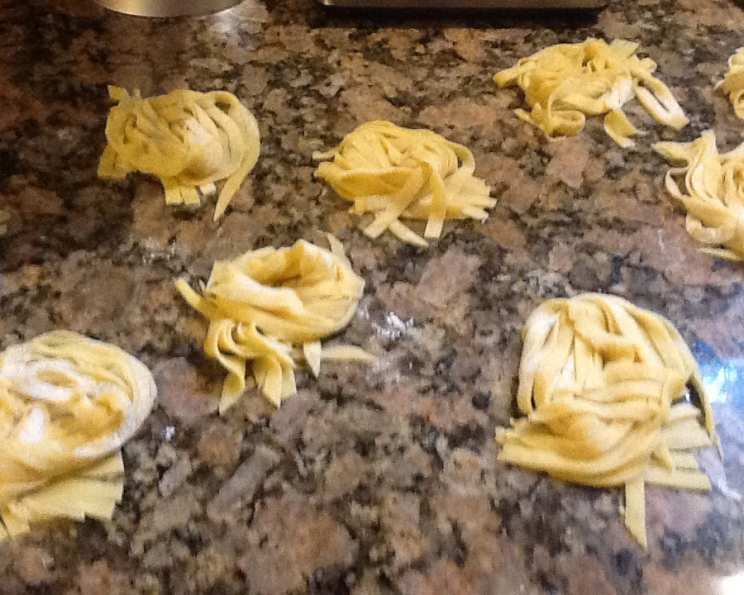
- Pass the pasta sheets through your desired cutter attachment (linguine, spaghetti, fettuccine, etc.) and lay the freshly cut noodles on a baking sheet to dry slightly for 10-20 minutes before cooking. Dust each batch of noodles with a tiny bit of flour and gently separate them with your fingers to ensure they don’t clump together.
- Bring a large pot of heavily salted water to a rolling boil. Add the fresh pasta and cook until it floats to the top and is tender to your liking, about 5 minutes. The cooking time can vary depending on the thickness of your pasta, so taste frequently.
- Drain the pasta immediately and toss with your favorite sauce. Serve hot.
Expert Tips & Tricks
- Room Temperature Eggs: Using room temperature eggs helps them emulsify more easily into the dough, creating a smoother texture.
- Adjusting Hydration: The amount of water needed can vary depending on the humidity and the type of flour used. Add water gradually and stop when the dough comes together.
- Resting is Key: Don’t skip the resting period! It allows the gluten to relax, making the dough much easier to work with.
- Drying Time: The drying time before cooking is crucial. If the pasta is too wet, it will stick together in the boiling water. If it’s too dry, it might crack during cooking. Aim for a slightly leathery texture.
Serving & Storage Suggestions
Serve your freshly made pasta immediately with your favorite sauce. Classic pairings include marinara, pesto, carbonara, or a simple aglio e olio.
To store uncooked pasta, let it dry completely on a baking sheet for several hours, or even overnight. Once dry, store it in an airtight container at room temperature for up to 2 days, or in the freezer for up to 2 months. To cook frozen pasta, simply add it directly to boiling water (no need to thaw). The cooking time may be slightly longer.
Cooked pasta is best enjoyed immediately. However, you can store leftovers in an airtight container in the refrigerator for up to 3 days. Reheat gently in a saucepan with a little sauce or olive oil.
Nutritional Information
| Nutrient | Amount per Serving | % Daily Value |
|---|---|---|
| Calories | 250 kcal | 13% |
| Total Fat | 5g | 8% |
| Saturated Fat | 1g | 5% |
| Cholesterol | 70mg | 23% |
| Sodium | 450mg | 19% |
| Total Carbohydrate | 40g | 13% |
| Dietary Fiber | 2g | 8% |
| Sugars | 1g | 2% |
| Protein | 8g | 16% |
Variations & Substitutions
- Gluten-Free Pasta: Substitute the all-purpose flour with a gluten-free all-purpose flour blend. You may need to adjust the amount of water slightly.
- Whole Wheat Pasta: Replace half of the all-purpose flour with whole wheat flour for a nuttier flavor.
- Flavored Pasta: Add herbs like finely chopped basil or spinach to the dough for a vibrant color and flavor. You can also add spices like red pepper flakes for a touch of heat.
- Egg Yolk Pasta: Use only egg yolks (about 4-5 yolks) instead of whole eggs for an incredibly rich and tender pasta.
FAQs (Frequently Asked Questions)
Q: Why is my pasta dough too sticky?
A: It’s likely that you’ve added too much water. Try kneading in a little extra flour, a tablespoon at a time, until the dough is no longer sticky.
Q: Why is my pasta dough too dry and crumbly?
A: You probably haven’t added enough water. Gradually add a teaspoon of water at a time while kneading until the dough comes together.
Q: Can I make pasta dough without a stand mixer?
A: Yes, you can make it by hand! Simply combine the ingredients in a bowl and then turn the dough out onto a floured surface and knead until smooth and elastic. It will take a little more effort, but the results will be just as delicious.
Q: How do I prevent my pasta from sticking together when cooking?
A: Use plenty of salted water and make sure it’s at a rolling boil before adding the pasta. Don’t overcrowd the pot and stir the pasta frequently during the first minute of cooking.
Q: Can I freeze leftover cooked pasta?
A: Yes, you can freeze cooked pasta. Toss it with a little olive oil or sauce to prevent it from sticking together, then portion it into freezer bags or containers.
Final Thoughts
Making pasta from scratch might seem daunting at first, but with a little practice and patience, you’ll be rewarded with the most delicious and satisfying pasta you’ve ever tasted. Don’t be afraid to experiment with different flavors and shapes to create your own signature pasta dishes. This recipe is a starting point; let your creativity guide you! Now, go forth and create some edible magic. And please, let me know how your culinary adventure turns out – I’m always eager to hear your feedback and see your pasta creations! Pair it with a crisp glass of Italian white wine and buon appetito!