
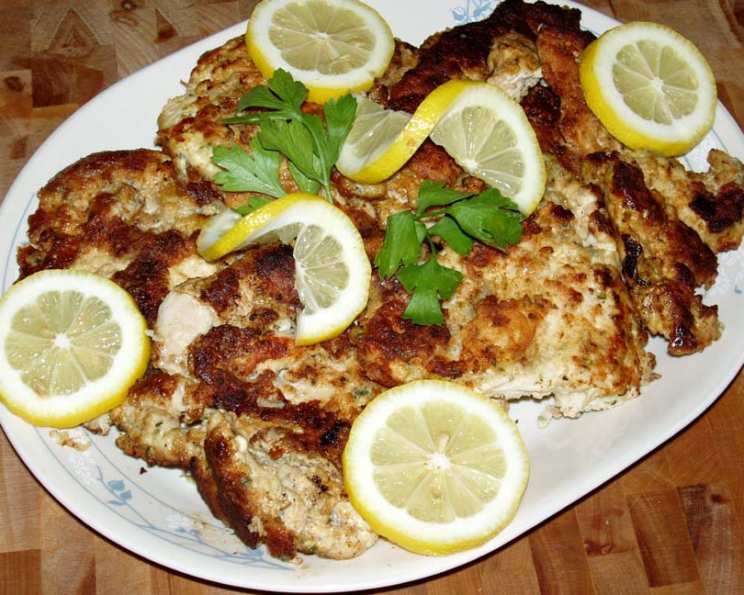
Perfect Summer Chicken Francese
The scent of lemon and herbs instantly transports me back to my grandmother’s sun-drenched kitchen. She always seemed to have a pot simmering on the stove, and her Chicken Francese was legendary. The bright, tangy sauce, the tender chicken—it was summer on a plate, a comforting hug in every bite. I remember trying to peek over the counter as she expertly dredged the chicken, the aroma filling the air with anticipation. This recipe, though not hers exactly, captures that same magic, that same sunny feeling of simple, delicious comfort.
Recipe Overview
- Prep Time: 15 minutes
- Cook Time: 25 minutes
- Total Time: 40 minutes
- Servings: 4
- Dietary Type: Pescatarian
Ingredients
- 4 boneless chicken breasts
- ¾ cup all-purpose flour
- 3 large eggs
- ⅓ cup parmesan cheese (grated)
- ½ tablespoon dried parsley
- ½ tablespoon dried tarragon
- ½ teaspoon garlic powder
- 1 teaspoon salt
- ½ teaspoon pepper
- 3 tablespoons olive oil
- 1 tablespoon butter (real butter is best)
- ¼ cup lemon juice
- 4 lemon slices (for garnish)
- 4 sprigs fresh parsley (for garnish)
Equipment Needed
- Large skillet
- Shallow bowls
- Meat mallet or rolling pin
- Whisk
- Serving platter
Instructions
-
Begin by preparing the chicken breasts. Place each breast between two sheets of plastic wrap or in a resealable bag. Using a meat mallet or rolling pin, pound the chicken breasts to an even thickness of about ¼ inch. This ensures they cook quickly and evenly.
-
Prepare your breading stations. In a shallow bowl, place the flour. Add half of the salt and half of the pepper to the flour and mix well. Reserve the remaining salt and pepper.
-
In a separate shallow bowl, whisk together the eggs, the remaining half of the salt and pepper, the parsley, tarragon, garlic powder, and the grated Parmesan cheese. Add half of the lemon juice to the egg mixture and whisk again until well combined.
-
Place a large skillet over medium-high heat. Add the olive oil and butter to the skillet and allow the butter to melt completely, creating a shimmering, flavorful base.
-
Now, it’s time to bread the chicken. Dredge each chicken breast thoroughly in the flour mixture, ensuring it is fully coated.
-
Next, dip the floured chicken breast into the egg mixture, allowing any excess to drip back into the bowl.
-
After dipping in the egg, dredge the chicken once more in the flour mixture, shaking off any excess. This double-dredging creates a beautiful, golden crust.
-
Carefully place the breaded chicken breasts in the hot skillet, ensuring not to overcrowd the pan. Cook until golden brown and cooked through, about 3-4 minutes per side. Be careful not to burn the chicken; adjust the heat if necessary.
-
Once the chicken is cooked through and golden brown, pour the remaining half of the lemon juice over the chicken in the skillet. Let it cook for another 2-3 minutes, allowing the lemon juice to create a light, tangy sauce.
-
Remove the chicken from the skillet and transfer it to a serving platter.
-
Garnish the Chicken Francese with lemon slices and fresh parsley sprigs.
-
Serve immediately and enjoy!
Expert Tips & Tricks
- Pounding the chicken is crucial for even cooking and tenderness. Don’t skip this step! If you don’t have a meat mallet, use a rolling pin or the bottom of a heavy skillet.
- Don’t overcrowd the pan. Cook the chicken in batches to ensure it browns properly. Overcrowding lowers the temperature of the pan, resulting in steamed, not browned, chicken.
- Use real butter! The flavor of real butter adds a richness that margarine simply can’t replicate.
- Adjust the lemon juice to your taste. If you prefer a more pronounced lemon flavor, add a bit more lemon juice to the sauce.
- For an extra layer of flavor, try adding a splash of dry white wine to the skillet along with the lemon juice.
- If the sauce gets too thick, add a tablespoon or two of chicken broth or water to thin it out.
Serving & Storage Suggestions
Chicken Francese is best served immediately, while the chicken is still hot and the sauce is vibrant. It pairs beautifully with steamed fresh asparagus, roasted new potatoes, or a simple side salad. For a complete meal, consider serving it with a side of pasta, such as linguine or spaghetti, tossed in a light butter and Parmesan cheese sauce.
Leftovers can be stored in an airtight container in the refrigerator for up to 3 days. Reheat gently in a skillet over low heat or in a microwave. The chicken may lose some of its crispness upon reheating, but the flavor will still be delicious. It’s not recommended to freeze Chicken Francese, as the texture of the chicken and sauce may be compromised.
Nutritional Information
| Nutrient | Amount per Serving | % Daily Value |
|---|---|---|
| Calories | 480 kcal | 24% |
| Total Fat | 28g | 43% |
| Saturated Fat | 10g | 50% |
| Cholesterol | 220mg | 73% |
| Sodium | 750mg | 31% |
| Total Carbohydrate | 15g | 5% |
| Dietary Fiber | 1g | 4% |
| Sugars | 2g | |
| Protein | 40g | 80% |
Note: Nutritional information is an estimate and may vary based on specific ingredients and preparation methods.
Variations & Substitutions
- Gluten-Free Chicken Francese: Substitute the all-purpose flour with a gluten-free flour blend. Ensure the Parmesan cheese is also gluten-free.
- Dairy-Free Chicken Francese: Omit the Parmesan cheese or substitute with a dairy-free Parmesan alternative. Use olive oil instead of butter.
- Herb Variations: Experiment with different herbs such as oregano, thyme, or rosemary in addition to or instead of the parsley and tarragon.
- Spice it up: Add a pinch of red pepper flakes to the egg mixture for a touch of heat.
- Vegetarian Francese: Use thick slices of eggplant or zucchini instead of chicken. Follow the same breading and cooking instructions.
FAQs (Frequently Asked Questions)
Q: Can I prepare the chicken ahead of time?
A: You can pound the chicken breasts and prepare the breading stations ahead of time. Store the pounded chicken in the refrigerator until ready to cook. It’s best to cook the chicken fresh for the best texture.
Q: How do I prevent the chicken from sticking to the skillet?
A: Make sure the skillet is properly heated and that you have enough olive oil and butter in the pan. Also, avoid overcrowding the pan.
Q: Can I use chicken thighs instead of chicken breasts?
A: Yes, you can use boneless, skinless chicken thighs. They may require a slightly longer cooking time than chicken breasts.
Q: What is the best way to check if the chicken is cooked through?
A: The internal temperature of the chicken should reach 165°F (74°C). You can use a meat thermometer to check the temperature. Also, the juices should run clear when pierced with a fork.
Q: Can I make a larger batch of the sauce?
A: Absolutely! Simply double or triple the amount of lemon juice and add a splash of chicken broth or white wine if desired.
Final Thoughts
Chicken Francese is more than just a meal; it’s an experience. It’s the bright tang of lemon, the savory herbs, the comforting warmth of a home-cooked dish. I encourage you to give this recipe a try and create your own summer memories. Don’t be afraid to experiment with variations and substitutions to make it your own. Share your creations and feedback – I’d love to hear about your culinary adventures! Perhaps you could pair it with a crisp glass of Pinot Grigio for the perfect summer evening. Buon appetito!