
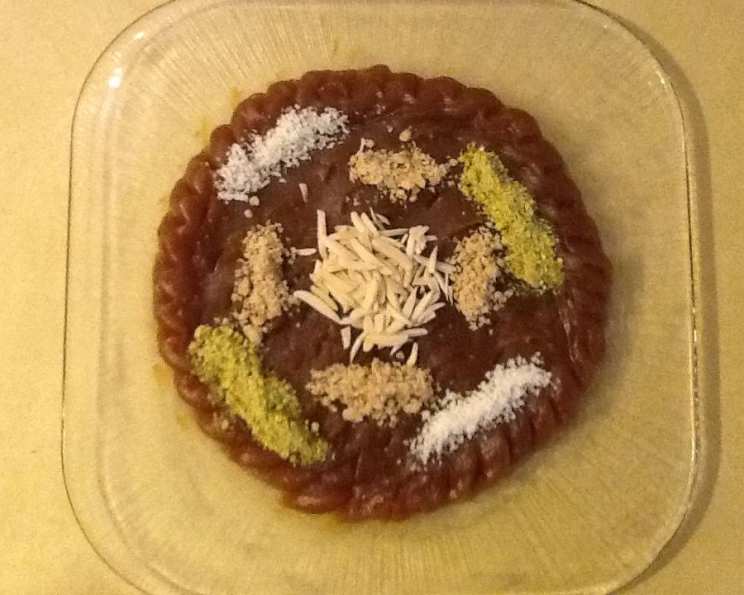
The Golden Embrace of Persian Halva: A Sweet Memory
Halva. Just the word itself conjures up the coziest of memories. I remember being a little girl, nestled in my grandmother’s kitchen in Tehran, the air thick with the scent of warm spices and toasted flour. She would stand over a well-worn copper pot, her hands moving with the practiced grace of decades, stirring and stirring as the halva transformed from a pale powder into a glistening, golden confection. The best part? She always let me sprinkle the finished halva with handfuls of crushed pistachios and slivered almonds – my own little artistic flourish on a timeless dessert. This recipe is my attempt to recreate that warmth and love, a taste of home passed down through generations.
Recipe Overview
- Prep Time: 10 minutes
- Cook Time: 30-40 minutes
- Total Time: 40-50 minutes
- Servings: 6-8
- Yield: About 2 cups
- Dietary Type: Vegetarian (can be made vegan with oil substitution)
Ingredients
- 250 g (about 2 cups) wheat flour (all-purpose)
- 200 g (about 1 cup) sugar
- 200 g (about ¾ cup) cooking oil (vegetable, canola, or sunflower oil recommended)
- ½ teaspoon saffron threads, crushed
- ½ cup rose water
- Pistachios, chopped, for garnish
- Sliced almonds, for garnish
Equipment Needed
- Large frying pan or wide pot
- Medium saucepan
- Whisk
- Wooden spoon or spatula
- Mortar and pestle (optional, for crushing saffron)
- Serving dish
Instructions
- Begin by gently heating the cooking oil in a large frying pan or wide pot over medium heat. Ensure the pan is large enough to accommodate the flour without overflowing during the toasting process.
- Add the wheat flour to the heated oil. Immediately reduce the heat to low to prevent burning.
- Now comes the crucial part: stirring. Continuously stir the flour and oil mixture with a wooden spoon or spatula. This is essential for even toasting and preventing lumps from forming.
- Continue stirring frequently for approximately 20-30 minutes, or until the flour turns a beautiful golden-brown color. The mixture will also develop a nutty aroma. Be patient; this process requires time and consistent attention. The color change is gradual, so keep a close eye on it to avoid burning.
- While the flour is toasting, prepare the sugar syrup. In a separate medium saucepan, combine the sugar with one glass of water (about 240ml).
- Bring the sugar and water to a boil over medium heat, stirring occasionally until the sugar is completely dissolved.
- Once the sugar is dissolved and the mixture is boiling, add the crushed saffron and rose water to the syrup. Stir well to combine. The saffron will infuse the syrup with its distinctive color and aroma.
- Remove the sugar syrup from the heat and set aside.
- Once the flour has reached a golden-brown color and the desired toasted aroma, remove it from the heat and allow it to cool slightly for a minute or two. This prevents the syrup from splattering when added.
- Gradually pour the sugar syrup into the toasted flour mixture while stirring constantly. Be cautious, as the mixture may bubble and splatter when the syrup is added.
- Continue stirring vigorously until the syrup is fully incorporated and the mixture forms a smooth, thick paste.
- If the mixture appears too thin, return the pan to low heat and continue stirring for 1-2 minutes, or until it reaches the desired consistency. Be careful not to overcook it, as this can make the halva dry and crumbly.
- Remove the halva from the heat and transfer it to a serving dish.
- While the halva is still warm, garnish generously with chopped pistachios and sliced almonds.
- Allow the halva to cool slightly before serving.
Expert Tips & Tricks
- Toasting the Flour: The most important step is properly toasting the flour. Too little, and the halva will taste raw. Too much, and it will be bitter. Aim for a rich, golden-brown color.
- Saffron Infusion: For a more intense saffron flavor, steep the saffron threads in a tablespoon of warm water for 30 minutes before adding them to the syrup. This will extract more color and flavor.
- Consistency is Key: The final consistency of the halva is a matter of personal preference. If you prefer a drier halva, cook it for a slightly longer time. For a softer halva, reduce the cooking time slightly.
- Preventing Lumps: Whisking the flour into the oil initially can help prevent lumps from forming.
- Troubleshooting: If the halva becomes too dry, add a tablespoon or two of warm water or rose water and stir until smooth. If it’s too thin, continue cooking it over low heat, stirring constantly, until it thickens.
Serving & Storage Suggestions
Persian halva is traditionally served warm or at room temperature. It’s a beautiful dessert on its own, but it also pairs well with a cup of strong Persian tea (chai). To store leftover halva, place it in an airtight container at room temperature for up to 2-3 days. You can also refrigerate it for up to a week, but it may become slightly drier. To reheat refrigerated halva, microwave it for a few seconds or gently warm it in a pan over low heat. Halva can also be frozen for up to a month. Thaw it overnight in the refrigerator before serving.
Nutritional Information
(Note: Nutritional information is an estimate and may vary based on specific ingredients and serving size.)
| Nutrient | Amount per Serving (approx. 1/8 of recipe) | % Daily Value* |
|---|---|---|
| Calories | 424 kcal | 21% |
| Total Fat | 28.7g | 44% |
| Saturated Fat | 3.35g | 17% |
| Cholesterol | 0mg | 0% |
| Sodium | 0.2mg | 0% |
| Total Carbohydrate | 47.5g | 16% |
| Dietary Fiber | 3.35g | 13% |
| Sugars | 25.1g | – |
| Protein | 4.15g | 8% |
*Percent Daily Values are based on a 2,000 calorie diet.
Variations & Substitutions
- Vegan Halva: To make this recipe vegan, substitute the cooking oil with a plant-based butter alternative or use a high-quality olive oil. The flavor will be slightly different, but still delicious.
- Gluten-Free Halva: While traditionally made with wheat flour, you can experiment with gluten-free flour blends. Note that the texture and cooking time may vary.
- Different Nuts: Feel free to experiment with different nuts for garnish. Walnuts, pecans, or hazelnuts would all be delicious additions.
- Spices: Add a pinch of cardamom or cinnamon to the flour mixture for a warmer, spicier flavor.
- Rose Water Substitute: If you don’t have rose water, you can substitute it with orange blossom water for a slightly different floral note.
FAQs (Frequently Asked Questions)
Q: Can I use ghee instead of oil?
A: Yes, ghee can be used for a richer, more traditional flavor. However, it is not vegan.
Q: How do I prevent the halva from being grainy?
A: Ensure the sugar is fully dissolved in the water before adding the syrup to the flour. Also, avoid overcooking the halva, as this can cause it to become dry and grainy.
Q: Can I make this recipe ahead of time?
A: Yes, halva can be made ahead of time and stored at room temperature or in the refrigerator.
Q: What is the best way to crush saffron threads?
A: The best way to crush saffron threads is to use a mortar and pestle. Alternatively, you can place the threads between two pieces of parchment paper and crush them with the bottom of a glass.
Q: My halva is too dry. What can I do?
A: If your halva is too dry, add a tablespoon or two of warm water or rose water and stir until smooth.
Final Thoughts
Making Persian halva is more than just following a recipe; it’s about connecting with a rich culinary tradition and sharing a taste of love and warmth. Don’t be intimidated by the process. Embrace the aroma of toasted flour, the vibrant color of saffron, and the delicate scent of rose water. I encourage you to try this recipe and create your own memories with this cherished dessert. And if you do, please share your experiences and any variations you come up with. I’d love to hear about them! Perhaps serve your halva with a strong cup of Persian tea and a side of fresh fruit for a truly authentic experience.