
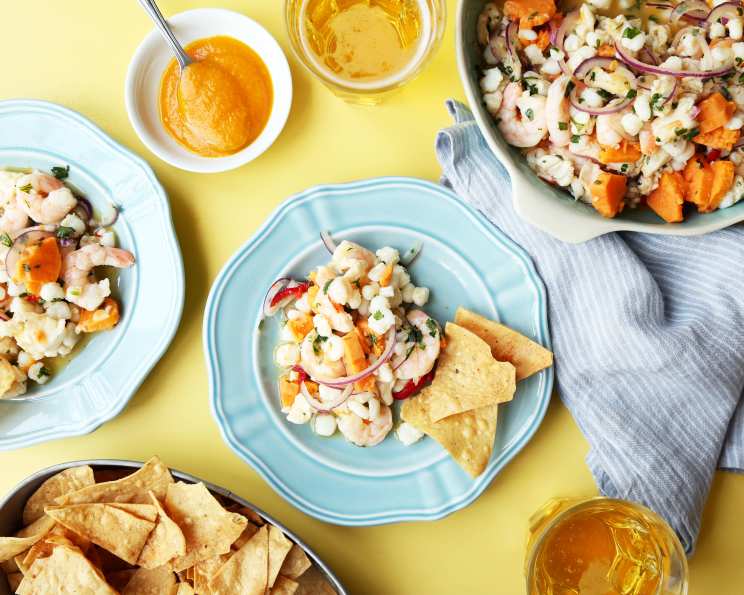
Peruvian Cebiche Mixto: A Symphony of the Sea
The first time I tasted cebiche mixto, I was standing on a sun-drenched beach in Lima, the salty breeze whipping through my hair. The explosion of flavors – the tangy lime, the fiery chilies, the sweetness of the corn, and the freshness of the seafood – was unlike anything I had ever experienced. It was a culinary awakening, a vibrant testament to Peru’s incredible biodiversity and its people’s passionate approach to food. It’s a dish that transports me back to that moment with every single bite.
Recipe Overview
- Prep Time: 30 minutes
- Cook Time: 15 minutes
- Total Time: 45 minutes
- Servings: 4
- Dietary Type: Dairy-Free, Gluten-Free
Ingredients
- 3 fish fillets (flounder or sea bass), cut into small cubes
- 12 cooked shrimp, cooled
- 1 red aji limo chile (Peruvian peppers), with or without veins depending on spice preference
- 1 yellow aji limo chile, veins removed
- 1 ½ cups lime juice (freshly squeezed, about halfway to avoid bitterness)
- 1 cooked sweet potato, optional
- ¼ bunch cilantro, leaves only
- ½ red onion, thinly sliced
- Sea salt, to taste
- 6 ice cubes
- 1 cup white corn kernels (previously boiled and cooled, giant white Cusco corn), optional
Equipment Needed
- Glass or plastic bowl
- Cutting board
- Knife
- Separate containers for boiling (optional)
Instructions
-
The night before or a few hours before you plan to assemble your cebiche, boil the shrimp, sweet potato (if using), and corn (if using) in separate containers until cooked through. Allow them to cool completely and then refrigerate. This step ensures the ingredients are at the perfect temperature to complement the cold cebiche.
-
If you cannot find aji limo chilies, habanero peppers can be substituted, but be mindful of their intense heat. A little goes a long way!
-
Remember, this recipe is for shrimp and fish cebiche. Feel free to add an assortment of other cooked seafood such as squid or scallops to create a more diverse cebiche mixto.
-
Cut the fish fillets into small cubes, approximately ½-inch in size. This allows the lime juice to penetrate the fish evenly, “cooking” it thoroughly.
-
Take the tip of one of the aji chilies and rub it along the bottom of the glass or plastic bowl you will be using. This subtly infuses the entire dish with the chili’s aroma and flavor.
-
Thinly dice both the red and yellow aji chilies. Remember to remove the veins from the yellow chili if you prefer a milder flavor. The veins hold much of the heat.
-
In the glass bowl, combine the cubed fish, 6 ice cubes, and lime juice. Salt to taste at this stage. Be generous with the salt, as it helps to balance the acidity of the lime. Stir gently to ensure the fish is submerged in the lime juice.
-
Allow the fish to “cook” in the lime juice for about 15 minutes. The acid in the lime juice will denature the proteins in the fish, giving it a firm, opaque texture similar to that of cooked fish. After 15 minutes, remove the ice cubes.
-
Add the diced aji peppers to taste. Start with a small amount and gradually add more until you reach your desired level of spiciness. Then, add the cooked shrimp and stir to combine.
-
Chop the cilantro leaves and incorporate them into the mixture. Stir gently to distribute the cilantro evenly throughout the cebiche.
-
Add the thinly sliced red onions to the bowl. Refrigerate the cebiche for about 15 more minutes to allow the flavors to meld together. This step is crucial for developing the cebiche’s characteristic complexity.
-
Serve the cebiche chilled, accompanied by corn and sweet potato (if using).
Expert Tips & Tricks
- The Quality of the Lime: Use the freshest, juiciest limes you can find. The flavor of the lime juice is paramount to the success of the dish. Avoid bottled lime juice, as it lacks the vibrancy and complexity of fresh juice.
- Don’t Over-Squeeze: When squeezing the limes, avoid squeezing them completely. The last bit of juice can be bitter. Squeeze about halfway for the best flavor.
- Adjusting the Spice: Aji limo chilies can vary in heat. Taste the chilies before adding them to the cebiche and adjust the quantity accordingly. If you’re sensitive to spice, start with a very small amount.
- Marinating Time: The marinating time is crucial. Over-marinating can result in a rubbery texture, while under-marinating can leave the fish too raw. 15 minutes is generally ideal, but you can adjust slightly based on the thickness of the fish cubes.
- Make Ahead: While cebiche is best served fresh, you can prepare some of the components ahead of time. The shrimp, sweet potato, and corn can be cooked and refrigerated up to a day in advance. However, do not combine the fish with the lime juice until just before serving.
- Use a non-reactive bowl: Always use a glass or plastic bowl when making cebiche. Metal bowls can react with the lime juice, altering the flavor of the dish.
Serving & Storage Suggestions
Cebiche is best served immediately after preparation. Arrange the cebiche in small bowls or glasses, garnishing with extra cilantro sprigs and a few slices of red onion. Serve alongside the corn and sweet potato (if using) as accompaniments.
Due to the raw fish, cebiche should not be left at room temperature for more than 2 hours. Leftovers can be stored in the refrigerator for up to 24 hours, but the texture of the fish will continue to change, becoming firmer. It is not recommended to freeze cebiche.
Nutritional Information
| Nutrient | Amount per Serving | % Daily Value |
|---|---|---|
| Calories | 223.1 kcal | N/A |
| Calories from Fat | 17 g | 8% |
| Total Fat | 2 g | 3% |
| Saturated Fat | 0.3 g | 1% |
| Cholesterol | 109.1 mg | 36% |
| Sodium | 271.5 mg | 11% |
| Total Carbohydrate | 16.6 g | 5% |
| Dietary Fiber | 1.7 g | 6% |
| Sugars | 3.4 g | N/A |
| Protein | 36.4 g | 72% |
Note: Nutritional information is an estimate and may vary based on specific ingredients and preparation methods.
Variations & Substitutions
- Vegetarian Cebiche: Substitute the fish and shrimp with hearts of palm or mushrooms for a vegetarian-friendly version.
- Spicy Mango Cebiche: Add diced mango to the cebiche for a sweet and spicy twist.
- Coconut Milk Cebiche: Replace a portion of the lime juice with coconut milk for a creamier, more tropical flavor.
- Aji Amarillo Paste: For a different flavor profile, use aji amarillo paste instead of, or in addition to, the aji limo chilies.
- Different Fish: While flounder and sea bass are traditional, other firm white fish like snapper or halibut can also be used.
FAQs (Frequently Asked Questions)
Q: Can I use frozen fish for cebiche?
A: Yes, you can use frozen fish, but make sure it is of the highest quality and has been properly thawed. Thaw the fish in the refrigerator overnight for best results.
Q: How do I know when the fish is “cooked” in the lime juice?
A: The fish is “cooked” when it turns opaque and firm to the touch. The texture will be similar to that of cooked fish.
Q: Can I make cebiche ahead of time?
A: It’s best to serve cebiche immediately after preparation. However, you can prep some of the ingredients ahead of time, such as cooking the shrimp, sweet potato, and corn.
Q: What if I can’t find aji limo chilies?
A: Habanero peppers are a good substitute, but be mindful of their intense heat. You can also use a combination of other chili peppers to achieve a similar flavor profile.
Q: What drinks pair well with cebiche?
A: A crisp, dry white wine like Sauvignon Blanc or Albariño pairs perfectly with cebiche. A refreshing Pisco Sour or a light beer are also excellent choices.
Final Thoughts
Peruvian Cebiche Mixto is more than just a recipe; it’s an experience. It’s a celebration of fresh ingredients, bold flavors, and the vibrant culinary heritage of Peru. I encourage you to try this recipe and discover the magic of cebiche for yourself. Don’t be afraid to experiment with different variations and substitutions to create your own signature version. And please, share your creations and feedback – I’d love to hear about your culinary journey! Enjoy this incredible dish with a chilled glass of white wine and let the flavors transport you to the sunny shores of Peru.