
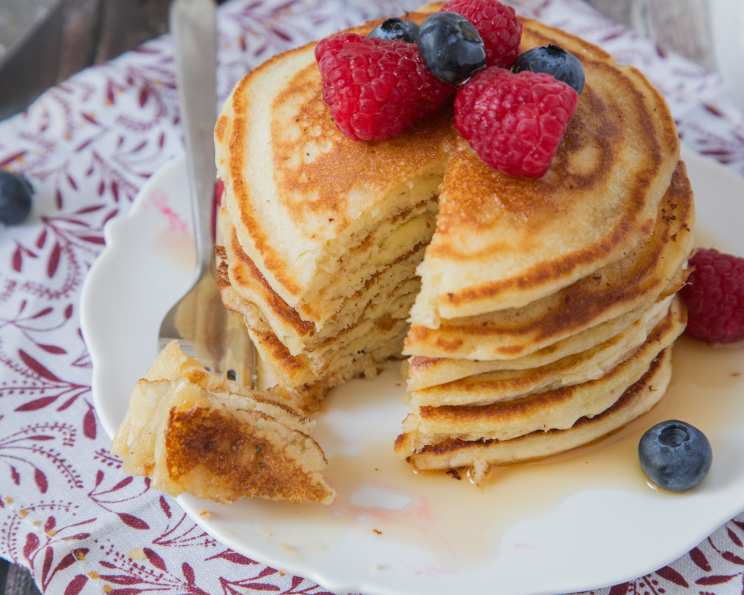
Pete’s Scratch Pancakes: A Taste of Simplicity
I can still picture it: the aroma of sizzling butter, the gentle hiss as batter hit the hot griddle, the impatient tapping of my little brother’s foot as he waited for his stack. Saturday mornings in our kitchen were sacred, a symphony of simple pleasures orchestrated by my mom, wielding her well-worn spatula like a maestro’s baton. While she had countless recipes, the one she came back to, time and time again, was one jotted down by a visitor on a scrap of teletype paper. These weren’t just pancakes; they were a testament to the fact that the best things in life often come from the simplest beginnings.
Recipe Overview
- Prep Time: 10 minutes
- Cook Time: 10 minutes
- Total Time: 20 minutes
- Servings: 6
- Yield: 9 6-inch pancakes
- Dietary Type: Vegetarian
Ingredients
- 2 cups flour
- 3 tablespoons sugar
- 1/2 teaspoon salt
- 1 tablespoon baking powder
- 2 eggs, beaten separately before adding to the mixture
- 1/4 cup butter, melted (1/8 of a pound)
- 1 3/4 cups milk
Equipment Needed
- Large mixing bowl
- Whisk
- Griddle or large frying pan
- Spatula
Instructions
-
Begin by mixing all the dry ingredients together in a large mixing bowl: the flour, sugar, salt, and baking powder. Use a whisk to ensure these are thoroughly combined; this is crucial for an even rise.
-
In a separate bowl, beat the eggs until they are light and frothy. The separate beating of the eggs contributes to the pancakes’ airy texture.
-
Melt the butter and allow it to cool slightly. This prevents it from cooking the eggs when combined.
-
Combine the beaten eggs and the melted butter with the milk. Gently stir to combine.
-
Slowly stir the wet ingredients into the dry ingredients, mixing until just combined. Be careful not to overmix; a few lumps are perfectly fine and actually contribute to a more tender pancake. Overmixing develops the gluten in the flour, resulting in tough pancakes.
-
Allow the batter to sit for at least 10 minutes while you heat your griddle or pan. This allows the gluten to relax and the baking powder to activate fully.
-
Heat your griddle to 325°F (160°C), or your frying pan to medium-high heat. The correct temperature is essential. If the pan is too hot, the pancakes will burn on the outside before they are cooked through. If it’s not hot enough, they will be flat and dense. You can test the temperature by flicking a few drops of water onto the surface; if they sizzle and evaporate quickly, it’s ready.
-
Lightly grease the hot griddle or pan with butter or cooking spray.
-
Pour approximately ¼ cup of batter onto the hot griddle for each pancake.
-
Cook for 2-3 minutes per side, or until golden brown and cooked through. Look for bubbles forming on the surface of the pancakes; this indicates that they are ready to be flipped.
-
Flip the pancakes carefully with a spatula and cook for another 2-3 minutes on the other side.
-
Serve immediately and enjoy!
Expert Tips & Tricks
- Don’t overmix the batter: This is the golden rule of pancake making. Overmixing develops the gluten in the flour, which leads to tough, chewy pancakes. A few lumps in the batter are perfectly fine.
- Let the batter rest: Letting the batter rest for 10 minutes (or even longer) allows the gluten to relax and the baking powder to fully activate, resulting in lighter, fluffier pancakes.
- Use a hot griddle or pan: A hot surface is crucial for creating golden-brown pancakes with a slightly crispy exterior.
- Don’t overcrowd the griddle: Cook the pancakes in batches to avoid overcrowding the griddle, which can lower the temperature and result in unevenly cooked pancakes.
- Keep pancakes warm in the oven: If you’re making a large batch of pancakes, keep them warm in a preheated oven (set to the lowest setting, around 200°F or 93°C) until ready to serve. Place them on a baking sheet in a single layer.
Serving & Storage Suggestions
Serve these pancakes hot off the griddle with your favorite toppings! Classic choices include butter, maple syrup, fresh berries, whipped cream, chocolate chips, and a dusting of powdered sugar. For a savory twist, try topping them with fried eggs, bacon, or sausage.
Leftover pancakes can be stored in an airtight container in the refrigerator for up to 2-3 days. To reheat, simply microwave them for a few seconds, toast them in a toaster, or warm them in a skillet.
Pancakes can also be frozen for longer storage. Place them in a single layer on a baking sheet and freeze until solid. Then, transfer them to a freezer bag or airtight container. They can be stored in the freezer for up to 2-3 months. To reheat, thaw them in the refrigerator overnight or microwave them directly from frozen.
Nutritional Information
| Nutrient | Amount per Serving | % Daily Value |
|---|---|---|
| Calories | 209.6 kcal | N/A |
| Calories from Fat | 73 g | 35% |
| Total Fat | 8.2 g | 12% |
| Saturated Fat | 4.7 g | 23% |
| Cholesterol | 61.5 mg | 20% |
| Sodium | 334.9 mg | 13% |
| Total Carbohydrate | 28.1 g | 9% |
| Dietary Fiber | 0.8 g | 3% |
| Sugars | 4.3 g | N/A |
| Protein | 5.9 g | 11% |
Note: Nutritional information is an estimate and may vary based on specific ingredients and portion sizes.
Variations & Substitutions
- Gluten-Free Pancakes: Substitute the all-purpose flour with a gluten-free flour blend. Be sure to use a blend that contains xanthan gum or guar gum to help bind the ingredients together.
- Dairy-Free Pancakes: Replace the milk with your favorite non-dairy milk, such as almond milk, soy milk, or oat milk.
- Vegan Pancakes: In addition to using non-dairy milk, replace the eggs with flax eggs (1 tablespoon ground flaxseed mixed with 3 tablespoons of water per egg). Let the mixture sit for 5 minutes to thicken before adding to the batter.
- Buttermilk Pancakes: Substitute the milk with buttermilk for a tangier flavor and even more tender pancakes.
- Add-Ins: Get creative with your add-ins! Try adding blueberries, chocolate chips, banana slices, chopped nuts, or spices like cinnamon or nutmeg to the batter.
FAQs (Frequently Asked Questions)
Q: Why are my pancakes flat and not fluffy?
A: This is often caused by overmixing the batter, which develops the gluten and makes the pancakes tough. It can also be due to the griddle not being hot enough.
Q: How do I know when to flip the pancakes?
A: Look for bubbles forming on the surface of the pancakes. Once the bubbles start to pop and the edges look set, it’s time to flip them.
Q: Can I make the batter ahead of time?
A: Yes, you can make the batter ahead of time, but it’s best to use it within a few hours. If you let it sit for too long, the baking powder will lose its effectiveness.
Q: What’s the best way to keep pancakes warm?
A: Preheat your oven to the lowest setting (around 200°F or 93°C). Place the cooked pancakes on a baking sheet in a single layer and keep them warm in the oven until ready to serve.
Q: Can I freeze the pancakes?
A: Yes, pancakes freeze well. Place them in a single layer on a baking sheet and freeze until solid. Then, transfer them to a freezer bag or airtight container. They can be stored in the freezer for up to 2-3 months.
Final Thoughts
These pancakes aren’t just a recipe; they’re a portal to simpler times, a reminder that the most satisfying moments often arise from the most humble ingredients. Whether you’re a seasoned chef or a kitchen novice, I urge you to try Pete’s Scratch Pancakes. Gather your loved ones, fire up the griddle, and create some memories of your own. Don’t be afraid to experiment with toppings and variations, and most importantly, have fun! And please, share your pancake creations and feedback – I’d love to hear about your experience! Maybe add a little whipped cream and a side of crispy bacon; you deserve it.