
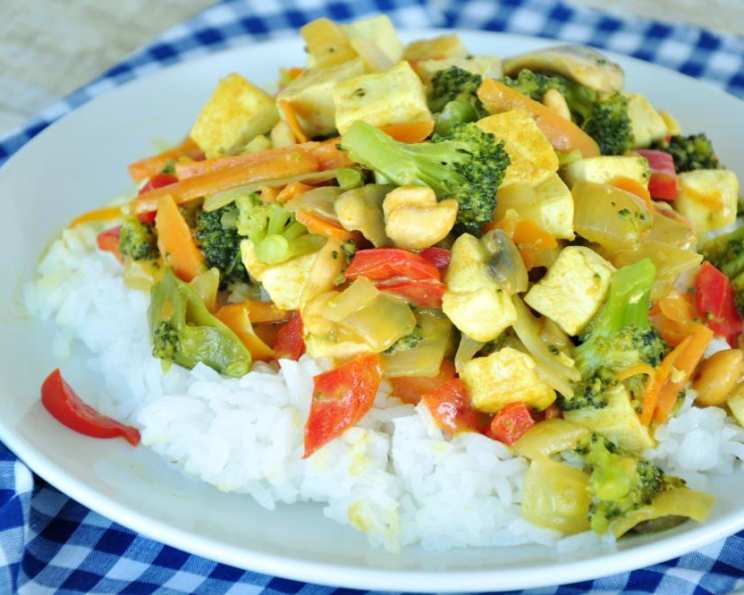
Recreating a Restaurant Favorite: Coconut Curry Vegetables
The first time I tasted PF Chang’s Coconut Curry Vegetables, I was a struggling culinary student, pinching pennies but desperate for a decent meal. The aroma alone, a heady blend of coconut, curry, and fresh vegetables, pulled me in. That first bite was a revelation – the perfect balance of sweet, savory, and subtly spicy, coating crisp-tender vegetables and satisfying tofu. It was an affordable luxury, a comforting escape, and I knew I had to learn how to make it myself.
Recipe Overview
- Prep Time: 20 minutes
- Cook Time: 20 minutes
- Total Time: 40 minutes
- Servings: 2
- Yields: 1 Stir Fry
- Dietary Type: Vegetarian (can be vegan with minor adjustments – see variations)
Ingredients
- 2 tablespoons canola oil or 2 tablespoons sesame oil
- 12 ounces package extra firm water-packed tofu
- 1 small onion, cut into 3/4-inch cubes
- 1 small red bell pepper, cubed
- 1 cup sliced mushrooms
- 3 cups broccoli florets
- 1⁄2 cup carrot, thinly sliced
- 1⁄2 cup whole sugar snap peas
Coconut-Curry Sauce
- 1⁄2 cup coconut milk
- 2 tablespoons soy sauce
- 1⁄2 teaspoon curry powder
- 2 tablespoons packed brown sugar
- 2 teaspoons unseasoned rice vinegar or 2 teaspoons cider vinegar
- 2 teaspoons cornstarch
- 1⁄2 cup peanuts
Equipment Needed
- Wok or large skillet
- Cutting board
- Knife
- Small bowl for sauce
- Slotted spoon (optional)
Instructions
-
Begin by prepping the tofu. Drain the tofu thoroughly. Cut the tofu into cubes, approximately 1/2-inch in size. This size works well for even browning and easy eating.
-
Heat 1 tablespoon of canola oil (or sesame oil) in a wok or large skillet over medium-high heat.
-
Add the cubed tofu to the hot oil and fry until golden brown on all sides. This usually takes about 5-7 minutes, turning frequently. To achieve a firmer texture, consider pressing the tofu before frying to remove excess water. Some chefs recommend freezing the tofu first; this further firms up the texture, allowing for an even crispier result. Once browned, remove the tofu from the pan using a slotted spoon and set aside.
-
Next, prepare the vegetables. Bring a pot of water to a boil. Blanch or steam the broccoli florets, carrots, and sugar snap peas until they are tender-crisp. This should only take 2-3 minutes; be careful not to overcook them. Immediately transfer the blanched vegetables to an ice bath to stop the cooking process and preserve their vibrant color and crispness. Drain well and set aside. This step can also be done in advance.
-
Wipe out the wok or skillet and return it to high heat. Add the remaining 1 tablespoon of canola oil (or sesame oil), swirling to coat the pan.
-
Add the cubed onion and red bell pepper to the hot wok. Stir-fry for 3-4 minutes, or until they become tender-crisp. Constant stirring is key to preventing burning and ensuring even cooking.
-
Add the sliced mushrooms to the wok and stir-fry for a few more minutes, until they are heated through and slightly softened.
-
Return the blanched broccoli, carrots, and sugar snap peas to the wok, along with the browned tofu. Toss everything together to combine the ingredients evenly.
-
Now, prepare the Coconut-Curry Sauce. In a small bowl, whisk together the coconut milk, soy sauce, curry powder, packed brown sugar, and unseasoned rice vinegar (or cider vinegar). Taste the sauce and adjust the amount of brown sugar to your liking, depending on your preferred level of sweetness. Remember that a pinch of salt can also balance the flavors.
-
Pour the Coconut-Curry Sauce over the vegetables and tofu in the wok. Bring the mixture to a simmer, tossing gently to coat all the ingredients in the sauce.
-
In a separate small bowl, dissolve the cornstarch in 1 1/2 tablespoons of cold water, creating a slurry. This will help to thicken the sauce.
-
Pour the cornstarch slurry into the wok, stirring constantly. Continue to stir until the sauce thickens and turns glossy, about 10 seconds. If you’ve doubled the sauce (as suggested for serving over rice or noodles), it may take a bit longer.
-
Finally, add the peanuts to the wok and toss to combine.
-
Serve the Coconut Curry Vegetables immediately, garnished with extra peanuts if desired.
Expert Tips & Tricks
- Tofu Prep is Key: Pressing or freezing the tofu makes a world of difference in texture. Pressing removes excess water, allowing for better browning. Freezing changes the internal structure, creating a chewier, more absorbent tofu.
- Don’t Overcrowd the Wok: If you’re making a larger batch, work in smaller portions to ensure the vegetables stir-fry properly and don’t steam. Overcrowding can lower the pan temperature and result in soggy vegetables.
- Adjust the Curry: The amount of curry powder can be adjusted to suit your taste. Start with the recommended amount and add more to increase the spice level. Using different types of curry powder (e.g., Madras curry powder) will also influence the flavor profile.
- Freshness Matters: Use the freshest vegetables possible for the best flavor and texture.
Serving & Storage Suggestions
Serve the Coconut Curry Vegetables hot, either on its own or over rice or noodles. A warm loaf of crusty bread is also a great accompaniment for soaking up the delicious sauce.
Leftovers can be stored in an airtight container in the refrigerator for up to 3 days. To reheat, gently warm in a skillet over medium heat, stirring occasionally. You may need to add a splash of water or coconut milk if the sauce has thickened too much. The dish is not recommended for freezing, as the vegetables can become mushy upon thawing.
Nutritional Information
| Nutrient | Amount per Serving | % Daily Value |
|---|---|---|
| Calories | 707.9 kcal | N/A |
| Calories from Fat | 460 g | 65% |
| Total Fat | 51.2 g | 78% |
| Saturated Fat | 15.3 g | 76% |
| Cholesterol | 0 mg | 0% |
| Sodium | 1093.2 mg | 45% |
| Total Carbohydrate | 45.5 g | 15% |
| Dietary Fiber | 7.4 g | 29% |
| Sugars | 22.1 g | 88% |
| Protein | 29.6 g | 59% |
Note: Nutritional information is an estimate and can vary based on specific ingredients and cooking methods.
Variations & Substitutions
- Vegan Option: Ensure the soy sauce you are using is gluten free.
- Gluten-Free: To ensure this dish is entirely gluten-free, use tamari instead of soy sauce.
- Protein Variations: Edamame or chickpeas can be used in addition to, or in place of, the tofu. Adjust cooking times accordingly.
- Vegetable Variations: Feel free to substitute other vegetables based on what you have on hand or what’s in season. Bell peppers of different colors, zucchini, bok choy, or snow peas would all be great additions.
- Spice Level: Adjust the amount of curry powder to your liking. You can also add a pinch of red pepper flakes or a dash of chili oil for extra heat.
FAQs (Frequently Asked Questions)
Q: Can I use frozen vegetables in this recipe?
A: While fresh vegetables are recommended for the best texture and flavor, frozen vegetables can be used in a pinch. Be sure to thaw them completely and drain any excess water before adding them to the wok.
Q: How can I make the sauce thicker?
A: If the sauce is not thickening to your liking, you can add a bit more cornstarch slurry (equal parts cornstarch and cold water) to the wok, stirring constantly until it reaches the desired consistency.
Q: Can I make this dish ahead of time?
A: You can prepare the vegetables and sauce separately ahead of time and store them in the refrigerator. When ready to serve, simply combine them in the wok and heat through.
Q: What’s the best way to reheat leftovers?
A: Gently reheat leftovers in a skillet over medium heat, stirring occasionally. You may need to add a splash of water or coconut milk if the sauce has thickened too much. Microwaving is also an option, but may result in a slightly less desirable texture.
Q: Can I use different types of nuts?
A: Absolutely! Cashews, almonds, or even sunflower seeds can be used in place of peanuts. Choose your favorite nut for a personalized touch.
Final Thoughts
Now it’s your turn to bring the vibrant flavors of PF Chang’s Coconut Curry Vegetables into your own kitchen. Don’t be afraid to experiment with variations, adjust the spice level to your liking, and make this dish your own. Whether you’re serving it over rice, noodles, or enjoying it with a slice of crusty bread, this recipe is sure to impress. I hope this recipe inspires you to not just cook but create delicious food and bring joy to your dinner table.