
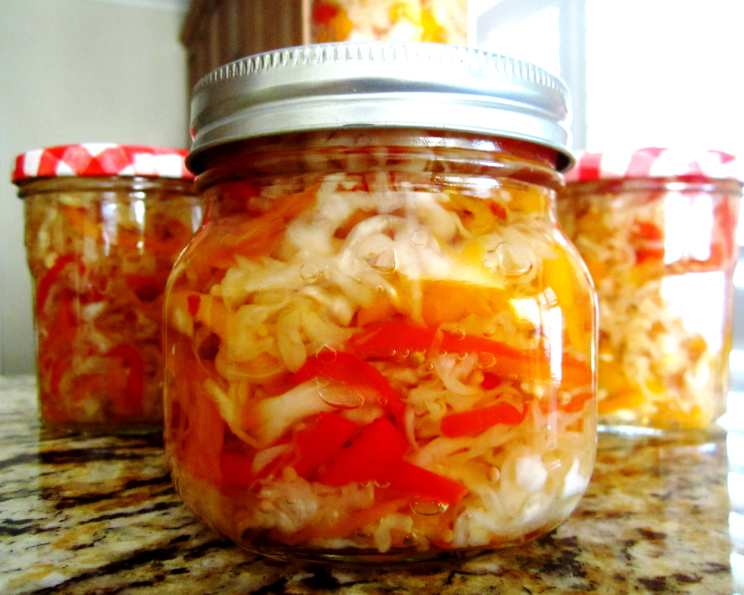
Tangy and Bright: Homemade Pickled Cabbage and Peppers
My grandmother, a woman of few words but immense culinary skill, always had a jar of something fermenting or pickling in her pantry. The earthy scent of vinegar and spices was as familiar as her warm hugs. While she made everything from dill pickles to pickled beets, it was her tangy pickled cabbage and peppers that I remember most vividly. Every summer, we’d spend an afternoon together, the rhythmic chopping of vegetables filling the kitchen, transforming the bounty of her garden into jars of sunshine we could enjoy all year round. The vibrant colors of the peppers, the sharp tang of the cabbage—it’s a taste that brings me right back to her cozy kitchen, her apron dusted with flour and a twinkle in her eye.
Recipe Overview
- Prep Time: 20 minutes
- Cook Time: 20 minutes
- Total Time: 40 minutes (plus 8-12 hours resting time)
- Yields: Approximately 4 pints
- Dietary Type: Vegan, Gluten-Free
Ingredients
- 2 lbs cabbage, cored and shredded
- 5 cups bell peppers, cut into thin strips (a mix of red and yellow is pretty)
- 1/4 cup pickling salt
- 1 cup sugar
- 1 1/2 cups white wine vinegar
- 1/2 teaspoon hot pepper flakes
- 4 teaspoons mustard seeds
- 6 garlic cloves, minced
Equipment Needed
- Large bowl or crock
- Non-reactive saucepan
- Pint mason jars
- Jar lifter
- Boiling water bath canner
Instructions
-
In a large bowl or crock, thoroughly toss the shredded cabbage and bell peppers with the pickling salt. Ensure the salt is evenly distributed to draw out moisture.
-
Cover the bowl or crock tightly and let it stand in a cool place for 8-12 hours. This step is crucial for properly curing the vegetables. The salt helps to remove excess water, resulting in a crispier finished product.
-
In a non-reactive saucepan (stainless steel or enamel-coated), combine the sugar and white wine vinegar. Using a non-reactive pan is important to prevent any unwanted flavors or reactions.
-
Bring the vinegar and sugar mixture to a rolling boil over medium-high heat, stirring occasionally to ensure the sugar dissolves completely. Once boiling, remove from heat and allow it to cool slightly.
-
Thoroughly rinse the cabbage and pepper mixture under cold water to remove excess salt. Drain it extremely well. You want to remove as much water as possible at this stage.
-
In the same bowl, gently toss the rinsed cabbage and peppers with the hot pepper flakes, mustard seeds, and minced garlic. Make sure everything is evenly distributed.
-
Pack the vegetable mixture firmly into clean pint mason jars, leaving about 1/2 inch of headspace. Press down firmly to eliminate air pockets. The recipe, as written, generally makes about 4 pints. If you find you need more jars, you may not have packed the vegetables firmly enough – and you’ll need more vinegar mixture as a result.
-
Carefully pour the cooled vinegar mixture over the vegetables in each jar, ensuring they are fully submerged, and maintaining that 1/2 inch of headspace.
-
Wipe the rims of the jars clean with a damp cloth. This is important to ensure a good seal.
-
Place the hot two-piece lids on the jars, screwing the bands on fingertip-tight.
-
Process the jars for 20 minutes in a boiling water bath. Make sure the water covers the jars by at least 1 inch. Use a jar lifter to safely lower the jars into the boiling water and remove them afterwards.
-
After processing, carefully remove the jars from the boiling water bath and place them on a towel-lined surface to cool completely. You should hear a “pop” as the jars seal.
-
Once the jars are cooled, check the seals by pressing down on the center of the lid. If it doesn’t flex, the jar is properly sealed.
-
Store the cooled jars in a cool, dry, dark place for at least 3 weeks before eating the cabbage. This allows the flavors to fully develop and mellow out.
Expert Tips & Tricks
- Salt Selection: Always use pickling salt, as it doesn’t contain iodine or anti-caking agents that can darken the pickles or affect the brine’s clarity.
- Crispness Factor: To maintain maximum crispness, consider adding a grape leaf to each jar before processing. The tannins in the leaves help prevent the vegetables from softening.
- Spice It Up: For an extra kick, add a few dried chilies to the jars before processing. You can also adjust the amount of hot pepper flakes to your preference.
- Don’t Overcook: Avoid overcooking the vinegar mixture, as this can lead to a less vibrant flavor.
- Vinegar Variety: Feel free to substitute other commercial vinegars. White vinegar or apple cider vinegar work well, as white wine vinegar can be a bit expensive.
- Jar Sealing: If a jar doesn’t seal properly, refrigerate it immediately and consume the pickled vegetables within a few weeks.
Serving & Storage Suggestions
This pickled cabbage and peppers is incredibly versatile. It’s fantastic as a topping for hot dogs and sausages, a side dish with grilled meats, or even as a vibrant addition to salads. Serve it cold straight from the jar or gently heated.
Once opened, store the pickled cabbage and peppers in the refrigerator. Properly sealed jars can be stored in a cool, dark place for up to a year. Once opened, they will last for several weeks in the refrigerator.
Nutritional Information
| Nutrient | Amount per Serving | % Daily Value |
|---|---|---|
| Calories | 304.8 kcal | N/A |
| Calories from Fat | 11g | 4% |
| Total Fat | 1.3 g | 2% |
| Saturated Fat | 0.2 g | 1% |
| Cholesterol | 0 mg | 0% |
| Sodium | 7121.5 mg | 296% |
| Total Carbohydrate | 73.9 g | 24% |
| Dietary Fiber | 9.2 g | 36% |
| Sugars | 61.9 g | 247% |
| Protein | 5.3 g | 10% |
Note: Nutritional information is an estimate and may vary based on specific ingredients and portion sizes.
Variations & Substitutions
- Spice Level: Adjust the amount of hot pepper flakes to control the heat level. You can also add other spices like cumin seeds or coriander seeds for a different flavor profile.
- Vegetable Medley: Experiment with adding other vegetables like carrots, onions, or green beans.
- Sweetness: Adjust the amount of sugar to your preference. Honey or maple syrup can be used as a substitute for sugar.
- Vinegar Options: For a milder flavor, use apple cider vinegar instead of white wine vinegar.
- Fermented Twist: For a richer flavor, consider adding a few tablespoons of whey or sauerkraut brine to the mixture before packing the jars. This will encourage fermentation and add a probiotic boost.
FAQs (Frequently Asked Questions)
Q: Why is it important to use pickling salt instead of regular table salt?
A: Pickling salt doesn’t contain iodine or anti-caking agents, which can discolor the vegetables and cloud the brine.
Q: Can I skip the salting step?
A: While you can skip it, the salting process helps to draw out excess moisture from the vegetables, resulting in a crispier pickle.
Q: How long do I need to wait before eating the pickled cabbage and peppers?
A: It’s best to wait at least 3 weeks before eating to allow the flavors to fully develop.
Q: My jars didn’t seal. What should I do?
A: If a jar doesn’t seal properly, refrigerate it immediately and consume the pickled vegetables within a few weeks.
Q: Can I use this recipe for other vegetables?
A: Yes, this recipe can be adapted for other vegetables like carrots, green beans, or onions. Just adjust the cooking time accordingly.
Final Thoughts
There’s a special kind of satisfaction that comes from creating something delicious and shelf-stable right in your own kitchen. This pickled cabbage and peppers recipe is a testament to that. It’s more than just a condiment; it’s a burst of flavor, a vibrant addition to any meal, and a connection to culinary traditions that have been passed down through generations. Don’t be intimidated by the canning process; it’s easier than you think! Gather your ingredients, follow the steps, and you’ll be rewarded with jars of tangy goodness to enjoy for months to come. I encourage you to try this recipe, experiment with variations, and share your creations with friends and family. And if you do, I’d love to hear your feedback! Perhaps you could pair it with a hearty bratwurst and a crisp, dry Riesling for a truly delightful meal.