
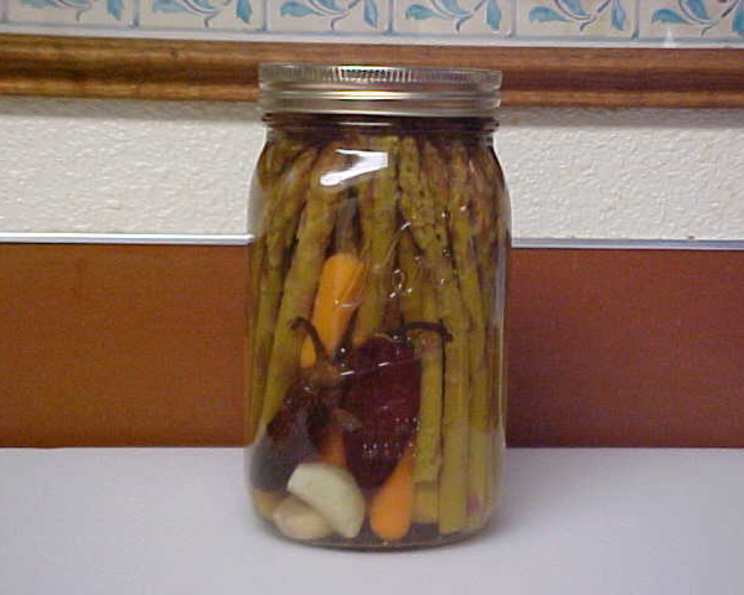
Pickled Chipotle Asparagus: A Fiery Spring Delight
I still remember the first time I tasted pickled asparagus. It wasn’t this recipe, mind you. It was at a roadside stand in Napa Valley, the air thick with the scent of fermenting grapes and sun-baked earth. The asparagus, crisp and vibrant green, had a subtle vinegary tang that cut through the richness of a cheese I was sampling. It was an unexpected flavor revelation, a testament to the simple magic of preserving nature’s bounty. This recipe, kicked up a notch with the smoky heat of chipotle peppers, brings that memory back with a welcome dose of fiery excitement.
Recipe Overview
- Prep Time: 1 hour
- Cook Time: 45 minutes
- Total Time: 2 hours 15 minutes
- Yields: 6 quarts
- Serves: 6
- Dietary Type: Vegan, Gluten-Free
Ingredients
- 3 1/2 cups distilled white vinegar
- 1 1/4 cups white wine vinegar
- 5 tablespoons pickling salt
- 2 1/2 tablespoons pickling spices
- 8 lbs asparagus
- 2 lbs baby carrots
- 12 garlic cloves, peeled
- 6 dried chipotle chiles
Equipment Needed
- 3-4 quart saucepan
- Boiling water canner with rack
- Quart saucepan
- 8-10 quart saucepan
- Slotted spoon
- Large bowl
- Tongs
- Canning jars (6 quart-sized)
- Canning lids and bands
- Clean, damp cloths
- Hot pad
Instructions
-
In a 3 to 4 quart pan over high heat, bring 7 1/4 cups water, distilled vinegar, wine vinegar, salt, and pickling spice to a boil. Once boiling, reduce heat, cover, and simmer, stirring occasionally, for 15 minutes. This allows the flavors of the spices to fully infuse the vinegar brine.
-
Prepare your boiling water canner. Fill the canner with water – about 2/3 full if using pint-sized jars, and 1/2 full for quart jars. Place the rack on the pan rim, cover the canner, and bring the water to a boil over high heat. Maintain the water temperature between 180-185 degrees Fahrenheit. A candy thermometer is helpful here.
-
Prepare your canning lids. Nest the lids in the bands and place them in a quart pan. Cover them with water. Set the pan over high heat and bring the water to 180 degrees Fahrenheit (do NOT boil). Remove from heat and cover the pan. This softens the sealing compound on the lids, ensuring a good seal.
-
Rinse all the vegetables well. Snap off and discard the tough ends of the asparagus. In an 8-10 quart pan over high heat, bring 4 quarts of water to a boil.
-
Blanch the vegetables. Add half of the asparagus to the boiling water and cook until tender-crisp to the bite, about 2 minutes. Using a slotted spoon, transfer the blanched asparagus to a large bowl of ice water to stop the cooking process. Repeat with the remaining asparagus and transfer to the ice water.
-
Add half the carrots to the boiling water and cook until tender-crisp to the bite, about 3 minutes. Transfer to the ice water. Repeat with the remaining carrots. Blanching ensures the vegetables retain their color and crispness during pickling.
-
Drain the vegetables thoroughly. Trim the asparagus to 6-inch spears, reserving the ends.
-
Prepare the jars. Place 2 cloves of garlic and 1 chile in each jar. Into five jars, equally pack the asparagus spears and about 3/4 of the carrots vertically without forcing. Pack the asparagus trimmings and remaining carrots into the remaining jar. This jar will be your “nugget” jar, filled with the smaller pieces.
-
Fill the jars. Fill each jar with the hot vinegar mix to cover the vegetables, leaving 1/2 inch headspace at the top. This headspace is crucial for proper sealing.
-
Wipe the jar rims and outer threads with a clean, damp cloth. This removes any food particles that could prevent a good seal.
-
Using tongs, lift the lids and seals from the hot water. Center a lid on each jar and, using a hot pad, screw the bands on firmly, but don’t force them. The bands should be snug but not overtightened.
-
Process the jars. Place the jars on the rack in the canner and carefully lower the rack into the water. The water should cover the jars by at least 1 inch. Cover the canner, return the water to a boil (maintaining a temperature of 180-185 degrees Fahrenheit) and process for 20 minutes.
-
Cool the jars. Remove the jars from the canner with tongs and place them on a counter lined with a towel. Tighten the bands. Let the jars cool completely at room temperature. You should hear a “pop” sound as the jars seal.
-
Check the seals. After the jars have cooled completely, remove the bands. Wipe the jars and lids with a clean, damp cloth. Label the jars with the date and contents.
-
Store the pickled asparagus in a cool, dark place for up to 2 years.
-
Once opened, chill and consume within 2 months.
HINT: Always use clean utensils when handling pickles to prevent mold or cloudiness. Do not put fingers or dirty utensils into the jars.
Expert Tips & Tricks
- Spice it up (or down): Adjust the number of chipotle chiles based on your heat preference. For a milder flavor, remove the seeds and veins from the chiles before adding them to the jars.
- Perfectly crisp veggies: Don’t overcook the asparagus and carrots during blanching. They should still have a good bite to them.
- Ensure a good seal: Make sure the jar rims are completely clean before adding the lids. A proper seal is essential for long-term storage and preventing spoilage. If a jar doesn’t seal within 24 hours, refrigerate it and consume the pickled asparagus within a few weeks.
- Vinegar matters: Using the correct ratio of vinegar to water is important for safety and flavor. Don’t deviate from the recipe unless you are familiar with safe canning practices.
Serving & Storage Suggestions
Pickled chipotle asparagus is a versatile condiment. Serve it as part of a charcuterie board, alongside grilled meats, or as a zesty addition to salads. It’s also delicious straight from the jar!
Store unopened jars in a cool, dark place for up to 2 years. Once opened, refrigerate and consume within 2 months.
Nutritional Information
| Nutrient | Amount per Serving | % Daily Value |
|---|---|---|
| Calories | 221.6 kcal | N/A |
| Calories from Fat | 14 g | 6% |
| Total Fat | 1.6 g | 2% |
| Saturated Fat | 0.3 g | 1% |
| Cholesterol | 0 mg | 0% |
| Sodium | 6020.6 mg | 250% |
| Total Carbohydrate | 39.7 g | 13% |
| Dietary Fiber | 16.8 g | 67% |
| Sugars | 15.4 g | N/A |
| Protein | 15.9 g | 31% |
Variations & Substitutions
- Sweet Heat: Add a tablespoon of honey or maple syrup to the brine for a touch of sweetness to balance the heat of the chipotle peppers.
- Other Vegetables: Try pickling other vegetables like green beans, pearl onions, or bell peppers using the same brine recipe.
- Spice it Different: Experiment with different types of chili peppers for varying levels of heat and flavor. Consider using jalapeños, serranos, or even a pinch of red pepper flakes.
- Garlic Infusion: Roast the garlic cloves before adding them to the jars for a deeper, sweeter garlic flavor.
FAQs (Frequently Asked Questions):
Q: Why do I need to blanch the asparagus and carrots before pickling?
A: Blanching helps to preserve the color and texture of the vegetables during the pickling process. It also helps to kill any enzymes that could cause spoilage.
Q: Can I use regular table salt instead of pickling salt?
A: No, pickling salt is pure sodium chloride and doesn’t contain iodine or anti-caking agents, which can darken the pickles and make the brine cloudy.
Q: How do I know if my jars are properly sealed?
A: After the jars have cooled completely, the lids should be concave and not flex when pressed in the center. If a lid flexes, the jar is not properly sealed and should be refrigerated.
Q: Can I reuse canning lids?
A: No, canning lids are designed for single-use only. The sealing compound can be damaged during the canning process and may not provide a reliable seal on subsequent uses.
Q: What if my pickled asparagus turns brown?
A: Browning can occur if the vegetables are exposed to air during the pickling process or if the brine is not acidic enough. Make sure the vegetables are fully submerged in the brine and that you are using the correct ratio of vinegar to water.
Final Thoughts
Pickling is an age-old art, a way to capture the fleeting flavors of the season and enjoy them year-round. This recipe for Pickled Chipotle Asparagus is a delicious and rewarding project that will add a fiery kick to your pantry. Don’t be afraid to experiment with variations and find your own signature blend of spices. I encourage you to give this recipe a try and share your creations with friends and family. It’s a guaranteed conversation starter and a delicious way to celebrate the bounty of spring! Pair these fiery spears with a crisp, cold lager or a tangy goat cheese for the ultimate flavor explosion.