
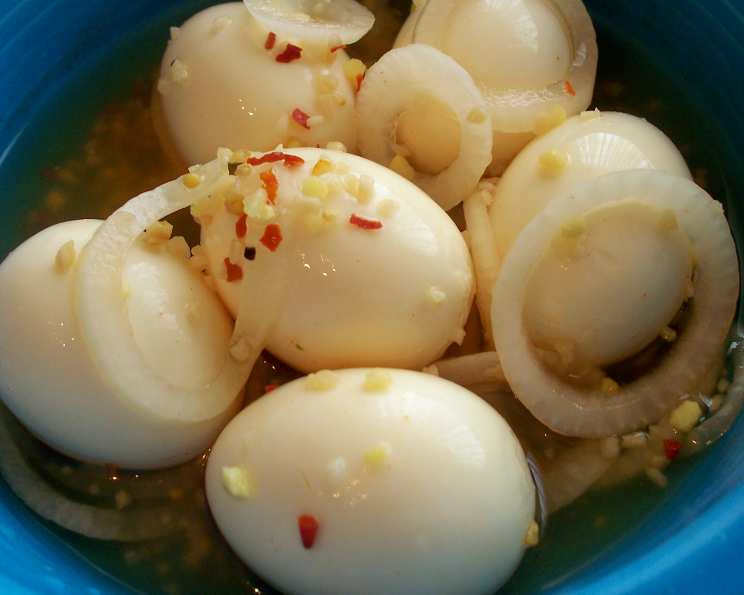
Pickled Cluckerberries: A Culinary Adventure in Vinegar and Spice
My grandmother, bless her heart, had a peculiar habit of pickling everything. Cucumbers? Naturally. Beets? Of course. But then there were the experiments: watermelon rind, green tomatoes, and, most memorably, hard-boiled eggs. As a child, I wrinkled my nose at the sight of those brine-soaked orbs bobbing in their jar, but now? They’re a nostalgic comfort food, a tangy reminder of her fearless spirit in the kitchen. These “Pickled Cluckerberries” as I like to call them, are a quick and easy way to capture a bit of that pickled magic. It’s not quite grandma’s recipe, but it’s close enough to bring back those memories of spicy pickled eggs on a summer afternoon.
Recipe Overview
- Prep Time: 15 minutes
- Cook Time: 25 minutes
- Total Time: 40 minutes (plus pickling time)
- Servings: 12
- Yield: 12 eggs
- Dietary Type: Varies (see notes)
Ingredients
- 12 eggs
- 1 large yellow onion, sliced into thin rings
- Pickle juice (enough to cover the eggs)
- 5 garlic cloves, smashed
- 4 teaspoons crushed red pepper flakes (optional)
- 4 tablespoons hot sauce (optional)
Ingredient Notes:
- Pickle Juice: Use the juice from your favorite store-bought pickles (dill, bread & butter, etc.). The flavor of the juice will heavily influence the final product.
- Hot Sauce: Choose your preferred brand and heat level of hot sauce. Tabasco, Louisiana Hot Sauce, or even a smoky chipotle hot sauce would all work well.
- Dietary Type: This recipe can be vegetarian. However, it is not vegan. Use of certain hot sauces may mean the recipe is not gluten-free.
Equipment Needed
- Large pot
- Slotted spoon
- Large bowl
- Ice
- Cutting board
- Large jar or container with a lid
Instructions
-
Begin by gently placing the eggs in a large pot. Add enough cold water to completely cover the eggs by a couple of inches. This ensures even cooking.
-
Bring the water to a rolling boil over high heat. Once boiling, reduce the heat slightly to maintain a gentle boil and cook for about 5 minutes. This initial boiling sets the proteins and prevents the yolks from turning green.
-
Remove the pot from the heat and let the eggs sit in the hot water for 15-20 minutes. This allows the eggs to cook fully without overcooking the yolks.
-
Prepare an ice bath: Fill a large bowl with ice and cold water. Use plenty of ice to get it as cold as possible.
-
Carefully transfer the cooked eggs with a slotted spoon into the ice bath. Chill them thoroughly until they are cold enough to handle, about 20 minutes. This rapid cooling stops the cooking process and makes the eggs easier to peel.
-
While the eggs are cooking and chilling, prepare the pickling liquid. Take your jar of pickle juice, and add the onion slices into the jar. The onions will add another layer of flavor, and become delicious pickles themselves!
-
Peel and smash the garlic cloves by placing them on a cutting board and pressing down firmly with the palm of your hand until they split open. Add the smashed garlic cloves to the jar of pickle juice and onions. Smashing the garlic releases its flavor and aroma.
-
If you desire a spicier pickled egg, now is the time to add the crushed red pepper flakes and/or hot sauce to the pickle juice mixture. Adjust the amount to your personal spice preference.
-
Once the eggs are thoroughly chilled and easy to handle, peel them carefully under cool running water. Ensure that no bits of shell remain.
-
Gently place the peeled eggs into the jar with the pickle juice, onions, garlic, and spices. Ensure the eggs are fully submerged in the pickle juice. If necessary, add more pickle juice from another jar or a mixture of vinegar and water to cover.
-
Seal the jar tightly with a lid. Place the jar in the refrigerator and let the eggs sit for as long as you can stand it before eating. For the best flavor, wait at least a few days. The longer they soak, the more pickled they will become.
-
(Optional, for extra heat) If you enjoy really hot and spicy pickled eggs, add a small can of pickled jalapenos and their juice to the jar along with the eggs. This will infuse the eggs with a significant kick.
Expert Tips & Tricks
- Perfect Hard-Boiled Eggs: Achieving perfectly cooked hard-boiled eggs is crucial. Overcooked eggs will have a green ring around the yolk and a rubbery texture. Undercooked eggs will be difficult to peel.
- Easy Peeling: For easier peeling, try adding a teaspoon of baking soda to the water when boiling the eggs. The baking soda helps to loosen the shell membrane. Cracking the egg all over before submerging it in the ice bath can also help water seep under the shell.
- Flavor Infusion: For a more intense flavor, gently pierce the eggs a few times with a toothpick after peeling but before adding them to the pickling liquid. This will allow the pickle juice to penetrate the eggs more effectively.
- Spice Level Adjustment: The amount of crushed red pepper and hot sauce can be adjusted to your liking. Start with a smaller amount and taste the pickling liquid before adding more.
- Don’t Toss the Pickled Onions! The onions will be delicious! Add them to burgers, sandwiches, or salads.
Serving & Storage Suggestions
Pickled eggs are fantastic as a snack, appetizer, or even as a protein boost to a salad. They can be served whole or sliced. Drain the eggs from the pickle juice before serving.
Store the pickled eggs in the refrigerator in the sealed jar. They will keep for up to two weeks, though their texture may change over time as they continue to pickle. Ensure the eggs are always submerged in the pickle juice to prevent spoilage.
Do not freeze pickled eggs, as freezing will drastically alter their texture.
Nutritional Information
Note: Nutritional information is an estimate and will vary based on the specific ingredients used, particularly the type of pickle juice and hot sauce.
| Nutrient | Amount per Serving | % Daily Value |
|---|---|---|
| Calories | 70 kcal | 4% |
| Total Fat | 5g | 6% |
| Saturated Fat | 1.5g | 8% |
| Cholesterol | 200mg | 67% |
| Sodium | Varies | Varies |
| Total Carbohydrate | 1g | 0% |
| Dietary Fiber | 0g | 0% |
| Sugars | 0g | 0% |
| Protein | 6g | 12% |
Variations & Substitutions
- Different Pickle Juice: Experiment with different types of pickle juice, such as bread and butter pickle juice, spicy pickle juice, or even homemade pickle brine. Each will impart a unique flavor to the eggs.
- Vegetables: Add other vegetables to the pickling jar, such as sliced carrots, celery, or bell peppers.
- Spices: Add other spices to the pickling liquid, such as mustard seeds, peppercorns, or bay leaves.
- Vinegar Base: If you don’t have pickle juice on hand, you can make your own pickling brine using a mixture of vinegar, water, salt, sugar, and spices. A ratio of 1:1 vinegar to water is a good starting point.
FAQs (Frequently Asked Questions)
Q: How long do the eggs need to sit in the pickle juice before they are ready to eat?
A: For the best flavor, let them sit for at least a few days, and up to a week. The longer they soak, the more pickled they will be.
Q: Can I use different types of onions?
A: Yes, red onions or sweet onions can be used instead of yellow onions. Each will impart a slightly different flavor to the pickled eggs.
Q: Can I reuse the pickle juice after the eggs are gone?
A: It’s generally not recommended to reuse pickle juice after it has been used to pickle eggs due to potential contamination. However, you can reuse it to pickle other vegetables, such as onions or cucumbers.
Q: How do I prevent the eggs from turning green around the yolk?
A: Avoid overcooking the eggs. The key is to cook them just until the yolks are set but not dry. Cooling them quickly in an ice bath is also crucial.
Q: Can I make a larger batch of pickled eggs?
A: Yes, simply increase the quantities of all ingredients proportionally. Make sure you have a large enough jar or container to hold all the eggs and pickling liquid.
Final Thoughts
So there you have it – Pickled Cluckerberries, a delightful and surprisingly easy way to transform ordinary hard-boiled eggs into a flavor-packed snack. Don’t be afraid to experiment with different pickle juice flavors, spices, and vegetables to create your own signature pickled egg. Give this recipe a try, and let the memories of Grandma’s kitchen flood back with every tangy bite. Let me know what you think in the comments, and don’t forget to share your own pickling adventures!