
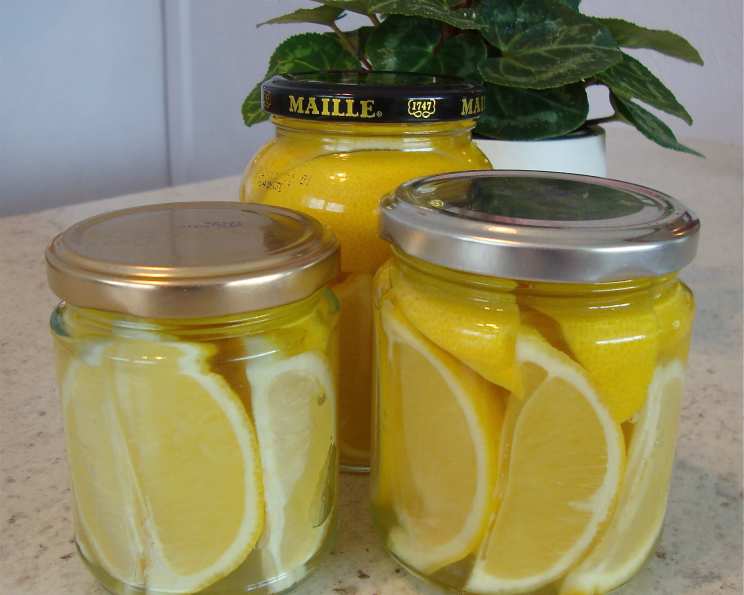
Preserved Sunshine: The Art of Pickled Lemons
My grandmother, a formidable cook with a pantry that could rival a small grocery store, always had a jar of these luminous, puckering jewels tucked away on a shelf. I remember being fascinated by their intense yellow color, somehow concentrated and amplified by the brine. As a child, I dared to taste one straight from the jar – a mistake I wouldn’t repeat! But that initial shock gave way to a lifelong appreciation for the complex, salty, sour, and subtly floral flavor that only pickled lemons can deliver. Now, I find myself reaching for them constantly to add a bright, unexpected twist to countless dishes.
Recipe Overview
- Prep Time: 15 minutes
- Cook Time: 6 minutes
- Total Time: 26 minutes (plus 1 month for pickling)
- Yields: 2-3 jars
- Dietary Type: Vegan, Gluten-Free
Ingredients
- 5-6 lemons
- 1 cup water
- 1 cup white vinegar
- ½ teaspoon coarse salt
Equipment Needed
- Sterilized Jars (2-3, depending on size)
- Large Pot
Instructions
- Begin by thoroughly washing the lemons. This is crucial to remove any surface dirt or wax.
- Slice each lemon from tip to tip into approximately six slices. Aim for even slices to ensure consistent pickling.
- Pack the lemon slices tightly into the sterilized jars. Sterilizing the jars is essential for preventing spoilage. You can do this by bringing the jars and lids to a boil in a large pot of water for 10 minutes. Remove carefully and allow to cool slightly before packing.
- In a separate large pot, combine the water, salt, and white vinegar.
- Bring the mixture to a boil over medium-high heat and boil for 6 minutes. This ensures the salt is fully dissolved and the vinegar is properly incorporated.
- Allow the brine to cool slightly. Pouring boiling liquid directly into the jars can cause them to crack.
- Carefully fill the jars with the cooled brine, ensuring the lemon slices are completely submerged. Leave about ½ inch of headspace at the top of the jar.
- Seal the jars tightly with their lids.
- Store the jars in a cool, dark cupboard for approximately one month before using. This allows the lemons to fully pickle and develop their characteristic flavor.
Expert Tips & Tricks
- Choosing Lemons: Opt for lemons with thin skins, as they will become more tender during the pickling process. Meyer lemons are a fantastic choice if available, offering a slightly sweeter and more floral flavor.
- Sterilizing Jars: Proper sterilization is key to preventing mold growth and ensuring a longer shelf life. If you don’t want to boil them, you can also sterilize the jars in an oven at 250°F (120°C) for 20 minutes.
- Salt Selection: Coarse salt is preferred because it dissolves slowly and evenly. Avoid using iodized salt, as it can impart a bitter taste.
- Packing Tightly: Packing the lemon slices tightly into the jars helps to prevent them from floating and ensures they are fully submerged in the brine. This is essential for even pickling.
- Patience is Key: Resist the urge to open the jars before the one-month pickling period is up. The longer they sit, the more intense and complex the flavor will become.
- Burping the Jars: During the first week of pickling, you may want to “burp” the jars daily by briefly opening them to release any built-up gases. This is especially important if you live in a warmer climate.
Serving & Storage Suggestions
Pickled lemons are incredibly versatile and can be used in a variety of dishes. Chop them finely and add them to tagines, stews, and curries for a burst of tangy, salty flavor. They are also delicious in salads, vinaigrettes, and sauces. Try adding a few slices to a cheese board for a unique and unexpected pairing.
Once opened, store the pickled lemons in the refrigerator. They will keep for several months, and the flavor will continue to develop over time. Make sure the lemon slices remain submerged in the brine. If necessary, add a little extra vinegar or water to keep them covered.
Do not consume if there are any signs of mold or spoilage.
Nutritional Information
Here’s an approximate nutritional breakdown per serving (based on consuming approximately 1/6 of the recipe):
| Nutrient | Amount per Serving | % Daily Value |
|---|---|---|
| Calories | 75 kcal | N/A |
| Calories from Fat | 7g | N/A |
| Total Fat | 0.8 g | 1% |
| Saturated Fat | 0.1 g | 0% |
| Cholesterol | 0 mg | 0% |
| Sodium | 594 mg | 24% |
| Total Carbohydrate | 29 g | 9% |
| Dietary Fiber | 13 g | 50% |
| Sugars | 0.1 g | 0% |
| Protein | 3 g | 6% |
Note: Nutritional information is an estimate and may vary based on specific ingredients and serving sizes.
Variations & Substitutions
- Spice It Up: Add a few dried chilies, peppercorns, or bay leaves to the jars for an extra layer of flavor.
- Herb Infusion: Incorporate fresh herbs like rosemary, thyme, or oregano into the brine for a more aromatic pickle.
- Sweet and Sour: Add a tablespoon or two of sugar or honey to the brine for a slightly sweeter pickle.
- Citrus Medley: Use a combination of different citrus fruits, such as lemons, limes, and oranges, for a more complex flavor profile.
- Vinegar Variation: While white vinegar provides a clean taste, consider experimenting with apple cider vinegar for a slightly fruity note.
FAQs (Frequently Asked Questions)
Q: Why do I need to sterilize the jars?
A: Sterilizing the jars eliminates bacteria and other microorganisms that can cause spoilage, ensuring the pickled lemons are safe to eat and have a longer shelf life.
Q: Can I use regular table salt instead of coarse salt?
A: While you can, coarse salt is preferred as it dissolves more slowly and evenly. Iodized table salt can sometimes impart a bitter taste to the pickles.
Q: How long do I need to wait before eating the pickled lemons?
A: It’s best to wait at least one month before opening the jars. This allows the lemons to fully pickle and develop their characteristic flavor.
Q: What if the lemon slices float to the top of the jar?
A: Ensure the lemon slices are packed tightly into the jars and are fully submerged in the brine. If they still float, you can use a sterilized weight (such as a small glass pebble) to keep them submerged.
Q: Can I reuse the brine after I’ve eaten all the lemons?
A: While you can reuse the brine, it will likely be less flavorful than the original. It’s best to discard the brine after the lemons have been consumed.
Final Thoughts
Preserving lemons is a surprisingly simple process that yields a truly exceptional ingredient. The bright, tangy, and slightly salty flavor of pickled lemons can elevate countless dishes, adding a unique and unforgettable touch. Don’t be intimidated – give this recipe a try and experience the magic of preserved sunshine for yourself. Experiment with different variations, share your creations with friends and family, and let me know what you think! They add an incredible zing to everything from chicken tagines to a simple grilled fish. Happy pickling!