
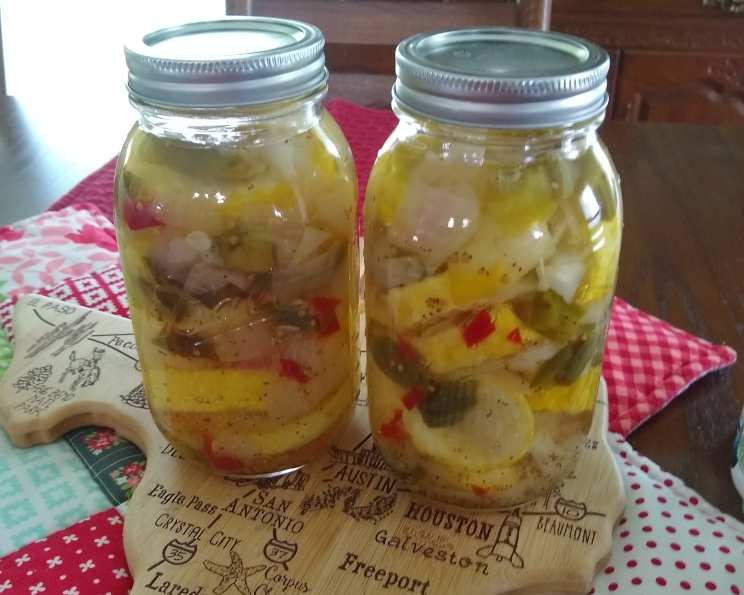
Zesty Sunshine in a Jar: The Delights of Pickled Yellow Squash
I can still remember the first time I saw a jar of pickled yellow squash. It was at a potluck, a kaleidoscope of vibrant hues glistening under the afternoon sun. While everyone else gravitated toward the potato salad and barbecue, I was drawn to this unassuming jar. One bite, and I was hooked. The crispness, the sweet-and-sour tang, the gentle spice – it was a flavor explosion that transported me straight to summer. Now, after many years of honing my culinary skills, I’m excited to share a recipe that perfectly captures that memorable taste.
Recipe Overview
- Prep Time: 1 hour 15 minutes
- Cook Time: 15 minutes
- Total Time: 2 hours 30 minutes
- Yields: Approximately 2 quarts (amount may vary)
- Dietary Type: Vegetarian, Gluten-Free
Ingredients
- 8 cups yellow squash, sliced thickly (approximately 8 medium squash)
- 2 cups onions, peeled and cut into large chunks
- 1 cup green pepper, seeded and cut into large chunks
Brine:
- 1 teaspoon celery seed
- 1 teaspoon mustard seeds
- 2 teaspoons pimientos, chopped
- 2 cups white vinegar
- 3 cups sugar
Equipment Needed
- Large pot
- Paper towels
- Boiling water bath canner
- Jars (2 quart-sized or equivalent), lids, and bands
Instructions
-
Begin by preparing the yellow squash. Place the sliced squash in a large pot. Liberally salt the squash. Let it stand for one hour. This process draws out excess moisture and firms up the squash.
-
After an hour, drain the liquid that has accumulated in the pot. This liquid contains a significant amount of the moisture we want to remove.
-
Now comes the essential step of drying the squash. Use paper towels to wipe the squash thoroughly. The goal is to remove as much salt as possible without washing the squash. The salt helps with preservation, so rinsing it off completely is not recommended.
-
While the squash is draining and drying, prepare the brine. In a large pot, combine the celery seed, mustard seeds, chopped pimientos, white vinegar, and sugar.
-
Add the green pepper to the brine mixture and bring the brine to a boil over medium-high heat.
-
Next, add the drained and dried squash and onion chunks to the boiling brine.
-
Return the mixture to a boil, stirring occasionally to ensure even cooking.
-
Once the mixture has returned to a boil, remove it from the heat.
-
Carefully transfer the pickled squash mixture into prepared jars, leaving 1/2 inch headspace at the top of each jar. This headspace is crucial for proper sealing during processing.
-
Place lids on the jars, and screw on the bands finger-tight. Avoid over-tightening, as this can prevent the jars from sealing correctly.
-
Process the jars in a boiling water bath for the recommended time based on your elevation:
- 5 minutes for elevations up to 1000 feet
- 10 minutes for elevations from 1001 to 6000 feet
- 15 minutes for elevations above 6000 feet
Maintain a gentle, rolling boil throughout the processing time.
-
Once the processing time is complete, carefully remove the jars from the boiling water bath using jar lifters. Place the jars on a towel-lined surface, allowing them to cool completely. As the jars cool, you should hear a “pop” sound as the lids seal.
-
After the jars have cooled, check the seals by pressing down on the center of each lid. If the lid doesn’t flex or make a popping sound, it’s properly sealed. If a jar didn’t seal, refrigerate it and consume the contents within a few weeks.
-
Store the sealed jars in a cool, dark place for optimal preservation.
Expert Tips & Tricks
- Squash Selection: Choose firm, young yellow squash with smooth skins. Avoid squash that are overly large or have blemishes.
- Salt Quantity: Don’t be afraid to salt the squash generously. The salt is essential for drawing out moisture and firming up the squash.
- Brine Consistency: Adjust the sugar in the brine to your preference. If you prefer a tangier pickle, reduce the sugar slightly.
- Jar Preparation: Ensure that your jars are thoroughly clean and sterilized before filling them. This helps to prevent spoilage.
- Altitude Adjustment: Adjust processing times according to your altitude to ensure safe preservation.
Serving & Storage Suggestions
Pickled yellow squash is a versatile condiment that can be enjoyed in many ways. Serve it as a side dish alongside grilled meats, sandwiches, or salads. It also makes a delicious addition to charcuterie boards or relish trays.
Once opened, a jar of pickled yellow squash should be stored in the refrigerator. Properly sealed and stored jars can last for up to a year in a cool, dark place. Refrigerated jars should be consumed within a few weeks.
Nutritional Information
(Please note that these values are estimates and may vary based on specific ingredients and portion sizes.)
| Nutrient | Amount per Serving | % Daily Value |
|---|---|---|
| Calories | 692 kcal | 35% |
| Total Fat | 1.25g | 2% |
| Saturated Fat | 0.3g | 1% |
| Cholesterol | 0mg | 0% |
| Sodium | 32.75mg | 1% |
| Total Carbohydrate | 168.45g | 56% |
| Dietary Fiber | 4.65g | 19% |
| Sugars | 160.75g | 643% |
| Protein | 4.45g | 9% |
Variations & Substitutions
- Spicy Pickles: Add a pinch of red pepper flakes or a chopped jalapeño pepper to the brine for a spicy kick.
- Herbed Pickles: Incorporate fresh herbs like dill, thyme, or oregano into the jars for added flavor.
- Sweet and Sour: Experiment with different vinegars, such as apple cider vinegar or rice vinegar, for a slightly different flavor profile.
- Colorful Crunch: Include other vegetables like carrots, bell peppers of different colors, or cauliflower florets for a more visually appealing and texturally diverse pickle.
- Sugar Alternatives: For a sugar-free option, try using a sugar substitute like erythritol or stevia, keeping in mind that the taste may vary.
FAQs (Frequently Asked Questions)
Q: Why do I need to salt the squash for an hour?
A: Salting the squash helps to draw out excess moisture, which results in a firmer and crisper pickle. It also aids in preservation.
Q: Can I use different types of vinegar?
A: Yes, you can experiment with other vinegars like apple cider vinegar or rice vinegar for slightly different flavor profiles.
Q: How long can I store the pickled squash?
A: Properly sealed jars can be stored in a cool, dark place for up to a year. Once opened, refrigerate and consume within a few weeks.
Q: What do I do if a jar doesn’t seal properly?
A: If a jar doesn’t seal, refrigerate it immediately and consume the contents within a few weeks. It’s not safe to store unsealed jars at room temperature.
Q: Can I adjust the amount of sugar in the brine?
A: Yes, you can adjust the sugar to your preference. If you prefer a tangier pickle, reduce the sugar slightly.
Final Thoughts
Pickling yellow squash is a simple yet rewarding process that allows you to capture the vibrant flavors of summer in a jar. This recipe is a great starting point, and I encourage you to experiment with different herbs, spices, and vegetables to create your own unique variations. Don’t hesitate to share your feedback and experiences – I’m always eager to hear how you’ve made this recipe your own! Why not serve this delightful pickled squash alongside some grilled chicken or a crusty loaf of bread for a truly satisfying meal? Enjoy!