
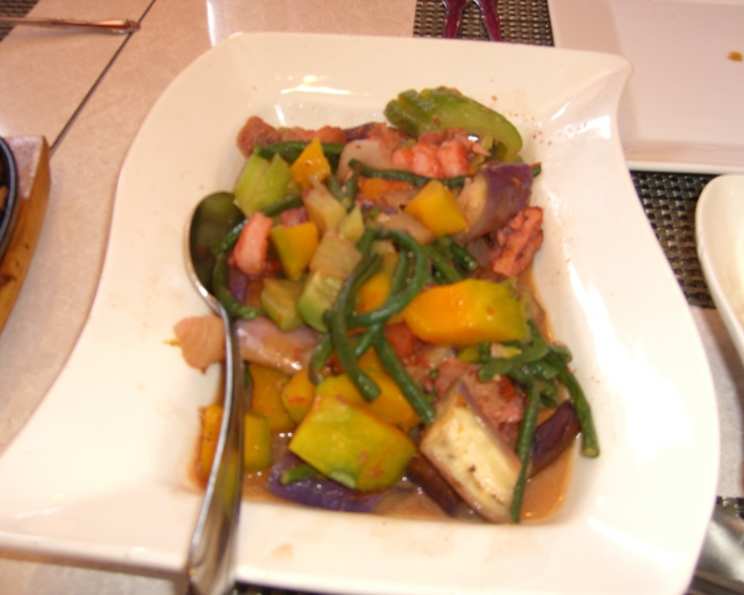
Pinakbet: A Taste of Home
The smell of bagoong alamang simmering on the stove instantly transports me back to my Lola’s (grandmother’s) kitchen in the Philippines. I remember sitting on the floor, watching her expertly chop vegetables while telling stories of our ancestors. Pinakbet wasn’t just a dish; it was a culinary hug, a reminder of family, and a taste of the Ilocos region that I carried with me, no matter where I went. The earthy aroma of the shrimp paste mingling with the sweetness of the squash and the slight bitterness of the melon – it’s a symphony of flavors that defines home.
Recipe Overview
- Prep Time: 20 minutes
- Cook Time: 30 minutes
- Total Time: 50 minutes
- Servings: 4-6
- Dietary Type: Adaptable (see variations)
Ingredients
- 1/2 lb pork, sliced
- 2 tablespoons vegetable oil
- 3 garlic cloves, minced
- 1 onion, chopped
- 2 tomatoes, chopped
- 1/2 calabaza squash, cubed
- 2 cups okra, sliced
- 2 cups Chinese long beans, chopped
- 2 Japanese eggplants, sliced
- 1 bitter melon, sliced (optional)
- 1 – 1 1/2 cup water
- 2-3 tablespoons bagoong alamang (salted shrimp paste)
Equipment Needed
- Large, deep skillet or casserole dish
- Cutting board
- Knife
Instructions
-
In a large, deep skillet or casserole dish, heat the vegetable oil over medium heat. Add the sliced pork and cook until it turns slightly brown on all sides. This step is crucial for developing a rich, savory base for the dish. Don’t overcrowd the pan; cook the pork in batches if necessary to ensure even browning.
-
Add the minced garlic, chopped onions, and chopped tomatoes to the skillet. Sauté for a few minutes, stirring occasionally, until the tomatoes have softened and wilted and the onions are translucent. This process releases the aromatic compounds from the garlic and onions, infusing the entire dish with flavor.
-
Add the cubed calabaza squash and sliced okra to the skillet. Stir-fry for a minute or two to coat the vegetables with the oil and begin the cooking process. This initial stir-frying helps to bring out the natural sweetness of the squash and the slightly grassy flavor of the okra.
-
Add the remaining vegetables: the chopped Chinese long beans, sliced Japanese eggplants, and sliced bitter melon (if using). Gently stir to combine all the ingredients, ensuring that the vegetables are evenly distributed.
-
Pour in the water and add the bagoong alamang (salted shrimp paste). Bring the mixture to a boil, then immediately lower the heat to a simmer. The bagoong alamang is the heart and soul of pinakbet, providing its signature salty, umami-rich flavor. Start with the smaller amount and adjust to taste later.
-
Cover the skillet or casserole dish and simmer over low heat until the vegetables are tender, but not mushy. This usually takes about 20-25 minutes. The key is to maintain a gentle simmer, allowing the vegetables to cook slowly and evenly. Periodically check the vegetables for doneness by piercing them with a fork.
-
Taste the pinakbet and adjust the seasoning as needed. If you prefer a stronger flavor, add a little more bagoong alamang, a teaspoon at a time. Be careful not to over-salt, as the bagoong is already quite salty. Gently stir to blend the additional bagoong into the dish.
-
Once the vegetables are tender and the flavors have melded together, immediately remove the pinakbet from the heat to prevent overcooking.
-
Transfer the pinakbet to a serving dish and serve hot alongside steamed rice. The warmth of the rice complements the savory flavors of the pinakbet beautifully.
Expert Tips & Tricks
- Vegetable Prep: Cut the vegetables into roughly the same size pieces to ensure even cooking.
- Bagoong Adjustment: Add the bagoong alamang gradually. Its intensity can vary.
- Pork Alternatives: Chicken or shrimp can substitute pork.
- Bitterness Reduction: Soak the bitter melon in salted water for 30 minutes to reduce its bitterness.
- Umami Boost: A splash of fish sauce (patis) can enhance the savory flavor if you’re hesitant about too much bagoong.
Serving & Storage Suggestions
Pinakbet is best served hot, right after cooking. It’s traditionally paired with steamed white rice, which provides a neutral base to balance the rich flavors of the stew.
Leftover pinakbet can be stored in an airtight container in the refrigerator for up to 3 days. To reheat, simply microwave or warm it gently in a skillet over low heat, adding a splash of water if needed to prevent it from drying out. Freezing is not recommended as it can alter the texture of the vegetables.
Nutritional Information
| Nutrient | Amount per Serving | % Daily Value |
|---|---|---|
| Calories | 250 kcal | 13% |
| Total Fat | 12g | 18% |
| Saturated Fat | 4g | 20% |
| Cholesterol | 40mg | 13% |
| Sodium | 600mg | 26% |
| Total Carbohydrate | 20g | 7% |
| Dietary Fiber | 8g | 32% |
| Sugars | 6g | N/A |
| Protein | 15g | 30% |
Note: Nutritional information is an estimate and may vary based on specific ingredients and portion sizes.
Variations & Substitutions
- Vegetarian Pinakbet: Omit the pork entirely. You can add tofu or tempeh for added protein.
- Vegan Pinakbet: Omit the pork and ensure the bagoong alamang you use is vegan. Some versions are made with fermented soybeans instead of shrimp.
- Seafood Pinakbet: Substitute the pork with shrimp or other seafood for a lighter flavor.
- Regional Variations: Some regions add other vegetables like string beans, winged beans (sigarilyas), or lima beans.
- Spice it up: Add a chopped chili pepper (like bird’s eye chili) for a spicy kick.
- No Bitter Melon: If you really dislike bitter melon, you can omit it entirely.
FAQs (Frequently Asked Questions)
Q: Can I use dried shrimp paste instead of bagoong alamang?
A: While bagoong alamang is the traditional ingredient, dried shrimp paste can be used as a substitute. Rehydrate it in a bit of warm water before adding it to the dish.
Q: How do I prevent the vegetables from becoming overcooked?
A: Monitor the vegetables closely and cook them until they are tender-crisp. Avoid over-stirring, as this can cause them to break down.
Q: Can I make pinakbet ahead of time?
A: Yes, you can make pinakbet a day in advance. The flavors will actually meld together even more overnight. Reheat gently before serving.
Q: What if I can’t find calabaza squash?
A: Butternut squash or kabocha squash can be used as substitutes for calabaza squash.
Q: How can I reduce the saltiness of the dish if I added too much bagoong?
A: Adding a little sugar or a squeeze of lemon juice can help balance the saltiness. You can also add more vegetables to dilute the flavor.
Final Thoughts
Pinakbet is more than just a dish; it’s a celebration of Filipino flavors and a connection to our roots. Don’t be intimidated by the unique ingredients like bagoong alamang or bitter melon – embrace the challenge and experiment with this versatile recipe. I encourage you to try this recipe, adapt it to your liking, and share it with your loved ones. I guarantee it’ll be a culinary adventure that’s both delicious and deeply satisfying. Feel free to leave a comment and let me know how it turned out!