
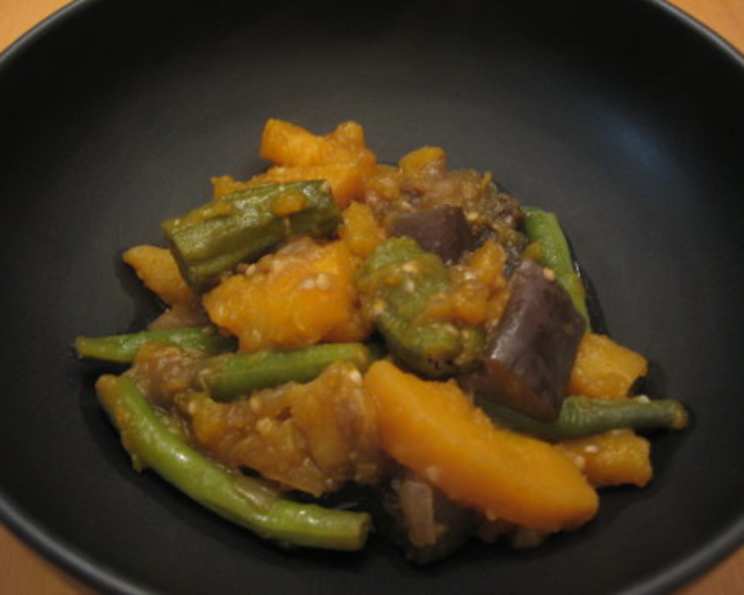
Pinakbet: A Taste of Home
My grandmother, Lola Ising, had a garden bursting with life. Towering tomato plants, sprawling squash vines, and vibrant okra stalks were her pride and joy. As a child, I remember her patiently guiding me through the rows, teaching me the names of each vegetable. But more than the gardening lessons, it was the aroma of Pinakbet simmering on her stovetop that truly etched itself into my memory – a comforting scent that spoke of love, family, and the simple joys of life. The slightly bitter notes of the eggplant, the earthy sweetness of the squash, and the savory depth of the bagoong (fermented shrimp paste) all mingled together to create a symphony of flavors that transported me straight back to her warm kitchen.
Recipe Overview
- Prep Time: 20 minutes
- Cook Time: 25 minutes
- Total Time: 45 minutes
- Servings: 4-6
- Dietary Type: Varies (Can be Vegetarian/Pescatarian)
Ingredients
- 1 lb Japanese eggplant, cut into 2-inch sections
- Salt, to taste
- 5 ounces long beans, trimmed, cut into 3-inch lengths
- 5 pieces fresh ginger, quarter-sized
- 3 garlic cloves, minced
- 1 medium onion, chopped
- 4 teaspoons Japanese soy sauce
- 1 1/2 lbs red squash, peeled, seeded and cubed
- 10 whole okra, trimmed
- 2 cups water
Equipment Needed
- Large pot or wok
- Cutting board
- Knife
- Measuring spoons and cups
Instructions
-
Begin by preparing your aromatic base. In a large pot or wok, gently brown the ginger, garlic, and onions over medium heat. This process typically takes about 5-7 minutes, stirring frequently to prevent burning, until the onions are translucent and fragrant. This step is essential for building depth of flavor.
-
Next, add 2 cups of water to the pot. Increase the heat to high and bring the liquid to a boil. This creates the base for the stew.
-
Once the water is boiling, add all the remaining ingredients: the Japanese eggplant, long beans, red squash, and okra. Gently stir to combine everything.
-
Reduce the heat to medium-low. The goal is a gentle, consistent simmer. Simmer the Pinakbet vigorously for 20 minutes, stirring often. Regular stirring prevents the vegetables from sticking to the bottom of the pot and ensures even cooking.
-
Check for doneness. The Pinakbet is ready when the liquid has thickened and the vegetables are tender. The squash should be easily pierced with a fork, and the eggplant should be soft.
-
Taste and adjust seasoning. Add salt, if necessary, to taste. Remember that soy sauce also contributes saltiness, so add it sparingly.
-
Before serving, remove the ginger pieces. While they’ve imparted their flavor, they are not typically eaten.
Expert Tips & Tricks
- Bagoong Boost: For a truly authentic Pinakbet experience, consider adding 1-2 tablespoons of bagoong (fermented shrimp paste) during the simmering process. This adds a salty, umami-rich depth of flavor that is characteristic of the dish. Be cautious with the amount, as bagoong can be quite strong.
- Vegetable Variety: Feel free to customize the vegetable medley to your liking. Other popular additions include bitter melon (ampalaya), string beans, tomatoes, and even pork belly for a non-vegetarian version.
- Don’t Overcook: Be careful not to overcook the vegetables. They should be tender but still retain some texture. Overcooked vegetables will become mushy and unappetizing.
- Spice it Up: If you like a little heat, add a few chopped chili peppers to the pot during the simmering process.
- Make-Ahead Tip: Pinakbet can be made ahead of time. The flavors actually meld and deepen as it sits. Simply store it in the refrigerator and reheat before serving.
Serving & Storage Suggestions
Serve Pinakbet hot, ideally with a generous serving of steamed rice. The rice acts as a blank canvas to soak up the flavorful sauce and complements the vegetables perfectly. It can also be served as a side dish alongside grilled fish or meat.
Leftover Pinakbet can be stored in an airtight container in the refrigerator for up to 3-4 days. To reheat, simply warm it in a pot over medium heat, stirring occasionally, until heated through. You can also reheat it in the microwave. While freezing is possible, the vegetables may lose some of their texture.
Nutritional Information
| Nutrient | Amount per Serving | % Daily Value |
|---|---|---|
| Calories | 150 kcal | 8% |
| Total Fat | 3g | 5% |
| Saturated Fat | 0.5g | 3% |
| Cholesterol | 0mg | 0% |
| Sodium | 400mg | 17% |
| Total Carbohydrate | 25g | 9% |
| Dietary Fiber | 8g | 32% |
| Sugars | 10g | – |
| Protein | 6g | 12% |
Note: Nutritional information is an estimate and may vary based on specific ingredients and portion sizes.
Variations & Substitutions
- Vegetarian Pinakbet: Ensure your soy sauce is vegetarian friendly. Some brands contain fish products. Omit the bagoong if using, or substitute with a vegetarian shrimp paste alternative.
- Vegan Pinakbet: As above, ensure vegetarian soy sauce is used and omit bagoong or substitute with a vegan alternative.
- Protein Power-Up: Add diced pork belly, shrimp, or tofu for added protein. Adjust cooking times accordingly.
- Regional Twists: Different regions in the Philippines have their own variations of Pinakbet. Experiment with adding other local vegetables like sitaw (yardlong beans) or patola (sponge gourd).
- Spicy Pinakbet: Add siling haba (long green chilies) or bird’s eye chilies for a spicy kick. Adjust the amount to your preference.
- Bagoong Monamon Variation: In some regions of the Philippines, particularly Ilocos, Bagoong Monamon (fermented anchovies) is used instead of Bagoong Alamang (fermented shrimp). This gives a different, but equally delicious, flavor profile to the dish. If using Bagoong Monamon, start with a smaller amount as it can be quite strong.
FAQs (Frequently Asked Questions)
Q: Can I use frozen vegetables in Pinakbet?
A: While fresh vegetables are ideal, frozen vegetables can be used in a pinch. Add them towards the end of the cooking time to prevent them from becoming mushy.
Q: How do I prevent the eggplant from becoming bitter?
A: Salting the eggplant before cooking can help draw out some of the bitterness. Simply sprinkle the cut eggplant with salt and let it sit for about 30 minutes, then rinse it with water and pat it dry before adding it to the pot.
Q: What can I use if I can’t find Japanese eggplant?
A: Regular eggplant can be used as a substitute for Japanese eggplant. However, Japanese eggplant tends to be less bitter and has a more delicate texture.
Q: How can I make Pinakbet less salty?
A: If your Pinakbet is too salty, you can try adding a little bit of sugar or vinegar to balance out the flavors. You can also add more vegetables to dilute the saltiness.
Q: Can I use vegetable broth instead of water?
A: Yes, vegetable broth can be used instead of water for a richer flavor. However, be mindful of the salt content of the broth, as it may affect the overall saltiness of the dish.
Final Thoughts
Pinakbet is more than just a vegetable stew; it’s a celebration of Filipino culture, a testament to the resourcefulness of home cooks, and a delicious way to enjoy the bounty of the garden. This recipe is a starting point – feel free to experiment with different vegetables and flavor combinations to create your own unique version. Don’t be afraid to add your personal touch! I encourage you to try this recipe and share the joy of Pinakbet with your family and friends. I would love to hear your feedback and any creative twists you add to the dish.