
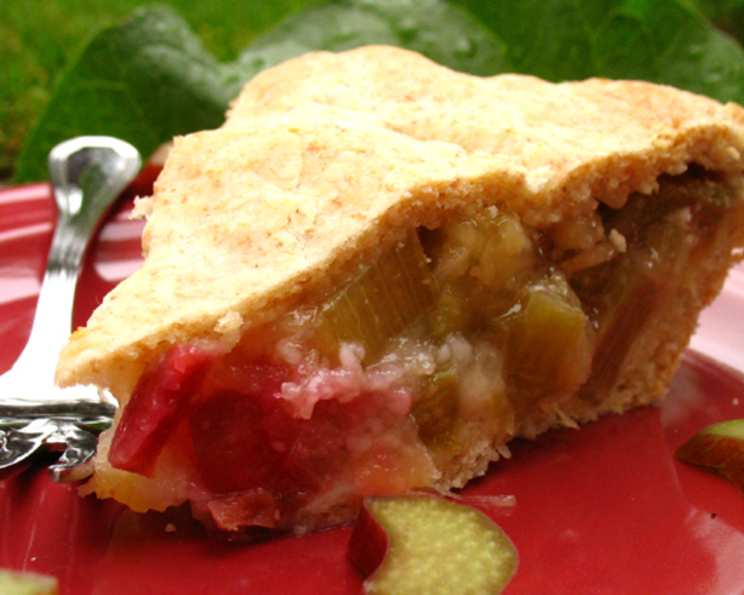
Pineapple Rhubarb Pie: A Taste of Sunshine and Spring
My grandmother, Elsie, always had a rhubarb patch thriving in her backyard. I remember, as a child, the thrill of pulling those vibrant pink and green stalks, knowing that a delicious pie would soon follow. While she mostly made a classic rhubarb pie, every so often, she’d add a secret ingredient – pineapple! It was a revelation, the tangy sweetness of the pineapple perfectly complementing the tart rhubarb. This Pineapple Rhubarb Pie is my attempt to recapture that memory, a delightful dance of flavors in every bite.
Recipe Overview
- Prep Time: 30 minutes
- Cook Time: 45-50 minutes
- Total Time: 1 hour 15 minutes
- Servings: 6-8
- Yield: 1 pie
- Dietary Type: Vegetarian
Ingredients
- 3 cups chopped rhubarb (fresh or frozen)
- 2 (8 ounce) cans crushed pineapple, drained
- 1 1/2 cups sugar
- 3 tablespoons quick-cooking tapioca
- 1 tablespoon lemon juice
- 1/2 teaspoon grated lemon peel
- 1 (15 ounce) package refrigerated pie pastry (or make your own)
Equipment Needed
- 9-inch pie plate
- Large mixing bowl
- Measuring cups and spoons
- Rolling pin (if making your own crust)
- Pizza cutter or knife
Instructions
- In a large mixing bowl, combine the chopped rhubarb, drained crushed pineapple, sugar, quick-cooking tapioca, lemon juice, and grated lemon peel. Mix gently until all ingredients are well combined.
- Let the mixture stand for 15 minutes. This allows the tapioca to start absorbing the juices, which will help thicken the pie filling during baking.
- Preheat your oven to 350 degrees Fahrenheit (175 degrees Celsius).
- Unroll one of the refrigerated pie pastry sheets and carefully line a 9-inch pie plate. Gently press the pastry into the bottom and up the sides of the plate. Trim any excess pastry that hangs over the edge.
- Pour the rhubarb and pineapple filling into the prepared pie crust, distributing it evenly.
- Unroll the remaining pie pastry sheet. You have several options here:
- Option 1 (Classic): Place the entire sheet over the filling. Use a knife or pizza cutter to trim any excess pastry. Cut several slits in the top crust to allow steam to escape during baking.
- Option 2 (Decorative): Use cookie cutters to cut out shapes from the pastry. Arrange the shapes on top of the filling, overlapping them slightly.
- Option 3 (Lattice): Cut the pastry into strips. Weave the strips over and under each other to create a lattice pattern on top of the filling.
- Whether you use a full crust or a decorative topping, gently trim, seal, and flute the edges of the pie. To seal, press the top and bottom crusts together firmly. To flute, use your fingers or a fork to create a decorative crimped edge.
- Bake at 350 degrees Fahrenheit (175 degrees Celsius) for 45-50 minutes, or until the crust is golden brown and the filling is bubbly. If the crust starts to brown too quickly, you can loosely cover the pie with aluminum foil for the last 15-20 minutes of baking.
- Remove the pie from the oven and let it cool completely on a wire rack before slicing and serving. This is crucial, as the filling will continue to thicken as it cools.
- Refrigerate any leftovers.
Expert Tips & Tricks
- Taming the Tartness: If your rhubarb is particularly tart, you can increase the amount of sugar slightly to balance the flavors. Start with an extra 1/4 cup and adjust to your taste.
- Preventing a Soggy Bottom: To prevent a soggy bottom crust, you can blind bake the bottom crust for 10-15 minutes before adding the filling. To blind bake, line the crust with parchment paper and fill it with pie weights or dried beans. This will help the crust to set and prevent it from shrinking during baking. Remove the weights and parchment paper before adding the filling.
- Adding a Buttery Touch: For an extra layer of flavor, dot the top of the filling with small pieces of butter before adding the top crust. This will add richness and help the filling to caramelize slightly.
- Making Ahead: You can prepare the filling a day in advance and store it in the refrigerator. Assemble the pie just before baking.
Serving & Storage Suggestions
This Pineapple Rhubarb Pie is delicious served warm or at room temperature. A scoop of vanilla ice cream or a dollop of whipped cream complements the tartness of the pie perfectly. You can also sprinkle the top with a dusting of powdered sugar for an elegant presentation.
Leftovers should be stored in the refrigerator, covered tightly, for up to 3 days. You can also freeze the baked pie for up to 2 months. To reheat, thaw the pie in the refrigerator overnight and then warm it in a 350 degrees Fahrenheit (175 degrees Celsius) oven for 15-20 minutes, or until heated through.
Nutritional Information
| Nutrient | Amount per Serving | % Daily Value |
|---|---|---|
| Calories | 620.5 kcal | N/A |
| Calories from Fat | 199 g | 32% |
| Total Fat | 22.2 g | 34% |
| Saturated Fat | 5.5 g | 27% |
| Cholesterol | 0 mg | 0% |
| Sodium | 390.9 mg | 16% |
| Total Carbohydrate | 103.5 g | 34% |
| Dietary Fiber | 4.2 g | 16% |
| Sugars | 67.5 g | 270% |
| Protein | 5 g | 9% |
Note: Nutritional information is an estimate and may vary based on specific ingredients and preparation methods.
Variations & Substitutions
- Gluten-Free Crust: For a gluten-free option, use a gluten-free pie crust recipe or a store-bought gluten-free pie crust.
- Different Fruits: Experiment with adding other fruits to the filling, such as strawberries, raspberries, or blueberries.
- Spice it Up: Add a pinch of ground ginger or cinnamon to the filling for a warm, spicy flavor.
- Vegan Option: Use a vegan pie crust recipe or a store-bought vegan pie crust. Ensure your sugar is vegan-friendly (some refined sugars are processed using bone char).
FAQs (Frequently Asked Questions)
Q: Can I use frozen rhubarb in this recipe?
A: Yes, you can use frozen rhubarb. There is no need to thaw it. Just add it to the filling as directed.
Q: My pie crust always shrinks when I bake it. What can I do to prevent this?
A: Make sure your pie dough is cold and rested before rolling it out. Also, avoid overworking the dough, as this can cause it to shrink. Docking the crust with a fork before baking can also help.
Q: How do I know when the pie is done?
A: The crust should be golden brown and the filling should be bubbly. You can also insert a knife into the center of the pie – it should come out with only slightly thickened juices.
Q: Can I make this pie without tapioca?
A: The tapioca helps to thicken the filling. If you don’t have tapioca, you can substitute it with cornstarch. Use about 2 tablespoons of cornstarch instead of 3 tablespoons of tapioca.
Q: Why is my pie filling runny?
A: Runny filling can be caused by not using enough thickener (tapioca or cornstarch), not letting the pie cool completely before slicing, or using too much liquid in the filling. Make sure to use the correct amount of thickener and let the pie cool completely before serving.
Final Thoughts
This Pineapple Rhubarb Pie is more than just a dessert; it’s a taste of nostalgia, a reminder of warm summer days and family gatherings. I encourage you to try this recipe and experience the delightful combination of tart and sweet for yourself. Don’t be afraid to experiment with variations and make it your own! Share your creations and feedback – I’d love to hear what you think. Perhaps you’ll find, like I did, that a simple slice of pie can transport you back to cherished memories.