
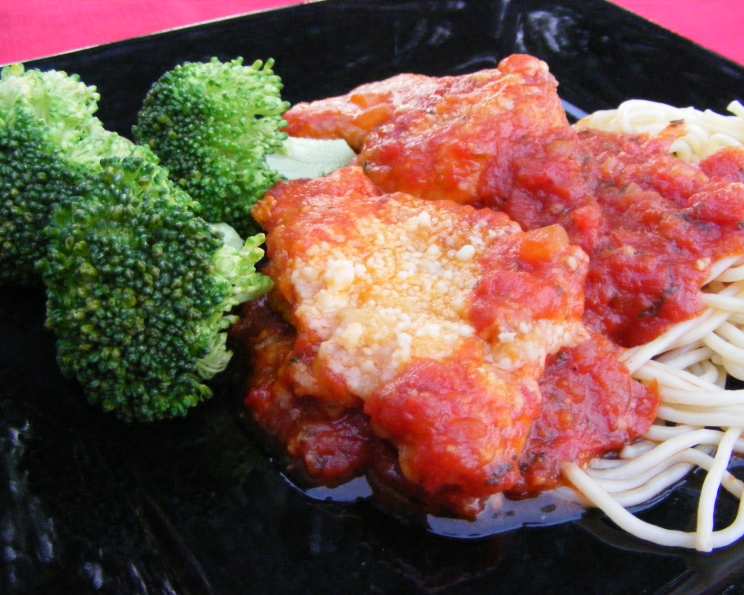
Pioneer Woman’s Comfort Food Classic: Chicken Parmigiana
The first time I tasted truly great Chicken Parmigiana, it wasn’t in a fancy restaurant, but at my Aunt Rose’s Sunday supper. The aroma alone, a heady mix of garlic, tomatoes, and melting cheese, transported me to a place of pure culinary bliss. I remember sneaking extra bites of the crispy, cheesy chicken, savoring every layer of flavor, while Aunt Rose beamed, clearly enjoying the simple joy of feeding her family. It’s a memory – and a dish – I’ve treasured ever since.
Recipe Overview
- Prep Time: 20 minutes
- Cook Time: 1 hour
- Total Time: 1 hour 20 minutes
- Servings: 4-6
- Dietary Type: Not Gluten-Free
Ingredients
- 1 lb skinless chicken breast (4-6 pieces, trimmed and pounded flat)
- 1/2 cup all-purpose flour
- Salt & pepper (to taste)
- 1/2 cup olive oil
- 2 tablespoons butter
- 1 medium onion, chopped
- 4 garlic cloves, minced
- 3/4 cup white wine (red is fine too)
- 3 (14 1/2 ounce) cans crushed tomatoes
- 2 tablespoons sugar
- 1/4 cup fresh parsley, chopped
- 1 cup Parmesan cheese, freshly grated
Equipment Needed
- Large Plate
- Large Skillet with lid
- Meat Mallet or Rolling Pin
- Pasta Pot (optional, if serving with pasta)
Instructions
-
Begin by preparing the chicken. Place the chicken breasts between two sheets of plastic wrap and pound them to an even thickness of about 1/4 inch. This helps them cook quickly and evenly.
-
On a large plate, combine the flour, salt, and pepper. Mix thoroughly.
-
Dredge each flattened chicken breast in the flour mixture, ensuring it’s fully coated. Shake off any excess flour. This coating will help the chicken brown beautifully in the skillet.
-
In a large skillet (preferably one with a lid), heat the olive oil and butter together over medium heat. Allow the butter to melt completely and the mixture to get hot but not smoking.
-
Carefully place the flour-dredged chicken breasts in the hot oil and butter mixture. Fry the chicken until golden brown on each side, about 2 to 3 minutes per side. The flour coating will give the chicken a lovely crispy texture.
-
Remove the chicken breasts from the skillet and set aside. Keep them warm while you prepare the sauce. An oven set to a low temperature (around 200°F) works well for this.
-
Without cleaning the skillet (all those browned bits are flavor gold!), add the chopped onion and minced garlic. Gently stir for about 2 minutes, until the onion is softened and translucent and the garlic is fragrant. Be careful not to burn the garlic.
-
Pour in the white wine (or red wine, if preferred). Use a spatula to scrape the bottom of the pan, loosening all the flavorful bits that have stuck to the bottom. This process, called deglazing, adds depth and complexity to the sauce.
-
Allow the wine to cook down until it’s reduced by half, about 2 minutes. This concentrates the flavor and removes some of the alcohol.
-
Pour in the crushed tomatoes and stir to combine. Add the sugar and season with more salt and pepper to taste. The sugar helps to balance the acidity of the tomatoes.
-
Allow the sauce to cook for 30 minutes, stirring occasionally. This simmering time allows the flavors to meld together beautifully.
-
If you’re serving the Chicken Parmigiana with pasta, cook your choice of linguine, spaghetti, or any other pasta until al dente according to package directions.
-
Toward the end of the sauce cooking time, add the chopped parsley and give the sauce a final stir. The parsley adds a fresh, vibrant flavor.
-
Carefully lay the fried chicken breasts on top of the tomato sauce in the skillet. Completely cover them in freshly grated Parmesan cheese. Don’t be shy with the cheese!
-
Place the lid on the skillet and reduce the heat to low. Allow the Parmigiana to simmer until the cheese is melted and the chicken is thoroughly heated through, about 5-10 minutes. Add more cheese to taste, if desired.
-
To serve, place the cooked pasta on a plate and cover with the tomato sauce. Place a chicken breast on top of the sauce and sprinkle with more parsley. Alternatively, you can simply place the chicken on a plate and dig in.
-
Serve immediately and enjoy!
Expert Tips & Tricks
- Pounding the chicken: Don’t skip this step! It ensures even cooking and tenderizes the chicken.
- Browning the chicken: A good sear on the chicken adds tremendous flavor. Don’t overcrowd the pan; cook in batches if necessary.
- Sauce consistency: If the sauce is too thick, add a splash of water or chicken broth. If it’s too thin, simmer for a few more minutes without the lid.
- Cheese: Freshly grated Parmesan is a must for the best flavor and melting.
- Make-Ahead Tip: The sauce can be made a day or two in advance. Store it in the refrigerator and reheat before adding the chicken.
Serving & Storage Suggestions
Serve the Chicken Parmigiana immediately while it’s hot and the cheese is melted. Garnish with fresh parsley for a pop of color and flavor.
Leftovers can be stored in an airtight container in the refrigerator for up to 3 days. Reheat in the microwave or in a skillet over low heat. To reheat in the oven, place the Chicken Parmigiana in a baking dish, cover with foil, and bake at 350°F until heated through.
Freezing is not recommended as the texture of the chicken and sauce may change upon thawing.
Nutritional Information
| Nutrient | Amount per Serving | % Daily Value |
|---|---|---|
| Calories | 760 kcal | N/A |
| Total Fat | 44g | 67% |
| Saturated Fat | 12.5g | 62% |
| Cholesterol | 110.1mg | 36% |
| Sodium | 978.7mg | 40% |
| Total Carbohydrate | 46.7g | 15% |
| Dietary Fiber | 6.9g | 27% |
| Sugars | 8.2g | N/A |
| Protein | 41.1g | 82% |
Note: Nutritional information is an estimate and may vary based on specific ingredients and portion sizes.
Variations & Substitutions
- Gluten-Free: Use gluten-free flour for dredging the chicken and serve with gluten-free pasta or zucchini noodles.
- Vegetarian: Substitute the chicken breasts with eggplant slices, breaded and fried in the same manner.
- Spicy: Add a pinch of red pepper flakes to the tomato sauce for a little heat.
- Different Cheese: Use a combination of Parmesan, mozzarella, and provolone for a more complex cheese flavor.
- Herbs: Experiment with different herbs in the sauce, such as basil, oregano, or thyme.
FAQs (Frequently Asked Questions)
Q: Can I use canned diced tomatoes instead of crushed tomatoes?
A: Yes, you can, but the sauce will have a chunkier texture. If you prefer a smoother sauce, you can blend the diced tomatoes before adding them to the skillet.
Q: Can I bake the Chicken Parmigiana instead of simmering it in the skillet?
A: Absolutely! After placing the chicken on top of the sauce and covering it with Parmesan, transfer the skillet to a 375°F oven and bake for 15-20 minutes, or until the cheese is melted and bubbly and the chicken is heated through.
Q: Can I use dried parsley instead of fresh?
A: While fresh parsley provides a brighter flavor, you can use dried parsley in a pinch. Use about 1 tablespoon of dried parsley in place of the 1/4 cup of fresh parsley.
Q: What’s the best way to prevent the chicken from becoming dry?
A: Pounding the chicken to an even thickness ensures that it cooks quickly and evenly, preventing it from drying out. Also, be careful not to overcook the chicken when frying it. It should be golden brown but not cooked all the way through. It will finish cooking in the sauce.
Q: Can I add vegetables to the sauce?
A: Certainly! Feel free to add other vegetables to the sauce, such as bell peppers, mushrooms, or zucchini. Add them to the skillet along with the onions and garlic and sauté until softened.
Final Thoughts
Chicken Parmigiana is more than just a recipe; it’s an experience. The crispy, cheesy chicken, the rich tomato sauce, the comforting aroma – it all comes together to create a dish that’s both satisfying and soul-warming. So, gather your ingredients, put on some music, and get ready to create a little bit of magic in your kitchen. Don’t be afraid to experiment and make it your own. And most importantly, share it with the people you love. Buon appetito!