
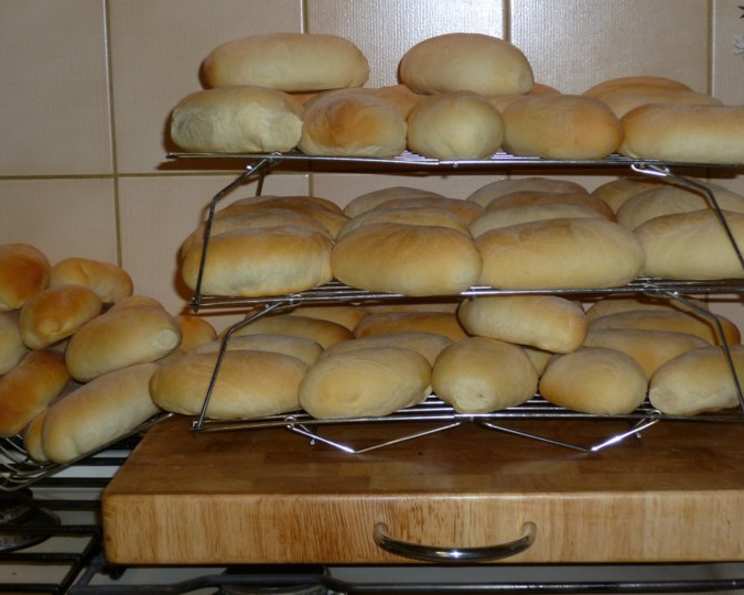
Piragi: Savory Latvian Bacon Rolls
The scent of baking bread alone can transport me, but the aroma of these Piragi – those little pockets of bacon-filled goodness – takes me straight back to my childhood. I can almost see my grandmother, vecmāmiņa, her hands dusted with flour, meticulously folding each roll. It wasn’t just the taste, though that was incredible; it was the feeling of warmth, of being utterly loved and cared for, that these savory rolls evoked. Every bite is a comforting memory, a connection to my heritage, and a reminder of the simple joy of sharing good food with family.
Recipe Overview
- Prep Time: 2 hours
- Cook Time: 10 minutes
- Total Time: 3 hours 15 minutes
- Yields: 100 rolls
- Serves: 50
- Dietary Type: Not specified, contains gluten and dairy
Ingredients
For the Pastry:
- 1/2 cup warm water
- 1 teaspoon sugar
- 2 tablespoons dry yeast
- 2 cups whole milk, scalded
- 1/2 cup oil
- 2 tablespoons sugar
- 1 teaspoon salt
- 2 egg yolks
- 1/2 cup butter
- 2 tablespoons sour cream
- 6 cups flour
- 1 egg, beaten (for egg wash)
For the Filling:
- 1 1/2 lbs bacon, finely diced
- 1/2 lb ham, finely diced
- 1 medium onion, chopped finely
- Salt & pepper to taste
Equipment Needed
- Large saucepan
- Large mixing bowl
- Measuring cups and spoons
- Cookie sheets
- Small drinking glass or cookie cutter
- Frying pan
Instructions
- First, prepare the filling. In a frying pan, fry the diced bacon and ham together for about 5 minutes, until the bacon is cooked but not crispy.
- Add the finely chopped onion to the pan and cook until softened and translucent.
- Drain the mixture well to remove excess grease and cool completely in the refrigerator. This step is important to prevent the filling from making the dough soggy.
- Next, activate the yeast. In a small bowl, sprinkle the dry yeast over the warm water.
- Add 1 teaspoon of sugar to feed the yeast.
- Let stand for 10 minutes, or until the mixture becomes foamy. This indicates that the yeast is active and ready to use.
- Now, prepare the milk mixture. In a saucepan, scald the whole milk. Scalding means heating it until just before it boils; you should see small bubbles forming around the edges of the pan.
- Remove the milk from the heat and add 2 tablespoons of sugar, salt, and butter.
- Allow the mixture to cool until it is lukewarm to the touch. This is crucial because hot milk can kill the yeast.
- In a large mixing bowl, add 3 1/2 cups of flour, the sour cream, the egg yolks, and the activated yeast mixture to the cooled milk mixture.
- Beat with a spoon until the mixture is smooth and shiny.
- Cover the bowl with a clean cloth or plastic wrap and let rest in a warm place for 1 hour. This allows the gluten to relax and the dough to begin its first rise.
- After the first rise, turn the dough out onto a lightly floured board.
- Gradually add the remaining flour, kneading until the dough is elastic and no longer sticky. You may not need all 6 cups of flour; add it gradually until the dough reaches the right consistency.
- Let rise for another 45 minutes.
- Preheat your oven to 400°F (200°C).
- Roll out the dough on a lightly floured surface until it is about 1/4 inch thick.
- Cut circles into the dough using a small drinking glass or cookie cutter. A diameter of about 2-3 inches is ideal.
- Spoon about 1 teaspoon of the cooled bacon and ham filling onto the center of each circle. Be careful not to overfill, as this can make the rolls difficult to seal.
- Fold the dough over to create a half-moon shape.
- Press the edges firmly to seal, and then tuck the seam under to prevent the filling from leaking during baking.
- Place the filled rolls on a greased cookie sheet, leaving some space between each roll.
- In a small bowl, whisk the remaining egg and brush the tops of the rolls with the beaten egg to give them a golden-brown color.
- Let rise for about 20 minutes before baking. This final rise helps to ensure a light and fluffy texture.
- Bake at 400°F (200°C) for 10 minutes, or until the rolls are golden brown. Keep a close eye on them, as baking times may vary depending on your oven.
- Remove the Piragi from the oven and let them cool slightly on the cookie sheet before serving.
Expert Tips & Tricks
- Make-Ahead Tip: The filling can be prepared a day in advance and stored in the refrigerator. This saves time on the day you want to bake the Piragi. You can also freeze the unbaked Piragi on a baking sheet, then transfer them to a freezer bag. Bake from frozen, adding a few minutes to the baking time.
- Dough Consistency: Achieving the right dough consistency is key. If the dough is too sticky, add a little more flour. If it’s too dry, add a splash of milk.
- Even Baking: To ensure even baking, rotate the cookie sheets halfway through the baking time.
- Flavor Boost: For a richer flavor, consider adding a pinch of smoked paprika to the bacon and ham filling.
- Consider adding some sautéed mushrooms to the filling for a heartier, vegetarian-friendly addition.
Serving & Storage Suggestions
Piragi are best served warm, straight from the oven. They make a wonderful snack, appetizer, or light meal. Serve them with a dollop of sour cream or a sprinkle of fresh dill for an extra touch of flavor.
Leftover Piragi can be stored in an airtight container at room temperature for up to 2 days, or in the refrigerator for up to 5 days. To reheat, warm them in the oven at 350°F (175°C) for about 5-10 minutes, or until heated through. You can also reheat them in the microwave, but be careful not to overcook them, as they can become tough. For longer storage, freeze the Piragi in a freezer-safe bag for up to 2 months.
Nutritional Information
| Nutrient | Amount per Serving | % Daily Value |
|---|---|---|
| Calories | 174.2 kcal | N/A |
| Calories from Fat | 101 g | 58% |
| Total Fat | 11.3 g | 17% |
| Saturated Fat | 3.9 g | 19% |
| Cholesterol | 28.1 mg | 9% |
| Sodium | 252 mg | 10% |
| Total Carbohydrate | 13 g | 4% |
| Dietary Fiber | 0.6 g | 2% |
| Sugars | 1.2 g | N/A |
| Protein | 4.9 g | 9% |
Note: Nutritional information is an estimate and may vary based on specific ingredients and preparation methods.
Variations & Substitutions
- Vegetarian Option: Replace the bacon and ham filling with a mixture of sautéed mushrooms, onions, and cheese.
- Spicy Piragi: Add a pinch of red pepper flakes to the filling for a little heat.
- Garlic Lovers: Include some minced garlic in the filling along with the onions.
- Gluten-Free: Use a gluten-free flour blend for the pastry. You may need to adjust the amount of liquid to achieve the right dough consistency.
- Dairy-Free: Substitute the whole milk with a plant-based milk alternative like almond or soy milk. Use a dairy-free butter substitute and omit the sour cream.
- Different Meats: Use ground beef, chicken, or even leftover roast meat in the filling for different flavor profiles.
FAQs (Frequently Asked Questions)
Q: Why is it important to let the dough rest for an hour before kneading?
A: Resting the dough allows the gluten to relax, making it easier to knead into a smooth and elastic dough. This results in a lighter and more tender final product.
Q: Can I use instant yeast instead of active dry yeast?
A: Yes, you can substitute instant yeast for active dry yeast. You don’t need to activate it in water first; just add it directly to the flour mixture. Use the same amount (2 tablespoons).
Q: How do I prevent the filling from leaking out during baking?
A: Make sure to seal the edges of the dough firmly after adding the filling. Tucking the seam under also helps to prevent leakage. Don’t overfill the rolls.
Q: Can I freeze the baked Piragi?
A: Yes, you can freeze baked Piragi. Allow them to cool completely before wrapping them tightly in plastic wrap and placing them in a freezer-safe bag. Reheat in the oven for best results.
Q: My Piragi are browning too quickly. What should I do?
A: If the Piragi are browning too quickly, reduce the oven temperature by 25 degrees and continue baking until they are cooked through. You can also tent them loosely with foil to prevent further browning.
Final Thoughts
These Piragi are more than just bacon rolls; they’re a taste of tradition, a slice of comfort, and a connection to family. Don’t be intimidated by the number of steps; the process is truly rewarding, and the end result is well worth the effort. Gather your ingredients, put on some music, and enjoy the journey of creating these delicious Latvian treasures. I encourage you to try this recipe, share it with loved ones, and feel free to experiment with the fillings and variations to make it your own. And if you do, please share your experiences – I’d love to hear how they turned out! Labu apetīti! (Bon appétit!)