
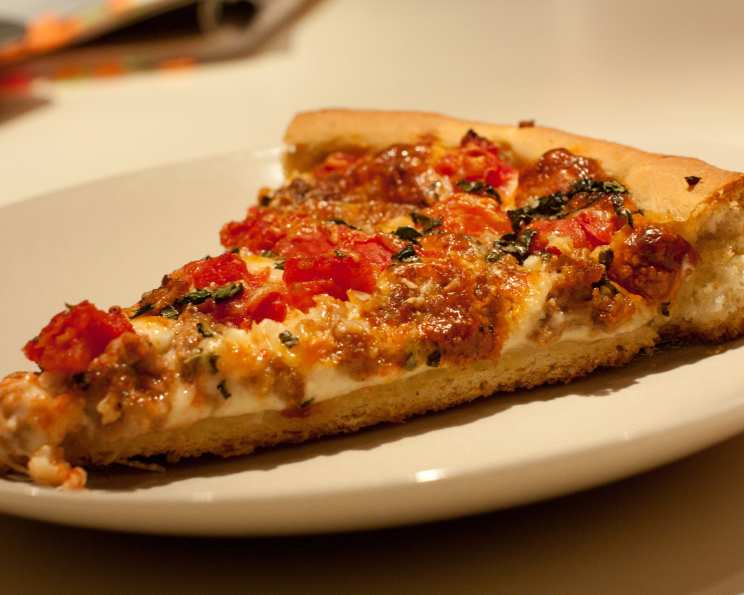
Recreating a Chicago Classic: Pizzeria Uno Deep Dish Pizza
The first time I ever tasted true Chicago deep dish pizza, I was a wide-eyed culinary student on a field trip. The sheer height of the pie, the intensely rich tomato sauce, and the crispy, buttery crust – it was unlike anything I’d ever experienced. I remember thinking, “This isn’t just pizza, it’s an architectural masterpiece you can eat!” That singular experience ignited a lifelong passion for understanding and recreating the magic of Chicago-style pizza, a journey that led me to experiment with countless recipes in pursuit of the perfect rendition of this iconic dish.
Recipe Overview
- Prep Time: 1 hour 15 minutes
- Cook Time: 40-50 minutes
- Total Time: 2 hours 50 minutes
- Servings: 8
- Yield: 1 pie
- Dietary Type: Not Vegetarian
Ingredients
For the Crust (Pan Dough):
- 1 cup warm tap water (110-115 degrees)
- ¼ ounce active dry yeast
- 3 ½ cups flour
- ½ cup coarse ground cornmeal
- 1 teaspoon salt
- ¼ cup vegetable oil
For the Pizza Topping:
- 1 lb mozzarella cheese, sliced thin
- 1 lb Italian sausage, removed from the casing and crumbled
- 1 (14 ½ ounce) can diced tomatoes, drained
- 2 garlic cloves, peeled and minced
- 5 fresh basil leaves, chopped fine
- 4 tablespoons grated parmesan cheese
Equipment Needed
- Large Mixing Bowl
- Spoon
- Plastic Wrap
- Oiled Bowl
- 15-inch Deep Dish Pizza Pan
- Spatula
Instructions
-
Begin by activating the yeast. Pour the warm water into a large mixing bowl and dissolve the yeast with a fork. Ensure the water isn’t too hot, as it can kill the yeast. Patience is key here; give the yeast a few minutes to bloom and become frothy.
-
In the same bowl, add 1 cup of the flour, all of the cornmeal, salt, and vegetable oil. Mix these ingredients thoroughly with a spoon until well combined. The cornmeal contributes to the pizza’s characteristic slightly gritty texture and nutty flavor.
-
Continue stirring in the remaining flour, ½ cup at a time, until the dough begins to pull away from the sides of the bowl. At this point, the dough will likely be shaggy.
-
Flour your hands and your work surface liberally. Turn the dough out onto the floured surface and knead it until it becomes smooth and elastic, and is no longer sticky. This process typically takes 5-7 minutes. Adding flour gradually as needed helps to prevent the dough from becoming too dry.
-
Lightly oil a clean bowl. Place the kneaded dough into the oiled bowl, turning it to coat all sides with the oil. This prevents the dough from drying out as it rises.
-
Cover the bowl tightly with plastic wrap. Let the dough rise in a warm place for 45-60 minutes, or until it has doubled in size. The warmth encourages the yeast to ferment, creating air pockets that make the dough light and airy. A slightly warm oven (turned off, of course!) or a sunny spot works well.
-
Once the dough has doubled, punch it down gently to release the excess air. Briefly knead it again to redistribute the yeast. This step is crucial for achieving an even texture in the final crust.
-
Grease a 15-inch deep-dish pizza pan thoroughly with oil.
-
Press the dough evenly into the prepared pan, ensuring it comes approximately 2 inches up the sides and is consistent in thickness on the bottom. Don’t be afraid to use your fingertips to push the dough into the corners of the pan.
-
Let the dough rise for another 15-20 minutes before adding the fillings. This second rise contributes to the final fluffy texture of the crust.
-
Preheat the oven to 500°F (260°C). A high initial temperature is essential for achieving a crispy crust.
-
While the dough is undergoing its second rise, prepare the pizza topping.
-
Cook the Italian sausage in a skillet over medium heat, breaking it up with a spoon as it cooks. Continue cooking until the sausage is no longer pink, then drain any excess fat. Draining the fat is important to prevent the pizza from becoming greasy.
-
When the dough has completed its second rise, begin layering the toppings. First, evenly distribute the sliced mozzarella cheese over the dough shell, creating a solid base. The cheese acts as a barrier, preventing the crust from becoming soggy from the tomato sauce.
-
Next, distribute the cooked sausage and minced garlic over the layer of cheese.
-
Top the sausage and garlic with the drained diced tomatoes. Make sure that the tomatoes are properly drained, otherwise, it can lead to a soggy pizza.
-
Finally, sprinkle the chopped basil and grated Parmesan cheese evenly over the tomatoes. The basil adds a touch of freshness, while the Parmesan cheese provides a salty, savory flavor.
-
Bake the pizza at 500°F (260°C) for 15 minutes, then reduce the oven temperature to 400°F (200°C) and continue baking for an additional 25-35 minutes, or until the crust is golden brown and the cheese is melted and bubbly.
-
To ensure the crust is cooked through, occasionally lift a section of the crust with a spatula to check its color. The crust should be golden brown underneath.
-
Remove the pizza from the oven and let it cool for a few minutes before slicing and serving.
-
Serve immediately.
Expert Tips & Tricks
- Crispier Crust: For an even crispier crust, consider par-baking the dough for 5-7 minutes before adding the toppings. This will help to prevent the bottom crust from becoming soggy.
- High-Quality Ingredients: Using high-quality ingredients will significantly enhance the flavor of your pizza. Opt for fresh mozzarella, flavorful Italian sausage, and ripe tomatoes.
- Cheese Placement: Layering the cheese directly on the crust helps to protect it from becoming soggy due to the sauce. Don’t skip this crucial step!
- Sausage Pre-Cooking: Pre-cooking the sausage is important to ensure that it is fully cooked through by the time the pizza is done. Draining the excess fat also prevents the pizza from becoming greasy.
- Dough Thickness: Make sure your dough isn’t too thick in the pan. This can lead to an undercooked crust.
Serving & Storage Suggestions
Serve your Chicago deep dish pizza immediately for the best flavor and texture. The melted cheese and crispy crust are at their peak when fresh out of the oven.
To store leftovers, wrap the pizza tightly in plastic wrap or aluminum foil and refrigerate. It will last for up to 3 days in the refrigerator.
To reheat, preheat your oven to 350°F (175°C). Place the pizza slices on a baking sheet and bake for 10-15 minutes, or until heated through. You can also reheat individual slices in a microwave, but the crust will not be as crispy.
Nutritional Information
| Nutrient | Amount per Serving | % Daily Value |
|---|---|---|
| Calories | 677 kcal | N/A |
| Calories from Fat | 330 g | 49% |
| Total Fat | 36.7 g | 56% |
| Saturated Fat | 14.4 g | 72% |
| Cholesterol | 79.4 mg | 26% |
| Sodium | 1377.8 mg | 57% |
| Total Carbohydrate | 54 g | 17% |
| Dietary Fiber | 3 g | 11% |
| Sugars | 2.6 g | N/A |
| Protein | 31.5 g | 63% |
Note: Nutritional information is an estimate and may vary based on specific ingredients and portion sizes.
Variations & Substitutions
- Vegetarian: Omit the sausage and add other vegetables such as mushrooms, bell peppers, onions, and spinach.
- Spicy: Add a pinch of red pepper flakes to the tomato sauce or use spicy Italian sausage.
- Gluten-Free: Use a gluten-free pizza dough recipe or purchase a pre-made gluten-free pizza crust. Be sure to check that all other ingredients are also gluten-free.
- Different Cheese: Experiment with different cheeses such as provolone, fontina, or a blend of Italian cheeses.
- Sauce Variation: Instead of diced tomatoes, use crushed tomatoes or a homemade pizza sauce.
FAQs (Frequently Asked Questions)
Q: Can I make the dough ahead of time?
A: Yes, you can prepare the dough up to 24 hours in advance. After the first rise, punch down the dough, wrap it tightly in plastic wrap, and refrigerate. Allow the dough to come to room temperature for about 30 minutes before pressing it into the pizza pan.
Q: Can I freeze the pizza?
A: Yes, you can freeze the baked pizza. Let it cool completely, then wrap it tightly in plastic wrap and aluminum foil. Freeze for up to 2 months. Reheat in a preheated oven at 350°F (175°C) until heated through.
Q: What is the best way to prevent a soggy crust?
A: Layering the cheese directly on the crust and ensuring that the tomatoes are well-drained helps to prevent a soggy crust. Par-baking the crust for a few minutes before adding the toppings can also help.
Q: Can I use a different size pan?
A: Yes, but you may need to adjust the baking time accordingly. If you use a smaller pan, the pizza may be thicker and require a longer baking time.
Q: Why is my crust not rising enough?
A: Make sure your yeast is fresh and that the water is at the correct temperature (110-115°F). Also, ensure that you are giving the dough enough time to rise in a warm place.
Final Thoughts
Making a Chicago deep dish pizza at home might seem intimidating, but it’s an incredibly rewarding experience. From the aroma of the rising dough to the satisfyingly cheesy first bite, this recipe is sure to impress. Don’t hesitate to experiment with different toppings and variations to create your own signature deep dish masterpiece. Gather your friends and family, pour a glass of your favorite beverage (a crisp Italian beer pairs wonderfully), and enjoy a slice of Chicago right in your own kitchen! I highly encourage you to give this recipe a try, and I’d love to hear about your experience and any creative twists you come up with. Happy baking!