
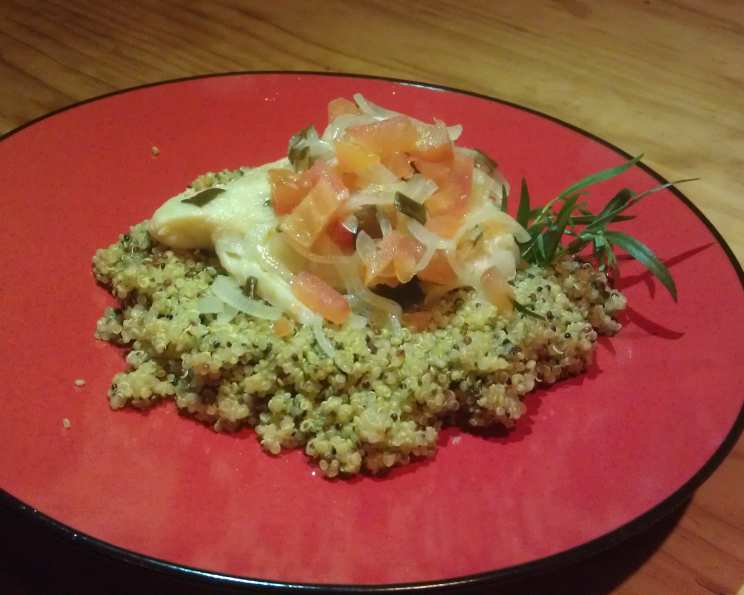
Poached Fillet of Sole: A Delicate Dance of Flavors
I remember my first encounter with poached sole. I was a wide-eyed culinary student, intimidated by the seemingly simple, yet incredibly refined dish. The delicate aroma of white wine, herbs, and perfectly cooked fish wafting from the kitchen was intoxicating. It was a masterclass in subtle flavors, a testament to the idea that less can truly be more. That day, I vowed to master the art of poaching, and this recipe brings me right back to that formative moment.
Recipe Overview
- Prep Time: 15 minutes
- Cook Time: 8 minutes
- Total Time: 23 minutes
- Servings: 2
- Dietary Type: Pescatarian, Gluten-Free, Dairy-Free
Ingredients
- 2 teaspoons olive oil
- ½ onion, finely chopped
- 3 shallots, thinly sliced
- 1 garlic clove, minced
- ¼ cup dry white wine
- 2 teaspoons lemon juice
- 1 teaspoon dried tarragon
- 1 bay leaf
- ⅛ teaspoon black pepper
- 2 (4 ounce) tilapia fillets or other mild fish fillets (sole recommended)
- 1 ½ tomatoes, chopped
Equipment Needed
- Large nonstick skillet
Instructions
-
Begin by heating the olive oil in a large nonstick skillet over medium heat. Make sure the skillet is large enough to accommodate the fish fillets without overcrowding them.
-
Add the finely chopped onion, thinly sliced shallots, and minced garlic to the skillet. Cook, stirring frequently to prevent burning, until the vegetables have softened and become translucent. This should take approximately 5 minutes. The goal is to gently sweat the aromatics, releasing their flavors without browning them excessively.
-
Pour in the dry white wine and lemon juice, then stir in the dried tarragon, bay leaf, and black pepper. Bring the mixture to a gentle simmer. The wine will deglaze the pan, lifting any flavorful browned bits from the bottom and creating a flavorful base for the poaching liquid.
-
Gently place the tilapia fillets (or sole) into the simmering liquid. Use a spoon to carefully spoon the onion mixture over the fillets, ensuring they are partially submerged. This helps to evenly distribute the flavors and keep the fish moist.
-
Reduce the heat to low, cover the skillet, and simmer for about 3 minutes, or until the fish is partially cooked. The cooking time will depend on the thickness of the fillets, so keep a close watch to avoid overcooking.
-
Gently stir in the chopped tomatoes. Cover the skillet again and continue to simmer until the fish is opaque and flakes easily with a fork. This should take another 2 to 3 minutes. Be careful not to overcook the fish; it should be moist and tender.
-
Once the fish is cooked through, remove and discard the bay leaf. This is important, as the bay leaf can become bitter if left in the dish for too long.
-
Serve the poached fillet of sole immediately, topping it generously with the flavorful sauce created during cooking.
Expert Tips & Tricks
- Choosing the right fish: While the recipe calls for tilapia, the star here is really a delicate white fish like sole. Other great substitutes include flounder, cod, or even halibut. The key is to choose a fish with a mild flavor that will allow the other ingredients to shine.
- Don’t overcook! The biggest mistake people make when poaching fish is overcooking it. Fish is done when it flakes easily with a fork and is opaque throughout. It should still be moist and tender, not dry and rubbery.
- Adding acidity: The lemon juice is crucial for balancing the richness of the dish and preventing the fish from tasting bland. Feel free to add a splash more if you prefer a more pronounced citrus flavor. A tiny dash of white wine vinegar could also work.
- Boosting the flavor: For a deeper, more complex flavor, consider adding a tablespoon of butter or a drizzle of extra virgin olive oil to the sauce at the end. This will enrich the sauce and give it a beautiful sheen.
- Herbs matter: Fresh herbs elevate this dish to a restaurant-quality experience. While the recipe calls for dried tarragon, fresh tarragon will offer a more vibrant flavor. Other herbs that pair well include parsley, chives, or dill. Add them at the end of cooking to preserve their delicate aroma.
Serving & Storage Suggestions
Serve the poached fillet of sole immediately while it’s still hot and the sauce is glistening. Accompany it with a side of fluffy brown rice or quinoa to soak up the delicious sauce. A simple green salad or steamed asparagus would also be a lovely complement.
Leftovers can be stored in an airtight container in the refrigerator for up to 2 days. To reheat, gently warm the fish in a skillet over low heat, adding a splash of water or broth to prevent it from drying out. Microwaving is not recommended, as it can make the fish rubbery. This dish is best enjoyed fresh.
Nutritional Information
| Nutrient | Amount per Serving | % Daily Value |
|---|---|---|
| Calories | 254 kcal | N/A |
| Fat | 7g | N/A |
| Saturated Fat | 1g | N/A |
| Cholesterol | 68mg | N/A |
| Sodium | 132mg | N/A |
| Carbohydrates | 13g | N/A |
| Fiber | 2g | N/A |
| Protein | 29g | N/A |
| Calcium | 64mg | N/A |
Note: Nutritional information is an estimate and may vary based on specific ingredients and preparation methods.
Variations & Substitutions
- Spice it up: Add a pinch of red pepper flakes to the poaching liquid for a subtle kick.
- Creamy sauce: Stir in a dollop of crème fraîche or Greek yogurt at the end for a richer, creamier sauce.
- Vegetable medley: Add other vegetables to the poaching liquid, such as sliced mushrooms, bell peppers, or zucchini.
- Lemon Butter Sauce: For a classic variation, finish the dish with a squeeze of lemon juice and a pat of butter.
- Herb Infusion: Experiment with different herbs to create unique flavor profiles. Try dill and parsley for a classic combination, or rosemary and thyme for a more rustic flavor.
FAQs (Frequently Asked Questions)
Q: Can I use frozen fish fillets for this recipe?
A: Yes, you can use frozen fish fillets, but be sure to thaw them completely before cooking. Pat them dry with paper towels to remove excess moisture.
Q: How do I know when the fish is done?
A: The fish is done when it flakes easily with a fork and is opaque throughout. Avoid overcooking, as this will make the fish dry and rubbery.
Q: Can I use a different type of wine?
A: Yes, you can use a different type of dry white wine, such as Sauvignon Blanc or Pinot Grigio. Avoid using sweet wines, as they will alter the flavor of the dish.
Q: Can I make this recipe ahead of time?
A: While the dish is best enjoyed fresh, you can prepare the poaching liquid ahead of time and store it in the refrigerator for up to 24 hours. Add the fish just before cooking.
Q: What if I don’t have shallots?
A: If you don’t have shallots, you can substitute them with another small onion.
Final Thoughts
Poached fillet of sole is a testament to the power of simplicity and fresh ingredients. It’s a dish that’s both elegant and approachable, perfect for a weeknight dinner or a special occasion. Don’t be afraid to experiment with different herbs and vegetables to create your own signature version. I hope you enjoy this recipe as much as I do, and I encourage you to share your creations and feedback with me! Bon appétit!