
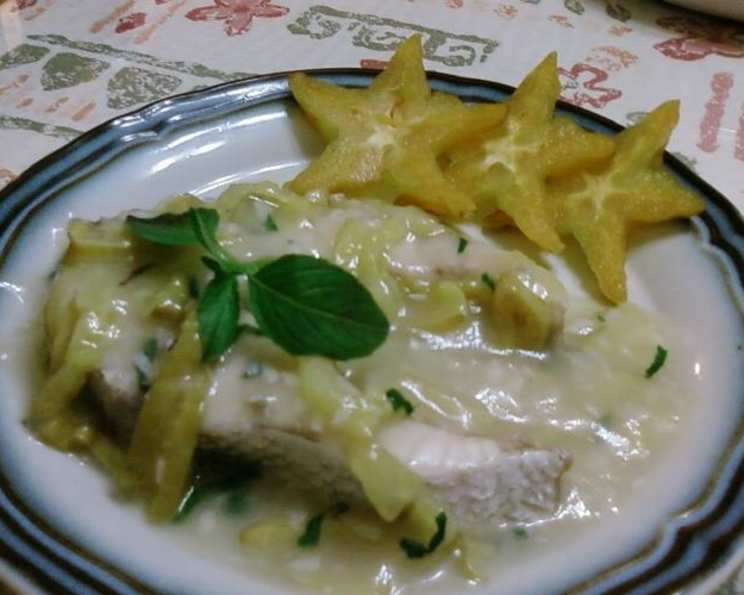
Poached Fish With Starfruit Sauce: A Culinary Journey
My grandmother, a woman whose kitchen was a fragrant haven, often experimented with flavors that danced on the edge of tradition. I remember one sweltering summer afternoon when she presented us with a dish that was as visually stunning as it was surprisingly delicious: poached fish glistening under a vibrant, tangy sauce studded with slices of starfruit. The sweet-tart flavor, perfectly balanced with savory notes, was a revelation. It was then I realized that truly great cooking is about embracing unexpected combinations and celebrating the freshness of simple ingredients. This recipe is an homage to her adventurous spirit and the delicious memories we shared around her table.
Recipe Overview
- Prep Time: 10 minutes
- Cook Time: 15 minutes
- Total Time: 25 minutes
- Servings: 2
- Yields: 2 fish fillets
- Dietary Type: Low Fat
Ingredients
- Water (up to 3/4 height of the fish in the pan)
- 1 tablespoon vegetable oil
- 2 slices ginger
- 1/2 cup sliced starfruit (or other fruit like orange, tomatoes, dried plums, capers, grapefruits, grapes, apricots, plums)
- 1 teaspoon vinegar
- 1 teaspoon sugar (adjust depending on fruit sweetness)
- 1 teaspoon soy sauce (or oyster sauce or A1 sauce)
- 1 tablespoon garlic, chopped
- 2-3 teaspoons salt (or to taste)
- 1/2 lb white fish fillet (or whole fish with several cut slits)
- 4 leaves basil, julienned (optional, or coriander or green onion)
- 1 teaspoon tapioca starch (or corn starch)
- 1 teaspoon water
- Fruit slices (to garnish)
Equipment Needed
- Pan with a lid
- Small bowl
- Plate
Instructions
- In a pan, combine water, vegetable oil, ginger slices, sliced starfruit, vinegar, sugar, soy sauce, chopped garlic, and salt. Bring the mixture to a boil over medium-high heat.
- Gently place the fish fillet(s) into the boiling liquid. If using a whole fish, make sure to cut several slits into the flesh to ensure even cooking.
- Reduce the heat to a simmer, cover the pan with a lid, and cook until the fish is cooked through. The cooking time will vary depending on the thickness of the fish, typically taking about 5-10 minutes. The fish is done when it flakes easily with a fork.
- Taste the sauce and adjust the saltiness as needed. Keep in mind that the fish is not marinated, so the sauce should be flavorful and slightly salty to compensate.
- Carefully remove the cooked fish from the pan and place it on a serving plate. Leave the sauce in the pan.
- In a small bowl, dissolve the tapioca starch in water to create a starch slurry. Ensure there are no lumps.
- Add the julienned basil to the sauce remaining in the pan.
- With one hand, continuously stir the sauce in the pan. With the other hand, slowly drip in only enough of the starch slurry to achieve the desired consistency. The sauce should be thick enough to cling to the fish without being lumpy. If the sauce is still too watery, make more starch slurry and add it gradually until the right consistency is reached.
- Pour the starfruit sauce generously over the poached fish.
- Garnish the dish with fresh fruit slices for an appealing presentation. Serve immediately.
Expert Tips & Tricks
- Flavor Boost: To deepen the flavor of the sauce, consider adding a splash of dry sherry or rice wine vinegar along with the regular vinegar.
- Fish Selection: While white fish like cod, halibut, or sea bass work beautifully in this recipe, feel free to experiment with other types of fish, such as salmon or trout. Adjust the cooking time accordingly.
- Preventing Overcooking: The key to perfectly poached fish is to avoid overcooking it. Err on the side of slightly undercooked, as the residual heat will continue to cook the fish after it’s removed from the pan.
- Aromatic Infusion: For an extra layer of aroma, try adding a few slices of lemongrass or a small piece of dried orange peel to the poaching liquid.
- Salt Savvy: Different types of salt have varying levels of saltiness. When adjusting the salt in the sauce, use a fine sea salt or kosher salt for the best results. Taste frequently to avoid over-salting.
- Garlic Infusion: For a milder garlic flavor, lightly sauté the chopped garlic in the vegetable oil before adding it to the poaching liquid. This will mellow out the sharpness of the raw garlic.
Serving & Storage Suggestions
Serve the Poached Fish With Starfruit Sauce immediately after preparation for the best flavor and texture. Garnish with fresh herbs and additional fruit slices for an elegant presentation. This dish pairs well with steamed rice or quinoa to soak up the flavorful sauce.
If you have leftovers, store them in an airtight container in the refrigerator. The fish will keep for up to 2 days. Reheat gently in a pan over low heat or in the microwave until warmed through. Note that the texture of the fish may change slightly upon reheating. The sauce might thicken upon refrigeration; add a splash of water when reheating to restore its original consistency. While freezing is possible, it is not recommended as the fish texture will be significantly altered.
Nutritional Information
| Nutrient | Amount per Serving | % Daily Value |
|---|---|---|
| Calories | 250 kcal | 13% |
| Total Fat | 10g | 15% |
| Saturated Fat | 2g | 10% |
| Cholesterol | 80mg | 27% |
| Sodium | 1200mg | 50% |
| Total Carbohydrate | 6g | 2% |
| Dietary Fiber | 1g | 4% |
| Sugars | 3g | – |
| Protein | 30g | 60% |
Note: Nutritional information is an estimate and may vary based on specific ingredients and portion sizes.
Variations & Substitutions
- Spicy Kick: Add a pinch of red pepper flakes or a finely chopped chili pepper to the poaching liquid for a touch of heat.
- Coconut Milk Version: Substitute some of the water with coconut milk for a richer, creamier sauce. Adjust the sugar accordingly, as coconut milk is naturally sweet.
- Citrus Burst: Enhance the citrus notes by adding a few slices of lemon or lime to the poaching liquid.
- Herb Infusion: Experiment with different herbs, such as cilantro, dill, or mint, instead of basil. Each herb will impart a unique flavor to the sauce.
- Vegetarian Option: While this recipe traditionally features fish, you can adapt it for a vegetarian diet by using firm tofu or tempeh instead. Adjust the cooking time as needed.
- Seasonal Fruit: Adapt the recipe to the seasons by using different fruits. Try peaches and plums in the summer, apples and pears in the fall, or blood oranges and pomegranates in the winter.
FAQs (Frequently Asked Questions)
Q: Can I use frozen fish for this recipe?
A: Yes, you can use frozen fish, but make sure to thaw it completely before poaching. Pat it dry with paper towels to remove excess moisture.
Q: What if I don’t have starfruit?
A: Starfruit has a unique flavor, but you can substitute it with other fruits like oranges, tomatoes, dried plums, capers, grapefruits, grapes, or apricots. Adjust the sugar level based on the sweetness of the fruit you choose.
Q: How do I prevent the fish from sticking to the pan?
A: Using a non-stick pan and ensuring there is enough liquid in the pan can help prevent the fish from sticking. You can also gently move the fish around in the pan occasionally during cooking.
Q: Can I make the sauce ahead of time?
A: It’s best to make the sauce fresh for the best flavor and consistency. However, if you need to make it ahead, store it in an airtight container in the refrigerator and reheat gently before serving.
Q: How do I know when the fish is cooked through?
A: The fish is cooked through when it flakes easily with a fork and is opaque throughout. The internal temperature should reach 145°F (63°C).
Final Thoughts
I hope this recipe inspires you to embrace the art of combining unexpected flavors and to create your own culinary memories. The delicate dance between the tender fish and the tangy-sweet starfruit sauce is a delightful experience that will surely impress your family and friends. Don’t be afraid to experiment with different fruits, herbs, and spices to personalize this dish and make it your own. Happy cooking!