
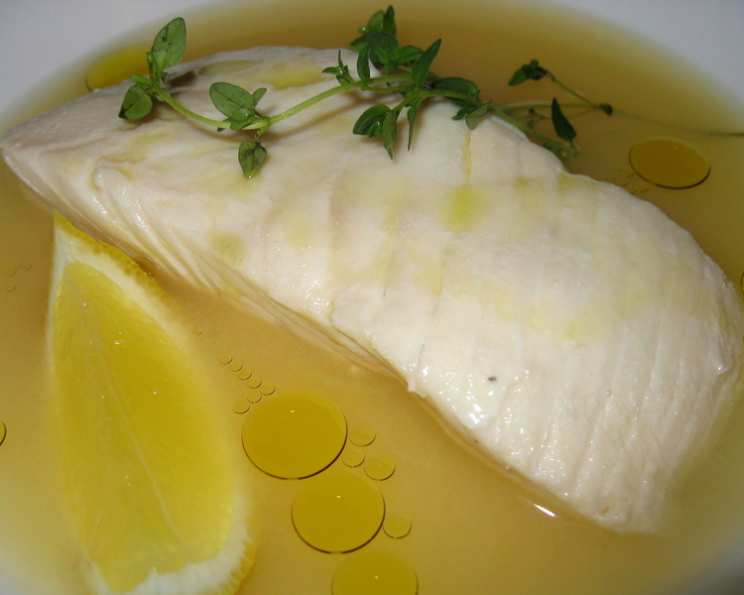
Poached Halibut in Lemon Thyme Broth
The first time I tasted halibut prepared simply, its delicate flavor transported me back to my childhood summers spent on the coast. My grandfather, a seasoned fisherman, would always bring home the freshest catch. This poached halibut, infused with the bright zest of lemon and the subtle earthiness of thyme, evokes those same feelings of simple elegance and pure, unadulterated flavor. It’s a dish that showcases the beauty of fresh ingredients and mindful cooking.
Recipe Overview
- Prep Time: 10 minutes
- Cook Time: 12 minutes
- Total Time: 22 minutes
- Servings: 4
- Dietary Type: Pescatarian, Gluten-Free, Dairy-Free
Ingredients
- 3 lemons
- 1 1/2 cups chicken broth
- 3 garlic cloves
- 8 sprigs fresh thyme
- 10 peppercorns
- 4 (6 ounce) halibut fillets
- 1 tablespoon olive oil (for drizzling)
- 1/4 teaspoon salt (more or less, to taste)
Equipment Needed
- Vegetable peeler
- Straight-sided skillet or saucepan with a tight-fitting lid
- Cheesecloth
- Sieve or fine-mesh strainer
- Wide bowls
- Heated platter
Instructions
- Begin by preparing the lemons. Using a vegetable peeler, carefully remove the zest from 2 of the lemons, being sure to avoid the bitter white pith. Then, juice the zested lemons.
- In a straight-sided skillet or saucepan equipped with a tight-fitting lid, combine the lemon juice, lemon zest, chicken broth, garlic cloves, and 4 sprigs of fresh thyme. Add the peppercorns to the broth.
- Bring the mixture to a boil over medium-high heat.
- While the broth is heating, season both sides of the halibut fillets with salt.
- Once the broth is boiling, carefully and gently place the salted halibut fillets into the skillet, ensuring they are mostly submerged in the liquid.
- Cover the pan tightly with the lid and immediately turn off the heat. Allow the halibut to stand in the hot broth for approximately 6 to 8 minutes, or until the fish is opaque white throughout and firm to the touch. The exact time will depend on the thickness of your fillets.
- Once the halibut is cooked, carefully transfer the fillets to a heated platter. Tent the platter loosely with foil to keep the fish warm while you prepare the broth.
- Pour the broth through a cheesecloth-lined sieve or fine-mesh strainer, discarding the solids (zest, garlic, thyme sprigs, and peppercorns). This step ensures a smooth and elegant sauce.
- Return the strained broth to the skillet. Bring the broth to a boil over medium heat, then immediately turn off the heat. This intensifies the lemon-thyme flavor.
- Divide the broth evenly between wide, shallow bowls. Gently place a halibut fillet in each bowl, nestling it into the fragrant broth.
- Cut the remaining lemon into wedges.
- Garnish each bowl with a lemon wedge, a fresh sprig of thyme, and a delicate drizzle of olive oil. Serve immediately.
Expert Tips & Tricks
- Don’t Overcook: Halibut is a delicate fish that can easily become dry and rubbery if overcooked. The poaching method described here ensures a moist and tender result. Err on the side of undercooking; the residual heat will continue to cook the fish as it rests.
- Infuse the Broth: For an even deeper flavor, consider gently bruising the thyme sprigs before adding them to the broth. This releases more of their aromatic oils.
- Keep it Warm: Use a low oven (around 200°F) to preheat the platter before transferring the halibut. This helps maintain the fish’s temperature while you finish the sauce.
- Subtle Seasoning: Halibut has a naturally mild flavor, so don’t be afraid to season it generously with salt. However, avoid overpowering it with other spices. The lemon and thyme should be the stars of the show.
- Broth Enhancement: If you want a richer broth, consider adding a knob of butter at the end and swirling it in until melted. This adds a lovely sheen and velvety texture.
Serving & Storage Suggestions
Serve the poached halibut immediately for the best flavor and texture. The presentation is as important as the taste; arranging the halibut artfully in the broth, garnished with fresh thyme and a bright lemon wedge, elevates the dish. This dish pairs beautifully with steamed asparagus, quinoa, or a simple green salad.
Leftovers can be stored in an airtight container in the refrigerator for up to 2 days. To reheat, gently warm the fish in the leftover broth over low heat, or microwave in short intervals to prevent overcooking. Note that the texture may be slightly different after reheating. While it can be frozen, the texture of the halibut may suffer. It’s best enjoyed fresh.
Nutritional Information
| Nutrient | Amount per Serving | % Daily Value |
|---|---|---|
| Calories | 303.8 kcal | N/A |
| Total Fat | 9.2 g | 14% |
| Saturated Fat | 1.4 g | 6% |
| Cholesterol | 70.3 mg | 23% |
| Sodium | 552.7 mg | 23% |
| Total Carbohydrate | 9.8 g | 3% |
| Dietary Fiber | 3.9 g | 15% |
| Sugars | 0.3 g | 1% |
| Protein | 48.7 g | 97% |
Note: Nutritional information is an estimate and may vary based on specific ingredients and portion sizes.
Variations & Substitutions
- Other Fish: If halibut is unavailable, cod, sea bass, or snapper can be substituted. Adjust cooking time accordingly based on the thickness of the fillet.
- Herb Variations: While thyme complements the lemon beautifully, other herbs like rosemary, tarragon, or dill can also be used for a different flavor profile.
- Citrus Swap: Lime can be used in place of lemon for a slightly tangier flavor.
- Vegetarian Option: For a vegetarian twist, try poaching firm tofu in the lemon-thyme broth.
- Wine Addition: A splash of dry white wine, such as Sauvignon Blanc or Pinot Grigio, can be added to the broth for extra depth of flavor. Add it when you add the chicken broth.
FAQs (Frequently Asked Questions)
Q: Can I use dried thyme instead of fresh?
A: While fresh thyme is preferred for its superior aroma and flavor, dried thyme can be used in a pinch. Use about 1 teaspoon of dried thyme for every 4 sprigs of fresh.
Q: How do I know when the halibut is cooked through?
A: The halibut is done when it turns opaque white throughout and flakes easily with a fork. The internal temperature should reach 145°F (63°C).
Q: Can I make the broth ahead of time?
A: Yes, you can prepare the broth up to 24 hours in advance. Store it in the refrigerator and reheat before poaching the halibut.
Q: What can I serve with this dish?
A: This poached halibut pairs well with a variety of sides, such as steamed asparagus, roasted vegetables, couscous, or a simple green salad.
Q: Can I use vegetable broth instead of chicken broth?
A: Absolutely. Vegetable broth is a great substitute, especially if you prefer a lighter flavor or are avoiding meat products.
Final Thoughts
This Poached Halibut in Lemon Thyme Broth is more than just a recipe; it’s an invitation to savor the simple pleasures of fresh, flavorful ingredients. The delicate halibut, infused with the bright zest of lemon and the subtle earthiness of thyme, creates a symphony of flavors that will delight your palate. Don’t hesitate to experiment with different herbs or citrus fruits to customize the dish to your liking. I encourage you to try this recipe and share your feedback. Perhaps pair it with a crisp glass of Sauvignon Blanc for a truly unforgettable meal. Bon appétit!