
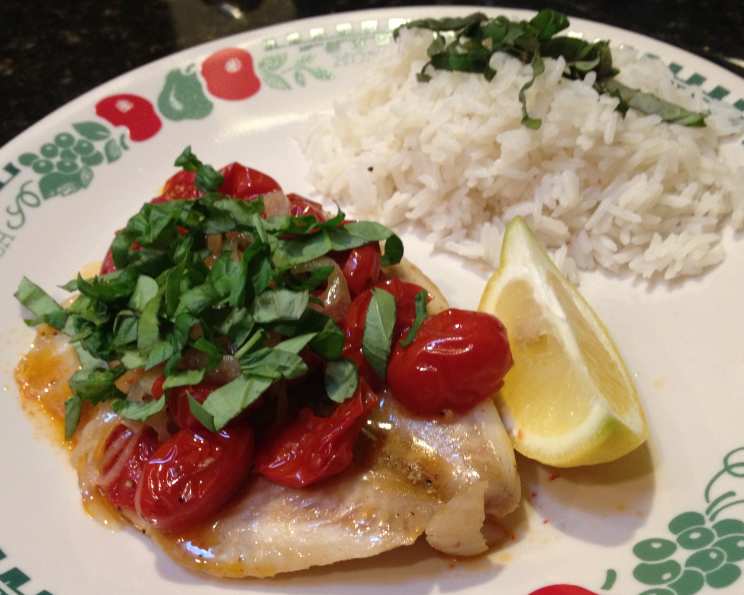
Poached Halibut With Tomato and Basil: A Taste of the Mediterranean
The scent of basil always transports me back to my grandmother’s sun-drenched garden in Italy. She grew the most vibrant, fragrant basil I’ve ever encountered, and she used it generously in everything. One of my fondest memories is watching her prepare a simple yet exquisite dish of poached fish with tomatoes and basil, the flavors melding together in a way that felt like pure sunshine on a plate. It’s a recipe I’ve cherished and adapted over the years, always reminding me of her warmth and the simple joys of Mediterranean cooking.
Recipe Overview
- Prep Time: 15 minutes
- Cook Time: 8-10 minutes
- Total Time: 23-25 minutes
- Servings: 4
- Dietary Type: Low Carb, Gluten-Free, Dairy-Free
Ingredients
- 4 (6-8 ounce) halibut fillets
- Salt and pepper
- 1 tablespoon olive oil
- 1 garlic clove, crushed
- 1 shallot, sliced
- ½ cup white wine
- 1 (15 ounce) can diced tomatoes, well drained
- ¼ lemon
- 20 fresh basil leaves, torn or shredded (chiffonade)
Equipment Needed
- Large skillet with a tight-fitting lid
- Thin spatula
Instructions
-
Begin by seasoning the halibut fillets generously with salt and pepper. Don’t be shy – seasoning is key to bringing out the delicate flavor of the fish.
-
In a large skillet, heat the 1 tablespoon of olive oil over medium heat. Make sure the skillet is large enough to accommodate all the halibut fillets without overcrowding.
-
Carefully arrange the halibut fillets in the hot skillet. Turn them gently to coat each side with the olive oil.
-
Add the 1 crushed garlic clove and 1 sliced shallot to the skillet. Let them sizzle for a moment, infusing the oil with their aromatic essence. Be careful not to burn the garlic, as it can become bitter.
-
Pour in ½ cup of white wine. The wine will deglaze the pan and add a lovely depth of flavor to the sauce. Allow the wine to simmer for a minute or two, reducing slightly.
-
Top each halibut fillet with one-quarter of the drained diced tomatoes. Distribute the tomatoes evenly over the fish.
-
Place the skillet on the stovetop and bring the liquid to a boil over medium-high heat.
-
Cover the skillet with a tight-fitting lid and immediately reduce the heat to moderate (medium to medium-low). This will create a gentle poaching environment for the fish.
-
Cook the halibut fillets for 8 to 10 minutes, or until they are opaque and flaky when gently pressed with a fork. The exact cooking time will depend on the thickness of the fillets, so keep an eye on them. Avoid overcooking, as halibut can become dry easily.
-
Once the halibut is cooked through, carefully transfer each fillet, along with the tomato topping, to individual dinner plates or a serving platter using a thin spatula.
-
Spoon the flavorful pan juices over the halibut fillets. These juices are packed with the flavors of garlic, shallot, wine, and tomato, so don’t let them go to waste.
-
Squeeze the juice of ¼ lemon evenly over the cooked fish. The lemon adds a bright, zesty note that complements the other flavors beautifully.
-
Generously top each halibut fillet with the 20 fresh basil leaves, either torn or shredded into a chiffonade. The fresh basil adds a final burst of aroma and freshness to the dish.
-
Serve immediately and enjoy!
Expert Tips & Tricks
- Perfectly Cooked Halibut: The key to perfectly poached halibut is to avoid overcooking. The fish should be opaque and flaky but still moist. A gentle touch with a fork is the best way to check for doneness.
- Tomato Drainage: Draining the diced tomatoes is essential to prevent a watery sauce. Use a fine-mesh sieve to remove excess liquid before adding them to the pan.
- Flavor Boost: For an extra layer of flavor, consider adding a pinch of red pepper flakes to the sauce.
- Make-Ahead Prep: You can slice the shallot and crush the garlic ahead of time to save time during cooking.
- Wine Selection: A dry white wine like Sauvignon Blanc or Pinot Grigio works best in this recipe. Avoid wines that are too sweet or oaky.
- If the sauce is too thin: After removing the fish, increase the heat to medium-high and simmer the sauce for a few minutes to reduce and thicken it.
- Don’t have fresh basil? While fresh is always best, a teaspoon of dried basil can be used in a pinch, adding it with the tomatoes.
Serving & Storage Suggestions
This poached halibut with tomato and basil is best served immediately while the fish is still warm and the flavors are vibrant. Garnish with an extra sprig of fresh basil for visual appeal.
Leftovers can be stored in an airtight container in the refrigerator for up to 2 days. Reheat gently in a skillet over low heat or in the microwave, being careful not to overcook the fish. Freezing is not recommended, as it can alter the texture of the halibut.
Nutritional Information
| Nutrient | Amount per Serving | % Daily Value |
|---|---|---|
| Calories | 269.7 kcal | N/A |
| Calories from Fat | 57g | 21% |
| Total Fat | 6.4 g | 9% |
| Saturated Fat | 1.1 g | 5% |
| Cholesterol | 102.9 mg | 34% |
| Sodium | 148.3 mg | 6% |
| Total Carbohydrate | 6.4 g | 2% |
| Dietary Fiber | 1.4 g | 5% |
| Sugars | 3.2 g | N/A |
| Protein | 39.9 g | 79% |
Variations & Substitutions
- Other Fish: If you don’t have halibut, cod, sea bass, or even salmon would work well in this recipe. Adjust cooking time accordingly based on the thickness of the fish.
- Lemon Variations: Instead of lemon juice, try using lime for a slightly different citrus flavor.
- Spice it up: Add a pinch of red pepper flakes for a little heat.
- Herb Variations: While basil is the star, feel free to add other fresh herbs like oregano, thyme, or parsley.
- Vegetable additions: Consider adding some chopped zucchini or bell peppers to the tomato mixture for added texture and nutrients.
- White wine substitute: Use chicken broth instead of white wine.
FAQs (Frequently Asked Questions)
Q: Can I use frozen halibut for this recipe?
A: Yes, you can use frozen halibut. Make sure to thaw it completely before cooking and pat it dry to remove excess moisture.
Q: Can I make this dish ahead of time?
A: While the dish is best served fresh, you can prepare the tomato mixture ahead of time and store it in the refrigerator. Add the mixture to the halibut right before cooking.
Q: How do I know when the halibut is cooked through?
A: The halibut is cooked through when it is opaque and flakes easily with a fork. Be careful not to overcook it, as it can become dry.
Q: Can I use canned tomatoes instead of diced tomatoes?
A: Yes, you can use canned crushed tomatoes or tomato puree. Make sure to drain them well before adding them to the skillet.
Q: What side dishes go well with this poached halibut?
A: This dish pairs well with a simple salad, steamed vegetables, rice, or quinoa.
Final Thoughts
This Poached Halibut with Tomato and Basil is a celebration of fresh, simple flavors. It’s a dish that’s both healthy and satisfying, perfect for a weeknight meal or a special occasion. I encourage you to try it and share your own variations and feedback. Serve it with a crisp glass of white wine and some crusty bread to soak up the delicious pan juices. Buon appetito!