
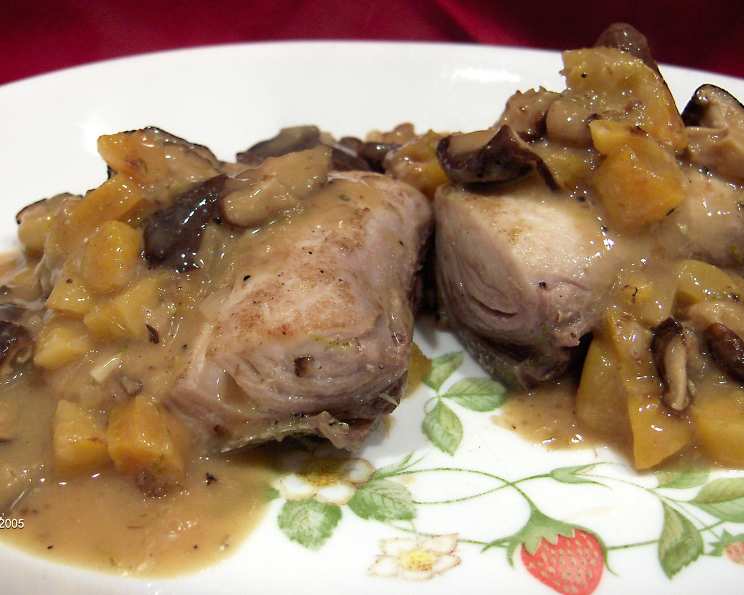
Poached Mahi Mahi with Mushrooms and Apricots: A Symphony of Flavors
I remember one particularly grey January day, decades ago, when I was a young chef just starting out. The winter gloom seemed to seep into everything, even the kitchen. I wanted to create something that would banish the blues, something vibrant and unexpected. I stumbled upon some beautiful mahi mahi, and the idea of poaching it with dried fruits and earthy mushrooms blossomed in my mind. The resulting dish was a revelation – the delicate fish, the sweet-tart apricots, the savory mushrooms, all singing in perfect harmony. It became my personal antidote to winter’s dreariness, a reminder that even in the coldest months, bright flavors can flourish.
Recipe Overview
- Prep Time: 15 minutes
- Cook Time: 20 minutes
- Total Time: 35 minutes
- Servings: 2
- Dietary Type: Pescatarian
Ingredients
- ¾ ounce dried shiitake mushrooms, quartered
- ¼ cup dried apricots, chopped
- 1 ½ cups boiling water
- 2 shallots, finely chopped
- 1 teaspoon coriander
- ½ lime, juice of
- ½ lime, zest of
- ¼ cup powdered instant milk (reconstituted with water to make 1 cup)
- Salt and pepper to taste
- Vegetable oil cooking spray
- ¾ lb mahi mahi fillet, skin on
- 1 tablespoon cornstarch
- 2 tablespoons cold water
Equipment Needed
- Medium bowl
- Fine-mesh sieve or strainer
- Nonstick deep frypan
- Whisk
- Serving platter
Instructions
-
Begin by preparing the foundational flavors. Quarter the dried shiitake mushrooms and chop the dried apricots.
-
In a medium bowl, combine the quartered shiitake mushrooms and chopped apricots. Pour 1 ½ cups of boiling water over them. Let this mixture stand for 15 minutes, allowing the dried ingredients to rehydrate and infuse the water with their flavors.
-
After 15 minutes, strain the mushroom and apricot mixture through a fine-mesh sieve or strainer, carefully reserving the liquid. The infused liquid is key to the poaching sauce.
-
To the strained liquid, add the coriander, lime zest, lime juice, salt, and pepper to taste. Stir well to combine these flavors.
-
Reconstitute the powdered instant milk with water according to the package directions, aiming to create 1 cup of reconstituted milk. Add this to the strained liquid mixture, ensuring you have a total of 2 cups of liquid. Stir well and set aside. This milk adds a subtle creaminess without overpowering the other flavors.
-
Prepare the mahi mahi fillet. Cut it down the middle lengthwise to create two equal-sized steaks.
-
Heat a nonstick, deep frypan over medium-high heat. Spray the pan generously with vegetable oil cooking spray.
-
Once the pan is hot, sauté the quartered mushrooms, chopped apricots, and finely chopped shallots for approximately 4 minutes, stirring frequently, until the shallots become translucent and fragrant.
-
Gently place the mahi mahi fillets into the pan, skin side up. Cook for 1 minute. This quick sear helps to prevent the fish from sticking and adds a touch of color.
-
Pour the reserved liquid mixture over the fish and vegetables. Bring the liquid to a gentle simmer.
-
Reduce the heat to maintain a simmer and cook for approximately 8 minutes, or until the mahi mahi is cooked through and flakes easily with a fork. The exact cooking time may vary slightly depending on the thickness of the fillets.
-
Carefully remove the mahi mahi fillets from the pan and place them on a serving platter, skin side down. Keep warm while you finish the sauce.
-
In a small bowl, create a slurry by whisking together the cornstarch and cold water. Ensure there are no lumps.
-
Pour the cornstarch slurry into the frypan with the remaining mushroom and apricot mixture. Stir continuously and bring the mixture to a boil.
-
Cook for 2 minutes, or until the sauce thickens to your desired consistency. Stir constantly to prevent sticking or burning.
-
Pour the thickened mushroom and apricot sauce generously over the mahi mahi fillets on the platter. Serve immediately.
Expert Tips & Tricks
- To enhance the flavor of the shiitake mushrooms, consider toasting them lightly in a dry pan before rehydrating. This brings out their umami notes.
- If you prefer a richer sauce, you can use heavy cream instead of reconstituted powdered milk. However, this will alter the nutritional profile of the dish.
- Don’t overcrowd the pan when sautéing the shallots, mushrooms and apricots. Work in batches if necessary, to ensure they brown evenly.
- The key to perfectly poached fish is to avoid overcooking. The mahi mahi should be opaque and easily flake with a fork.
Serving & Storage Suggestions
Serve the poached mahi mahi immediately for the best flavor and texture. Garnish with fresh herbs, such as chopped cilantro or parsley, for added visual appeal and freshness. This dish pairs beautifully with a side of steamed rice, quinoa, or couscous to soak up the flavorful sauce. Roasted asparagus or green beans would also make excellent vegetable accompaniments.
If you have any leftovers, store them in an airtight container in the refrigerator for up to 2 days. Reheat gently in a skillet over low heat or in the microwave, taking care not to overcook the fish. The sauce may thicken upon refrigeration, so you may need to add a splash of water or broth to loosen it up. Freezing is not recommended, as it can affect the texture of the fish.
Nutritional Information
| Nutrient | Amount per Serving | % Daily Value |
|---|---|---|
| Calories | 326.6 kcal | N/A |
| Calories from Fat | 51 g | 16% |
| Total Fat | 5.7 g | 8% |
| Saturated Fat | 3 g | 15% |
| Cholesterol | 139.6 mg | 46% |
| Sodium | 218.8 mg | 9% |
| Total Carbohydrate | 32.2 g | 10% |
| Dietary Fiber | 2.5 g | 9% |
| Sugars | 17.4 g | N/A |
| Protein | 37.8 g | 75% |
Variations & Substitutions
- For a spicier kick: Add a pinch of red pepper flakes to the poaching liquid or a drizzle of chili oil before serving.
- If you can’t find mahi mahi: Substitute with other firm white fish, such as cod, halibut, or snapper. Adjust cooking time accordingly.
- For a richer flavor: Use coconut milk instead of reconstituted powdered milk for a tropical twist.
- Seasonal Adaptation: In the summer, try using fresh apricots instead of dried ones.
- Vegetarian Option: Use firm tofu instead of mahi mahi. Pan-fry the tofu before adding the sauce.
FAQs (Frequently Asked Questions)
Q: Can I use fresh mushrooms instead of dried shiitake?
A: While dried shiitake mushrooms offer a deeper, more concentrated flavor, you can substitute with fresh shiitake or other mushrooms. Sauté them for a longer time to release their moisture and develop their flavor.
Q: Can I prepare the sauce ahead of time?
A: Yes, you can prepare the sauce up to a day in advance. Store it in an airtight container in the refrigerator. When ready to use, reheat gently and adjust the consistency with water or broth if needed.
Q: How do I know when the mahi mahi is cooked through?
A: The mahi mahi is cooked through when it is opaque and flakes easily with a fork. Avoid overcooking, as it can become dry.
Q: Can I use a different type of dried fruit?
A: Absolutely! Dried cranberries, cherries, or figs would all be delicious alternatives to dried apricots. Adjust the quantity to taste.
Q: What wine pairs well with this dish?
A: A crisp, dry white wine, such as Sauvignon Blanc or Pinot Grigio, would complement the flavors of this dish beautifully. The acidity of the wine will balance the richness of the sauce.
Final Thoughts
I hope this recipe inspires you to experiment with unexpected flavor combinations and create your own culinary masterpieces. Don’t be afraid to adjust the ingredients and techniques to suit your personal preferences. Cooking should be a joyful and creative process. I encourage you to try this Poached Mahi Mahi with Mushrooms and Apricots and share your feedback. Consider serving it with a side of wild rice and a chilled glass of Sauvignon Blanc for a truly memorable meal.