
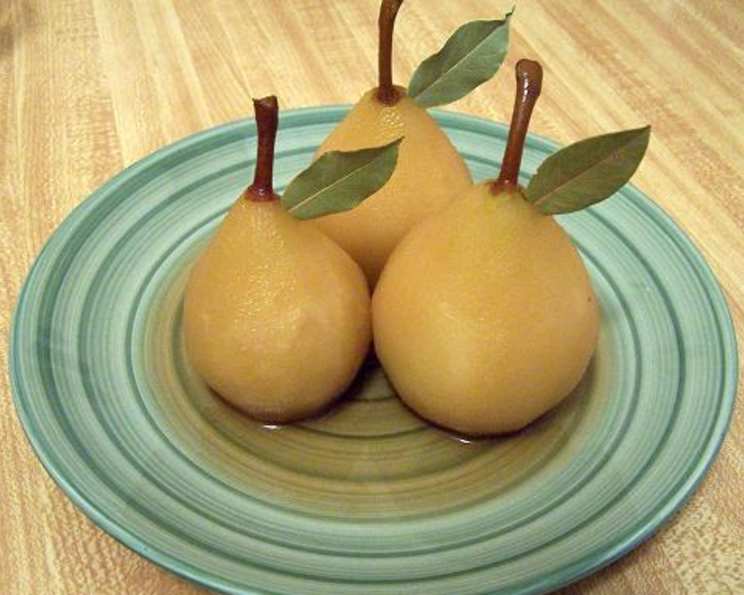
Poached Pears in Sauternes: A Symphony of Autumn Flavors
There’s a certain magic that happens when you bring together the mellow sweetness of ripe pears and the luxurious, honeyed notes of Sauternes wine. I remember the first time I tasted poached pears in Sauternes; it was at a small bistro in Bordeaux, during the harvest season. The air was crisp, filled with the scent of fermenting grapes, and this simple dessert – perfectly tender pears glistening in a golden syrup – was the perfect ending to a perfect day. It was a revelation, a taste of pure autumn bliss that I’ve been chasing ever since.
Recipe Overview
- Prep Time: 20 minutes
- Cook Time: 5 – 15 minutes
- Total Time: 35 minutes
- Servings: 6-12
- Yield: 6-12 pears
- Dietary Type: Gluten-Free
Ingredients
- 6-12 ripe pears, depending on size
- 1 orange, juice and zest of
- 375 ml Sauternes wine (or 375 ml other not-too-sweet white wine)
- 750 ml water
- 50 g honey
- 200 g sugar
- 2 lemons, juice of
- 1 vanilla pod, split
- 1 cinnamon stick, broken into short lengths
- 4 cloves
Equipment Needed
- Small, sharp knife
- Vegetable peeler
- Corer or small melon baller
- Large saucepan
Instructions
-
Begin by preparing the pears. Using a small, sharp knife, carefully score a zigzag pattern in the skin around the top of each pear, working downwards from the stalk. This adds a touch of elegance to the finished dish.
-
Leaving the zigzag skin at the top in place, peel the rest of each pear very thinly with a vegetable peeler, being careful to preserve their natural shape. No one wants a lopsided pear!
-
Next, remove the core from the base of each pear, using a corer or a small melon baller. This creates a space for the poaching liquid to infuse the pear from the inside out.
-
In a large saucepan big enough to hold all the pears comfortably, combine all the ingredients: the Sauternes wine, water, honey, sugar, juice and zest of the orange, juice of the lemons, the split vanilla pod, broken cinnamon stick, and cloves.
-
Set the saucepan over medium heat and bring the liquid to a boil. Once boiling, immediately reduce the heat to a gentle simmer – you want a bare simmer, with only the occasional bubble breaking the surface.
-
Carefully place the prepared pears into the simmering liquid. Ensure that the pears are mostly submerged; if not, add a little more water or wine.
-
The cooking time will vary depending on the ripeness of the pears. Very ripe pears might only take 5 minutes; much less ripe fruit could need up to 15 minutes. Test for doneness by gently inserting a knife into the thickest part of a pear. The pear is ready when the knife meets very little resistance.
-
As soon as the pears are cooked through, turn off the heat.
-
Transfer the pears and their poaching syrup to a bowl.
-
Leave the pears to cool at room temperature. This allows the flavors to meld and the pears to fully absorb the delicious poaching liquid.
-
Serve one or two pears per plate with a generous spoonful of the poaching syrup. Garnish with a little orange zest for an extra burst of citrus.
Expert Tips & Tricks
- Preventing Browning: Pears oxidize quickly once peeled. To prevent them from browning while you prepare the other pears, place them in a bowl of water with a squeeze of lemon juice.
- Poaching Liquid Perfection: Don’t discard the poaching liquid! It’s a treasure trove of flavor. You can reduce it further to create a more intense syrup, or use it to glaze other desserts.
- Vanilla Bean Magic: For a richer vanilla flavor, scrape the seeds from the vanilla pod into the poaching liquid in addition to adding the pod itself.
- Spice it Up: Experiment with other spices, such as star anise or cardamom, to add complexity to the poaching liquid.
Serving & Storage Suggestions
Serve these poached pears chilled or at room temperature for the best flavor. They are delicious on their own, or paired with a dollop of crème fraîche, mascarpone cheese, or vanilla ice cream.
Leftover poached pears can be stored in their poaching syrup in an airtight container in the refrigerator for up to 3 days. They can also be frozen for up to 1 month. To reheat, gently warm the pears in their syrup over low heat on the stovetop, or microwave in short bursts until heated through.
Nutritional Information
| Nutrient | Amount per Serving | % Daily Value |
|---|---|---|
| Calories | 308 kcal | 15% |
| Total Fat | 0.4 g | 1% |
| Saturated Fat | 0 g | 0% |
| Cholesterol | 0 mg | 0% |
| Sodium | 7.4 mg | 0% |
| Total Carbohydrate | 81 g | 27% |
| Dietary Fiber | 8.4 g | 33% |
| Sugars | 63 g | 126% |
| Protein | 1.3 g | 3% |
Variations & Substitutions
- Other Wine Varieties: If you don’t have Sauternes, you can substitute with another dessert wine like late-harvest Riesling or Moscato. A dry white wine like Sauvignon Blanc can also work, but you may need to adjust the amount of sugar and honey to compensate for the lack of sweetness.
- Spice it Up: Experiment with adding a small piece of ginger to the poaching liquid for a subtle warmth.
- Pear Varieties: While firm pears like Bosc or Anjou work best for poaching, you can also use softer varieties like Bartlett if you are careful to avoid overcooking them.
- Non-Alcoholic Version: Substitute the wine with white grape juice or apple cider for a non-alcoholic option.
FAQs (Frequently Asked Questions)
Q: Can I use frozen pears for this recipe?
A: While fresh pears are ideal, you can use frozen pears in a pinch. Thaw them slightly before poaching and be mindful that they may cook faster than fresh pears.
Q: How can I tell if the pears are ripe enough?
A: The pears should be firm but yield slightly to gentle pressure near the stem. Avoid pears that are overly soft or bruised.
Q: Can I make this recipe ahead of time?
A: Absolutely! In fact, the pears are even better after they’ve had a chance to sit in the poaching liquid for a day or two.
Q: My pears are browning even though I used lemon juice. What can I do?
A: Make sure the pears are fully submerged in the lemon water. You can also add a tablespoon of ascorbic acid (vitamin C) to the water for extra protection against browning.
Q: The poaching liquid is too sweet. Can I fix it?
A: Yes, you can balance the sweetness by adding a splash more lemon juice or a little water to dilute the syrup.
Final Thoughts
Poached Pears in Sauternes is more than just a dessert; it’s an experience. It’s a celebration of simple ingredients transformed into something truly special. The delicate sweetness of the pears, the fragrant aroma of the spices, and the luxurious touch of Sauternes wine all come together in perfect harmony. I encourage you to try this recipe and discover the magic for yourself. Share it with friends and family, and let me know what you think! Perhaps pair it with a glass of chilled Sauternes for the ultimate indulgence. Bon appétit!