
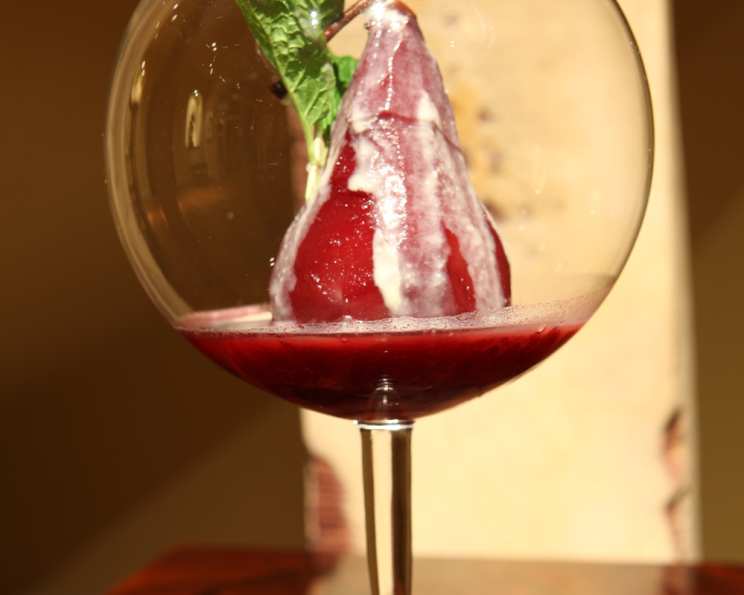
The Enchanting Elegance of Poached Pears
The scent of spiced wine simmering on the stove instantly transports me back to my grandmother’s kitchen. It was always a flurry of activity around the holidays, but the one constant, the quiet hum in the background, was the gentle bubbling of pears poaching in ruby-red wine. The warmth radiating from the stove, the sweet, intoxicating aroma filling the air, and the promise of the melt-in-your-mouth dessert to come – it was pure magic. Those crimson-stained pears, glistening under a glaze of their own making, were not just a treat; they were a symbol of family, love, and the joy of sharing something truly special.
Recipe Overview
- Prep Time: 15 minutes
- Cook Time: 35 minutes
- Total Time: 50 minutes
- Servings: 8
- Yields: 8 pears
- Dietary Type: Gluten-Free, Dairy-Free (naturally)
Ingredients
- 1 (750 ml) bottle red wine
- 1 lemon, juiced
- 1 vanilla bean, split
- 1 1/2 cups sugar
- 8 large Bosc pears, although any pear will do
Equipment Needed
- Saucepan
- Another pan (for blanching)
- Paring knife
- Pyrex dish
Instructions
-
In a saucepan, combine the red wine, lemon juice, the split vanilla bean, sugar, and about 2 cups of water.
-
Cover the saucepan and cook over medium heat until the sugar has completely dissolved, stirring occasionally to ensure even distribution. This typically takes about 5-7 minutes.
-
While the syrup is coming together, prepare the pears. In another pan, bring a pot of water to a boil.
-
Blanch the pears in the boiling water for just a couple of minutes. This helps to loosen the skins for easier peeling.
-
Immediately transfer the blanched pears to a bowl of ice water to stop the cooking process. This prevents them from becoming mushy.
-
Using a small paring knife, gently peel the skins from the pears, leaving the stems intact for an elegant presentation.
-
Carefully set the peeled pears upright in the wine syrup in the saucepan. Ensure the pears are mostly submerged; add a bit more water if necessary.
-
Simmer the pears in the wine syrup over low heat until they are just tender. This usually takes about 20-25 minutes, depending on the ripeness of the pears. To check for doneness, gently pierce a pear with a fork or knife; it should offer slight resistance but not be hard.
-
Once the pears are tender, carefully remove them from the pot to avoid bruising. Place them in a Pyrex dish or another suitable container.
-
Refrigerate the pears in the dish while you finish the syrup.
-
With the pears removed, turn the heat up to medium-high under the wine syrup and boil until it is reduced by about half. This will intensify the flavor and create a luscious glaze. Keep a close eye on the syrup as it reduces; it can burn easily.
-
Remove the saucepan from the heat and let the syrup cool to room temperature. As it cools, it will thicken slightly.
-
Once the syrup is cooled, spoon it over the pears, basting them often to ensure they are evenly coated. The syrup will gradually deepen the color of the pears, creating a beautiful ruby hue.
-
The amount of time you leave the pears in the syrup will affect their final color. For a lighter red, refrigerate them for a shorter period. For a deeper, almost burgundy color, especially appropriate for Christmas, leave them in the syrup for a longer period, even overnight.
-
Remove the pears from the refrigerator about 10 minutes before serving to allow them to come to a slightly warmer temperature, enhancing their flavor.
-
Garnish with a dollop of Somebody’s Mother’s White Chocolate Whipped Cream (see Somebody’s Mother’s Chocolate and Raspberry Trifle for recipe) or your favorite whipped cream or ice cream for an extra touch of indulgence.
Expert Tips & Tricks
- Choose pears that are firm but ripe. Overripe pears will become mushy during poaching. Bosc pears are a good choice because they hold their shape well, but Anjou or Bartlett pears can also be used.
- Don’t overcook the pears! They should be tender but not falling apart. Check for doneness frequently as they simmer.
- Use a good-quality red wine. The flavor of the wine will be concentrated as it reduces, so choose a wine that you enjoy drinking. A fruity red wine like Merlot or Pinot Noir works well.
- Add additional spices to the syrup. A cinnamon stick, a few cloves, or a star anise can add extra warmth and complexity to the flavor. Remove these spices before serving.
- For a non-alcoholic version, substitute the red wine with grape juice or cranberry juice. You may need to adjust the sugar depending on the sweetness of the juice.
- If the syrup becomes too thick, add a little water to thin it out. Conversely, if it’s too thin, continue to simmer it until it reaches the desired consistency.
Serving & Storage Suggestions
Serve the poached pears chilled or at room temperature. They are delicious on their own or served with whipped cream, ice cream, yogurt, or a sprinkle of chopped nuts.
Leftover poached pears can be stored in the refrigerator in an airtight container, submerged in the syrup, for up to 3-4 days. The syrup will help to keep the pears moist and prevent them from browning.
The poached pears can also be frozen for longer storage. Place them in a freezer-safe container, covered in the syrup, and freeze for up to 2 months. Thaw them in the refrigerator overnight before serving.
Nutritional Information
| Nutrient | Amount per Serving | % Daily Value |
|---|---|---|
| Calories | 358.7 kcal | N/A |
| Calories from Fat | 2 g | 1% |
| Total Fat | 0.3 g | 0% |
| Saturated Fat | 0 g | 0% |
| Cholesterol | 0 mg | 0% |
| Sodium | 6.5 mg | 0% |
| Total Carbohydrate | 76.1 g | 25% |
| Dietary Fiber | 7.3 g | 29% |
| Sugars | 60.7 g | 242% |
| Protein | 1 g | 2% |
Variations & Substitutions
- Spice it up: Add a cinnamon stick, star anise, or cloves to the poaching liquid for a warmer, more festive flavor.
- Citrus twist: Use orange juice or a combination of orange and lemon juice instead of just lemon juice. Add orange zest for extra flavor.
- Different wine: Experiment with different types of red wine, such as Cabernet Sauvignon or Zinfandel. You can also use a dessert wine like Port or Sherry for a richer flavor.
- White wine version: Poach the pears in white wine instead of red wine for a more delicate flavor. Use a dry white wine like Pinot Grigio or Sauvignon Blanc.
- Add berries: Add fresh or frozen berries to the poaching liquid for a fruity twist. Raspberries, blueberries, or cranberries work well.
FAQs (Frequently Asked Questions)
Q: Can I use frozen pears for poaching?
A: While fresh pears are preferred, you can use frozen pears in a pinch. Thaw them completely before poaching and be aware that they may become slightly softer than fresh pears.
Q: How do I prevent the pears from browning after peeling?
A: The lemon juice in the poaching liquid will help to prevent the pears from browning. You can also rub the peeled pears with lemon juice before placing them in the syrup.
Q: Can I make this recipe ahead of time?
A: Yes, poached pears are a great make-ahead dessert. They can be stored in the refrigerator for up to 3-4 days. The flavor actually improves as the pears sit in the syrup.
Q: What can I do with the leftover poaching syrup?
A: Don’t throw away the leftover syrup! It can be used as a sauce for ice cream, pancakes, or waffles. You can also use it to marinate fruit or add it to cocktails.
Q: Can I use artificial sweeteners instead of sugar?
A: Yes, you can substitute the sugar with your favorite artificial sweetener. Be sure to adjust the amount according to the sweetener’s instructions, as some are sweeter than sugar.
Final Thoughts
The allure of poached pears lies not just in their exquisite flavor and elegant presentation, but also in their simplicity. With just a handful of ingredients and a little patience, you can transform humble pears into a truly unforgettable dessert. I encourage you to embrace the comforting aroma of simmering wine and spices, to experiment with different flavor combinations, and to create your own cherished memories with this classic dish. Share your creations with loved ones, and let the warmth and joy of poached pears fill your kitchen and your hearts. Perhaps you’ll even develop your own “Somebody’s Mother’s” variation to pass down through generations.