
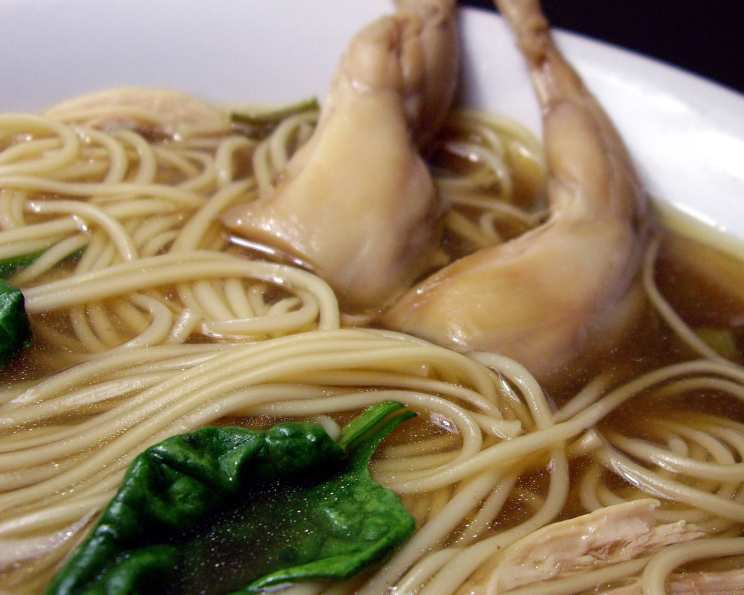
The Delicate Art of Poached Quail: A Culinary Journey
I remember the first time I tasted truly exceptional poached quail. It was at a small, unassuming restaurant tucked away on a side street in Hong Kong. The broth, infused with star anise and ginger, was unbelievably aromatic, and the quail itself was so tender it practically melted in my mouth. It was a revelation, a testament to how simple ingredients, treated with care and respect, can create a symphony of flavors. The dish evoked a sense of warmth and comfort, like a gentle hug from a faraway land. Since then, I’ve been on a quest to recreate that magic in my own kitchen, and I’m excited to share my version with you.
Recipe Overview
- Prep Time: 30 minutes
- Cook Time: 1 hour 32 minutes (initial boil and cooling) + overnight refrigeration + 10 minutes (reheating and assembly)
- Total Time: at least 12 hours (including refrigeration)
- Servings: 4
- Dietary Type: Gluten-free (if using gluten-free noodles)
Ingredients
- 4 quail
- 1/4 cup fresh ginger, sliced into 10cm pieces
- 5 star anise
- 7 green onions
- 2 tablespoons brown sugar
- 1/2 cup tamari soy sauce
- 1/2 cup Chinese wine, approximately 125ml
- 1 bunch small English spinach
- 270g somen noodles (or noodles of your choice)
- Water
Equipment Needed
- Tight-fitting saucepan
- Plate (to keep quail submerged)
- Refrigeration container
- Separate saucepan for noodles
Instructions
- Begin by preparing the quail. Stuff each quail with one green onion and a slice of ginger. This infuses the bird with aromatic flavors from the inside out.
- In a tight-fitting saucepan, carefully arrange the stuffed quail. Add the remaining ginger slices, green onions, star anise, brown sugar, soy sauce, and Chinese wine.
- Cover the quail completely with water. Ensure the quail remain submerged during cooking by placing a plate directly on top of them. This helps to ensure even poaching.
- Bring the mixture to a boil over medium heat. Once boiling, reduce the heat slightly and continue to boil for precisely 1 1/2 minutes. This short, intense boil helps to initially set the flavors and begin the cooking process.
- Turn off the heat completely and cover the saucepan with a tight-fitting lid. Allow the quail to cook in the residual heat for approximately 4 hours. This slow poaching process is key to achieving incredibly tender and moist meat. The precise time may vary depending on your stove, but aim for tenderness rather than overcooking.
- After the poaching period, transfer the quail and broth to a suitable container and refrigerate overnight. This allows the flavors to fully develop and meld together. The refrigeration step is essential for achieving the depth of flavor that defines this dish.
- The next day, drain the quail, reserving the flavorful broth. This broth is the heart of the dish, so be sure to save every drop!
- Carefully pull the meat and skin off the quail, attempting to keep the tiny legs and thighs intact for aesthetic purposes. This step can be a bit fiddly, but the effort is worth it for the final presentation.
- Reheat the reserved broth in a saucepan until it is bubbling hot.
- In a separate saucepan, bring water to a boil and add enough somen noodles for four servings. Cook the noodles for 2 minutes, or according to package directions. Be careful not to overcook the noodles, as they will continue to cook slightly in the hot broth.
- Instead of draining, use tongs to transfer the cooked noodles directly from the boiling water into four separate bowls. This helps to retain some of the cooking water, which adds a pleasant starchiness to the final dish.
- Add the quail meat to each bowl, followed by a small handful of English spinach, approximately 8 leaves per bowl, or more if desired. The spinach wilts quickly in the hot broth, adding a fresh, vibrant element to the dish.
- Finally, pour the bubbling hot broth over the noodles, quail, and spinach in each bowl. Serve immediately.
Expert Tips & Tricks
- For a richer flavor, consider adding a small piece of dried orange peel to the poaching liquid.
- If you’re short on time, you can reduce the initial poaching time to 2 hours, but the overnight refrigeration is still crucial for flavor development.
- To prevent the quail from drying out during the refrigeration process, you can wrap them tightly in plastic wrap before storing them.
- Don’t discard the quail bones! They can be used to make a delicious and flavorful stock for future soups or sauces.
- Adjust the amount of brown sugar to your liking, depending on your desired level of sweetness.
- For a spicier dish, add a pinch of red pepper flakes to the poaching liquid.
Serving & Storage Suggestions
Serve the poached quail noodle soup immediately while it is still hot. Garnish with a sprig of fresh cilantro or a drizzle of sesame oil for added flavor and visual appeal.
Leftovers can be stored in an airtight container in the refrigerator for up to 2 days. Reheat the broth separately from the noodles, and add fresh noodles and spinach when serving to prevent them from becoming soggy. It is not recommended to freeze this dish, as the texture of the quail and noodles may be affected.
Nutritional Information
| Nutrient | Amount per Serving | % Daily Value |
|---|---|---|
| Calories | 450 kcal | 23% |
| Total Fat | 18g | 28% |
| Saturated Fat | 4g | 20% |
| Cholesterol | 90mg | 30% |
| Sodium | 3000mg | 125% |
| Total Carbohydrate | 55g | 18% |
| Dietary Fiber | 5g | 20% |
| Sugars | 10g | – |
| Protein | 30g | 60% |
Note: Nutritional information is an estimate and may vary based on specific ingredients and portion sizes.
Variations & Substitutions
- For a gluten-free option, use gluten-free somen noodles or rice noodles.
- If you don’t have Chinese wine, you can substitute with dry sherry or sake.
- For a vegetarian version, replace the quail with firm tofu or shiitake mushrooms.
- Experiment with different vegetables, such as bok choy, mushrooms, or bean sprouts, in place of or in addition to the spinach.
- Add a squeeze of fresh lime juice or a dash of chili oil for a flavor boost.
FAQs (Frequently Asked Questions):
Q: Can I use frozen quail for this recipe?
A: Yes, you can use frozen quail, but be sure to thaw them completely before cooking.
Q: How do I know when the quail is cooked through?
A: The quail is cooked through when the meat is tender and easily pulls away from the bone.
Q: Can I make this dish ahead of time?
A: Yes, you can poach the quail and prepare the broth a day or two in advance. Store them separately in the refrigerator and assemble the dish just before serving.
Q: What if I don’t have a tight-fitting saucepan?
A: You can use a regular saucepan, but be sure to place a plate on top of the quail to keep them submerged in the broth.
Q: Can I use a different type of noodle?
A: Absolutely! Feel free to experiment with different types of noodles, such as udon, ramen, or egg noodles. Adjust the cooking time accordingly.
Final Thoughts
Poached quail might seem like a dish reserved for fancy restaurants, but with a little patience and attention to detail, you can easily create this culinary masterpiece in your own kitchen. The delicate flavors and tender texture are truly unforgettable. I encourage you to give this recipe a try, and don’t be afraid to experiment with different variations to create your own signature dish. Share your creations and feedback – I’d love to hear about your experience! And if you’re feeling adventurous, pair this dish with a crisp, dry Riesling for a truly exceptional dining experience.