
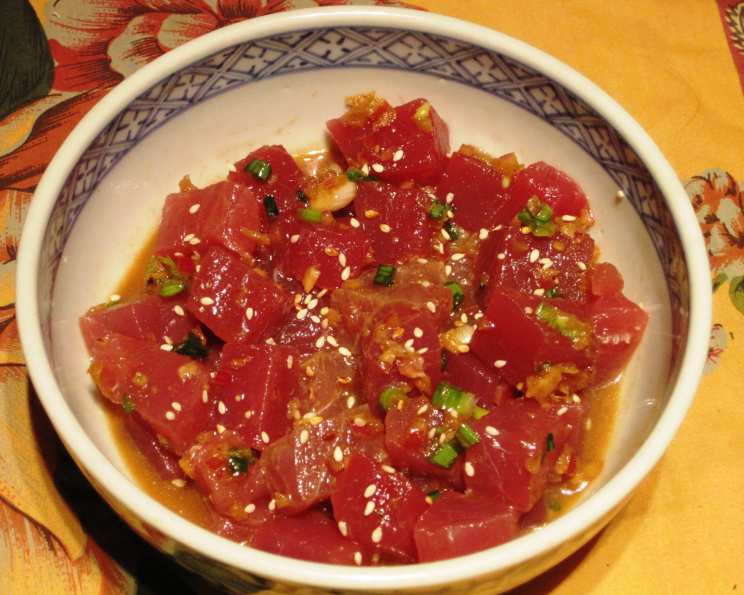
Deconstructed Sushi: Mastering the Art of Poki
The first time I had Poki, I was standing barefoot on a sun-drenched beach in Maui, the salty air thick with the scent of plumeria. A small, unassuming food truck was blasting reggae music, and the server, with a smile as bright as the Hawaiian sun, handed me a styrofoam bowl brimming with vibrant, glistening cubes of tuna. The explosion of flavors – the tangy soy sauce, the zing of ginger, the subtle heat of chili – transported me to another world. It was a revelation, a dish so simple yet so profoundly satisfying, that I knew I had to learn to recreate it back home.
Recipe Overview
- Prep Time: 20 minutes
- Cook Time: 0 minutes
- Total Time: 40 minutes
- Servings: 4-6
- Yield: Varies based on serving style
- Dietary Type: Gluten-Free (can be modified), Dairy-Free
Ingredients
- 1 lb fresh ahi tuna (must be Sashimi Grade #1)
- ¼ cup red onion, finely minced
- 3 green onions, chopped fine
- 1 tablespoon fresh ginger juice
- 3 tablespoons light soy sauce
- 3 tablespoons rice wine vinegar
- 3 tablespoons mirin
- 1 tablespoon sesame seeds, gently roasted
- 3 tablespoons lemon juice, fresh squeezed
- 1-3 tablespoon roasted sesame oil
- Vietnamese red chili sauce, to taste
Equipment Needed
- Sharp knife
- Cutting board
- Non-reactive bowl
- Measuring spoons and cups
- Refrigeration
Instructions
-
In a non-reactive bowl, combine the red onion, green onions, ginger juice, light soy sauce, rice wine vinegar, mirin, roasted sesame seeds, and lemon juice.
-
Add roasted sesame oil and Vietnamese red chili sauce. The amount of sesame oil and chili sauce is entirely up to your preference. Start with the smaller amount and increase to taste.
-
Blend all the ingredients together thoroughly with a whisk or fork. Taste the dressing and adjust seasoning as needed, adding salt if necessary. Keep in mind that the soy sauce already contributes salt, so taste before adding any extra.
-
Cut the ahi tuna into small, uniform cubes approximately 1/2 inch square (or smaller, if you prefer). Consistency in size ensures even distribution of flavor.
-
Gently toss the diced tuna in the prepared dressing, ensuring that all the pieces are evenly coated. Be careful not to overmix, as this can bruise the delicate tuna.
-
Refrigerate the Poki for at least 30 minutes to allow the flavors to meld together. This step is crucial for allowing the marinade to fully penetrate the tuna. Longer refrigeration (up to a few hours) is fine, but don’t let it sit too long, or the tuna might start to break down.
-
Serve chilled, as an appetizer, entrée, or salad. Suggestions are included below.
Expert Tips & Tricks
- Sourcing Tuna: The most important aspect of this recipe is the quality of the tuna. Only use sushi-grade #1 ahi tuna from a reputable seafood supplier. This guarantees that the fish is fresh and safe to eat raw. Ask your fishmonger for their recommendations.
- Ginger Juice: Making fresh ginger juice is easy. Simply grate fresh ginger and squeeze the juice through a fine-mesh sieve. Alternatively, you can use a juicer.
- Controlling the Heat: The amount of Vietnamese red chili sauce (or other chili sauce) determines the level of spiciness. Add it gradually, tasting as you go, until you reach your desired heat level. A little goes a long way!
- Keep it Cold: Ensure that all your utensils and work surfaces are clean and cold when preparing the fish. This helps to prevent the fish from warming up too quickly.
- Toast your sesame seeds: Toasting sesame seeds before adding them releases their aroma and flavor. You can do this in a dry pan over medium heat until they are fragrant and lightly golden. Watch them carefully, as they burn easily.
Serving & Storage Suggestions
- Appetizer: Serve Poki as an appetizer with shrimp chips (the kind you get at Asian grocery stores and fry yourself) or fried wonton chips.
- Entrée: Serve as an “entrée” dish with steamed short grain rice.
- Salad: Serve as a salad over seaweed salad or lettuce.
- Presentation: Garnish with extra sesame seeds and chopped green onions for a visually appealing presentation.
- Storage: Poki is best enjoyed immediately. Due to the raw fish, it does not keep well. Make only as much as you’re sure to eat in one sitting. If you must store it, keep it in an airtight container in the refrigerator for no more than 24 hours. Be aware that the texture and flavor will degrade over time. Do not freeze Poki.
- Buffets: If serving on a buffet, place the bowl on a bed of ice to keep it cool and prevent it from looking gray.
Nutritional Information
| Nutrient | Amount per Serving | % Daily Value |
|---|---|---|
| Calories | 230 kcal | – |
| Total Fat | 10 g | 15% |
| Saturated Fat | 2 g | 10% |
| Cholesterol | 43 mg | 14% |
| Sodium | 870 mg | 36% |
| Total Carbohydrate | 5 g | 1% |
| Dietary Fiber | 1 g | 3% |
| Sugars | 1 g | 5% |
| Protein | 29 g | 57% |
Note: Nutritional information is an estimate and may vary based on specific ingredients and portion sizes.
Variations & Substitutions
- Spicy Mayo Poki: Mix mayonnaise with sriracha or gochujang for a creamy and spicy dressing.
- Avocado Poki: Add diced avocado for a richer, creamier texture.
- Tofu Poki: For a vegetarian option, substitute the tuna with firm or extra-firm tofu that has been pressed to remove excess water and cubed.
- Salmon Poki: Substitute salmon for tuna.
- Gluten-Free: Ensure that the soy sauce used is gluten-free tamari.
- Sesame Oil Alternative: If you can’t find roasted sesame oil, you can use regular sesame oil, but the flavor will be less intense.
FAQs (Frequently Asked Questions)
Q: What kind of tuna is best for Poki?
A: Sushi-grade #1 ahi tuna is the best choice. It’s important to ensure that the fish is safe to eat raw.
Q: Can I use frozen tuna for Poki?
A: Yes, you can use frozen tuna, but it must be sushi-grade and thawed properly in the refrigerator. Make sure to pat it dry before dicing.
Q: How long can I marinate the tuna?
A: Marinate the tuna for at least 30 minutes, but no longer than a few hours, to prevent it from becoming too soft.
Q: Can I add other ingredients to Poki?
A: Absolutely! Seaweed salad, avocado, edamame, and cucumbers are all great additions.
Q: Is Poki spicy?
A: Poki can be spicy, depending on the amount of chili sauce you add. Adjust the amount to your personal preference.
Final Thoughts
Now that you’re armed with this recipe, I encourage you to dive into the vibrant world of Poki. Experiment with different flavors, find your perfect balance of salty, sweet, and spicy, and share your creations with friends and family. It’s a dish that’s as versatile as it is delicious, and one that’s sure to transport you to a tropical paradise with every bite. Don’t be afraid to get creative and make it your own! I’d love to hear about your variations and successes— please share your experience! Consider pairing your Poki with a crisp, dry white wine or a refreshing Hawaiian beer for the full island experience. Aloha!