
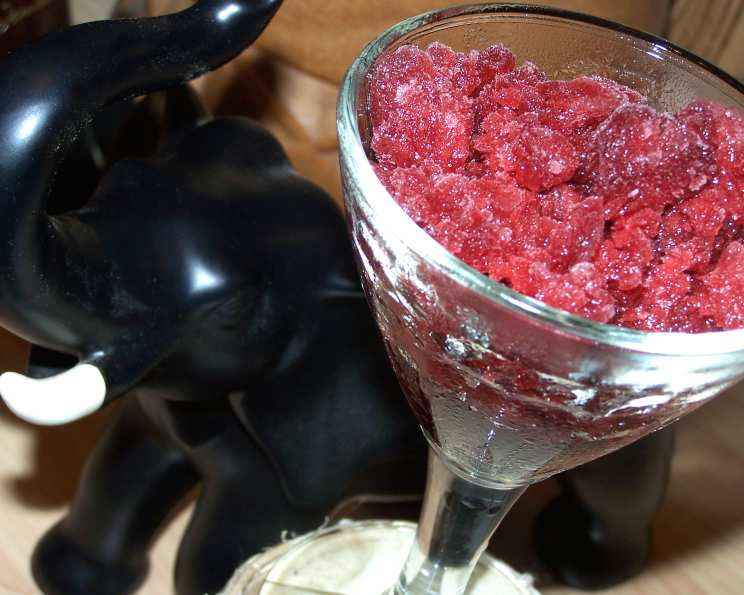
Pomegranate Granita: A Jewel of Frozen Delight
I’ll never forget the first time I tasted granita. It was a sweltering summer afternoon in Sicily, and I’d wandered into a tiny gelateria seeking refuge from the heat. The owner, a cheerful woman with flour dusting her apron, insisted I try her granita di limone. The icy crystals, bursting with bright citrus flavor, were an absolute revelation. It was simple, refreshing, and utterly transformative – a pure taste of sunshine in a spoon. Now, years later, granita remains one of my favorite ways to celebrate fresh, seasonal flavors, and this pomegranate version is a particular gem.
Recipe Overview
- Prep Time: 15 minutes
- Cook Time: 0 minutes (plus freezing time)
- Total Time: 4 hours 15 minutes
- Servings: 2
- Yield: About 2 cups
- Dietary Type: Vegan, Gluten-Free, Dairy-Free
Ingredients
- 2 pomegranates
- 4 teaspoons soft brown sugar (light brown sugar) or 4 teaspoons caster sugar, depending on your taste
Equipment Needed
- Knife
- Cutting board
- Citrus juicer or sturdy spoon
- Fine-mesh sieve
- Large, shallow glass baking dish
- Spoon or fork
Instructions
- Begin by preparing the pomegranates. Slice off the top and bottom of each fruit using a sharp knife. This will make it easier to break them apart.
- Gently break the pomegranates apart into segments. You can do this by scoring the skin along the natural ridges and then pulling the sections apart.
- Carefully remove the seeds (arils) from the pomegranate segments. Try to minimize the amount of white pith that comes along with the seeds, as the pith can be bitter.
- Now it’s time to extract the juice. There are a few methods you can use. You can use your hands, squeezing the seeds firmly to release their juice. Alternatively, you can use a citrus juicer (although be careful not to crush the seeds too much) or simply crush them in a bowl using the back of a sturdy spoon.
- Once you’ve extracted as much juice as possible, it’s essential to strain it to remove any remaining seeds and pieces of pith. Pour the juice through a fine-mesh sieve set over a bowl.
- Using the back of a spoon, gently press down on the solids in the sieve to extract as much juice as possible without pushing the bitter skins through. Discard the seeds and pith left in the sieve.
- In a large, shallow glass baking dish that will fit in your freezer, combine the pomegranate juice with the soft brown sugar (or caster sugar). The shallow dish is crucial for even freezing and creating the characteristic granita texture.
- Stir the juice and sugar together until the sugar has completely dissolved. If the sugar is having trouble dissolving, you can gently warm the mixture over a very low flame on the stovetop, stirring constantly. Be careful not to overheat the juice.
- Place the baking dish with the pomegranate mixture in the freezer. Freeze for 4 hours, stirring the mixture every 15 minutes during the first 2 hours. This frequent stirring is key to breaking up the ice crystals and achieving the desired flaky texture.
- After the initial freezing and stirring period, check the granita’s consistency. It should be partially frozen but still somewhat slushy.
- Using a spoon or fork, scrape the surface of the partially frozen mixture to create large, flaky crystals. This is what gives granita its unique texture.
- If desired, return the scraped granita to the freezer for a longer period to firm up further. The final consistency should be that of a chunky ice, not a smooth sorbet.
Expert Tips & Tricks
- Adjust sweetness to taste: Pomegranates can vary in sweetness. Taste the juice before freezing and add more or less sugar as needed.
- Use high-quality pomegranates: The flavor of the granita will only be as good as the pomegranates you use. Choose pomegranates that are heavy for their size and have a deep red color.
- Don’t skip the stirring: The constant stirring during the initial freezing period is essential for creating the flaky texture that defines granita.
- For a more complex flavor: Add a squeeze of lemon or lime juice to the pomegranate juice before freezing.
- Make it boozy: Add a splash of vodka or pomegranate liqueur to the mixture before freezing for an adults-only treat.
- Prevent Large Ice Crystals: The key to a good granita is small ice crystals. In addition to stirring frequently, you can also add a small amount of alcohol (like vodka) which helps to prevent large ice crystals from forming.
Serving & Storage Suggestions
Serve the pomegranate granita immediately after scraping it into crystals. Spoon it into chilled glasses or bowls. Garnish with a few fresh pomegranate seeds or a sprig of mint for a beautiful presentation. It’s best enjoyed fresh, as the texture can deteriorate if refrozen multiple times.
If you have leftover granita, store it in an airtight container in the freezer. It will keep for up to a week, but the texture may become icier over time. You can re-scrape it with a fork before serving to restore some of its original texture. Granita does not keep well at room temperature and should not be left out for extended periods.
Nutritional Information
| Nutrient | Amount per Serving | % Daily Value |
|---|---|---|
| Calories | 139 kcal | N/A |
| Total Fat | 0.5 g | 1% |
| Saturated Fat | 0.1 g | 0% |
| Cholesterol | 0 mg | 0% |
| Sodium | 8.2 mg | 0% |
| Total Carbohydrate | 35.4 g | 12% |
| Dietary Fiber | 0.9 g | 3% |
| Sugars | 34.4 g | N/A |
| Protein | 1.5 g | 3% |
Note: Nutritional information is an estimate and may vary based on specific ingredients and portion sizes.
Variations & Substitutions
- Other Fruit Granitas: The same technique can be used with other fruits like lemons, oranges, grapefruit, or berries. Adjust the sugar depending on the sweetness of the fruit.
- Herbal Infusions: Infuse the pomegranate juice with fresh herbs like mint, basil, or rosemary for a more complex flavor. Add the herbs to the juice while warming it to dissolve the sugar, then strain before freezing.
- Spice it Up: Add a pinch of cinnamon, cardamom, or ginger to the pomegranate juice for a warming spice.
- Agave Nectar: Substitute the sugar for agave nectar. Note that the flavor profile may differ.
FAQs (Frequently Asked Questions)
Q: Why is my granita too icy and not flaky enough?
A: This usually happens if you don’t stir the mixture frequently enough during the initial freezing period. The stirring breaks up the ice crystals and creates the characteristic flaky texture.
Q: Can I use pomegranate juice from the store instead of fresh pomegranates?
A: While you can use store-bought pomegranate juice, the flavor will be much better with fresh pomegranates. Also, adjust sugar as needed because store-bought juice will be a different sweetness level.
Q: How long does granita last in the freezer?
A: Granita will keep in the freezer for up to a week, but the texture may deteriorate over time. Re-scrape it with a fork before serving to refresh the texture.
Q: Can I make granita without sugar?
A: You can try making granita without sugar, but it may be very tart and the texture may not be as desirable. Sugar helps to prevent the formation of large ice crystals and contributes to the overall texture. You could try using a sugar substitute, but keep in mind that it may affect the texture and flavor.
Q: What’s the difference between granita and sorbet?
A: Granita has a coarser, icier texture than sorbet, which is smoother and more refined. Granita is typically made with just fruit juice, sugar, and water, while sorbet often contains other ingredients like stabilizers.
Final Thoughts
This Pomegranate Granita is more than just a frozen dessert; it’s a celebration of flavor and texture. The tangy sweetness of the pomegranate juice, transformed into icy crystals, is a refreshing treat perfect for any occasion. I encourage you to try this recipe and experiment with different fruit combinations and flavorings to create your own signature granita. Share your creations and let me know what you think! This granita pairs beautifully with a light biscotti or a glass of chilled sparkling wine.