
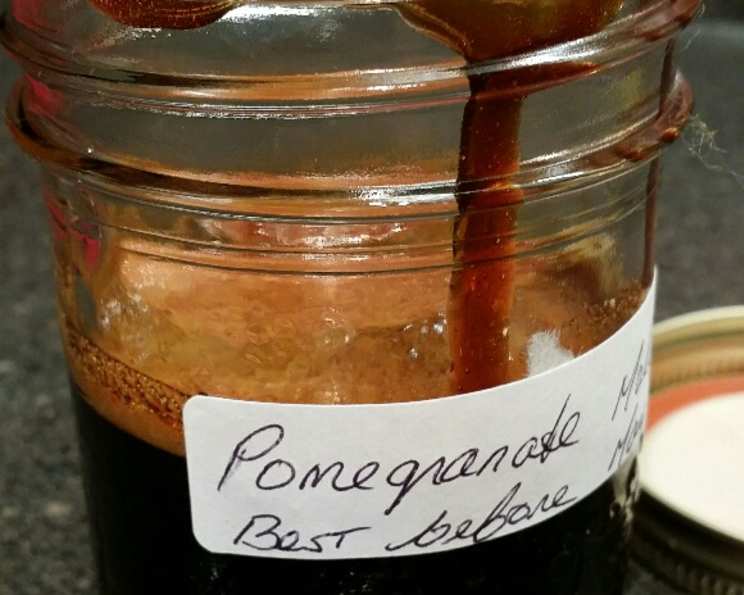
Homemade Pomegranate Molasses: A Jewel-Toned Delight
The scent of pomegranate always transports me back to my grandmother’s kitchen. Every autumn, her small apartment would be filled with the sweet, tart aroma of simmering fruit. She’d meticulously extract the jewel-like seeds, her hands stained a vibrant crimson. While she mostly used them for salads and desserts, she always reserved a portion to transform into a deeply concentrated syrup – a vibrant elixir we called pomegranate molasses. That simple syrup was more than just an ingredient; it was a taste of home, a symbol of her unwavering love, and a secret weapon that elevated everything from roasted vegetables to grilled lamb.
Recipe Overview
- Prep Time: 15 minutes
- Cook Time: 2 hours
- Total Time: 2 hours 15 minutes
- Yields: 3 cups
- Dietary Type: Vegan, Gluten-Free
Ingredients
- 6 cups pomegranate juice
- 1 1/4 cups pure maple syrup (or honey, for a non-vegan option)
- 3 tablespoons fresh orange juice
Equipment Needed
- Medium saucepan
- Measuring cups and spoons
- Bottles or jars for storage
Instructions
- In a medium saucepan, combine the pomegranate juice, pure maple syrup (or honey), and fresh orange juice.
- Bring the mixture to a simmer over medium-low heat. It’s crucial to keep the heat low to prevent scorching and ensure a gentle reduction.
- Continue to simmer, uncovered, for approximately 2 hours, or until the mixture has reduced to about 3 cups. The reduction time can vary based on your stovetop and the width of your saucepan.
- Stir occasionally to prevent sticking and ensure even cooking. As the mixture reduces, it will thicken and darken in color.
- To check for doneness, dip a spoon into the syrup and let it cool slightly. The molasses should coat the back of the spoon and have a syrupy consistency. It will thicken further as it cools.
- Remove the saucepan from the heat and let the pomegranate molasses cool slightly.
- Once cooled, carefully pour the molasses into a decorative bottle or jar. Make sure the bottles or jars are clean and dry before filling them.
Expert Tips & Tricks
- Pomegranate Juice Quality: The quality of your pomegranate juice significantly impacts the final flavor. Opt for 100% pure pomegranate juice without any added sugars or preservatives. Freshly squeezed juice is always the best, but a high-quality store-bought option will also work.
- Gentle Simmering is Key: Rushing the reduction process will result in a burnt or bitter molasses. Maintain a gentle simmer throughout the cooking time.
- Stirring is Essential: Regular stirring prevents the molasses from sticking to the bottom of the pan and scorching.
- Doneness Test: The spoon test is the most reliable way to determine doneness. The molasses should coat the back of the spoon and have a noticeable thickness.
- Skimming Foam: As the mixture simmers, some foam may form on the surface. Skim this off with a spoon to achieve a clearer, smoother final product.
- Adjusting Sweetness: If you prefer a less sweet molasses, you can reduce the amount of maple syrup or honey. Start with a smaller amount and adjust to taste as the mixture simmers.
Serving & Storage Suggestions
Pomegranate molasses is a versatile ingredient that can be used in a variety of ways:
- Drizzle: Drizzle over roasted vegetables like butternut squash, Brussels sprouts, or carrots.
- Marinades: Use as a marinade for meats like chicken, lamb, or pork.
- Salad Dressings: Whisk into salad dressings for a sweet and tangy flavor.
- Desserts: Add a spoonful to yogurt, ice cream, or fruit salads.
- Cocktails: Use as a sweetener in cocktails and mocktails.
- Glaze: Glaze salmon or other seafood with it for a vibrant finish.
To store:
- Once cooled, store the pomegranate molasses in an airtight container in the refrigerator.
- It can be stored for up to 6 months.
- If you notice any signs of spoilage, such as mold or an off odor, discard it.
Nutritional Information
| Nutrient | Amount per Serving (estimated) | % Daily Value* |
|---|---|---|
| Calories | 205 kcal | 10% |
| Total Fat | 0g | 0% |
| Saturated Fat | 0g | 0% |
| Cholesterol | 0mg | 0% |
| Sodium | 10mg | 0% |
| Total Carbohydrate | 52g | 19% |
| Dietary Fiber | 0g | 0% |
| Sugars | 49g | N/A |
| Protein | 0g | 0% |
*Percent Daily Values are based on a 2,000 calorie diet.
Variations & Substitutions
- Honey instead of Maple Syrup: For a non-vegan option, you can substitute honey for maple syrup. The flavor will be slightly different, but still delicious.
- Lemon Juice instead of Orange Juice: If you don’t have orange juice on hand, you can use lemon juice instead. It will add a slightly more tart flavor.
- Spice Infusion: Add a cinnamon stick, star anise, or a few cardamom pods to the saucepan while simmering for a warm, spiced flavor. Remove before bottling.
- Chili Infusion: For a sweet and spicy molasses, add a small dried chili pepper to the saucepan while simmering. Remove before bottling.
FAQs (Frequently Asked Questions)
Q: Can I use store-bought pomegranate juice concentrate?
A: Yes, but you’ll need to adjust the amount of maple syrup accordingly. Start with half the amount and add more to taste. Also reduce the simmering time, as concentrate is already reduced.
Q: How do I know when the molasses is thick enough?
A: The spoon test is the best way to check. Dip a spoon into the simmering mixture, then hold it horizontally. If the molasses coats the back of the spoon and a line drawn through it holds its shape, it’s ready. Remember it will thicken further as it cools.
Q: What if my molasses is too thick after cooling?
A: Gently warm the molasses in a saucepan over low heat, adding a tablespoon or two of water or pomegranate juice to thin it out.
Q: Can I use a different type of sweetener?
A: While maple syrup and honey are the most common choices, you can experiment with other sweeteners like agave nectar or brown sugar. However, be aware that the flavor will be affected.
Q: My molasses tastes burnt. Is there anything I can do?
A: Unfortunately, if the molasses tastes burnt, it’s likely ruined. It’s best to start over, ensuring you maintain a low simmer and stir frequently to prevent scorching.
Final Thoughts
Creating your own pomegranate molasses is a simple, rewarding culinary adventure. Not only does it offer a burst of unique flavor to your dishes, but it also connects you to a tradition of preserving and transforming nature’s bounty. Embrace the process, experiment with variations, and most importantly, share your creation with loved ones. Pair it with a simple roasted chicken or drizzle over a vibrant winter salad, and watch how this jewel-toned delight elevates your everyday meals into something truly special.