
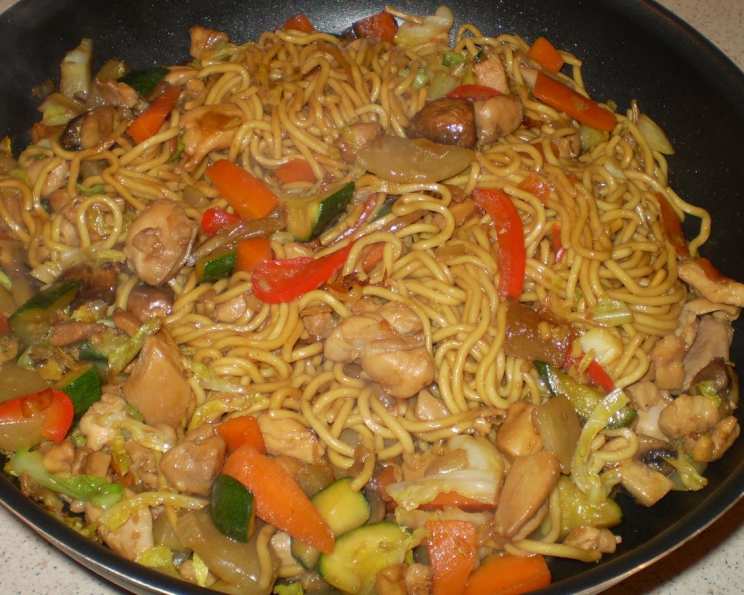
Poodle Doodle (Malaysian Noodle Stir-Fry)
I can still remember the slightly furrowed brow of my younger brother as he tentatively tried his first bite of lap cheong, the sweet and savory Chinese sausage that’s a cornerstone of so many stir-fries. His face contorted for a split second before he uttered the now infamous words, comparing its texture to something far less appetizing than it actually is. That night, “Poodle Doodle” was born – a silly name for a deeply satisfying dish that, despite its unconventional moniker, became a family favorite, always packed with vibrant vegetables and layers of flavor.
Recipe Overview
- Prep Time: 20 minutes
- Cook Time: 25 minutes
- Total Time: 45 minutes
- Servings: 8
- Dietary Type: Varies (can be adapted to be gluten-free and dairy-free)
Ingredients
- 800 g hokkien noodles
- 2 Chinese sausages (lap cheong, available at Asian grocery stores)
- 1 tablespoon water
- 2 tablespoons olive oil
- 1 carrot, sliced
- 2 sticks celery, sliced
- 1 zucchini, sliced
- 1 red pepper, deseeded & membranes removed, sliced
- 1⁄4 cabbage, sliced
- 500 g chicken breasts, sliced
- 1 onion, sliced
- 1 teaspoon gingerroot, grated
- 2 garlic cloves, minced
- 1 teaspoon sambal oelek
- 1⁄4 cup soy sauce
- 2 tablespoons oyster sauce
- 2 tablespoons ketjap manis or 2 tablespoons thick soy sauce
Equipment Needed
- Large wok or large skillet
- Microwave-safe bowl
- Cutting board
- Knife
- Grater
- Measuring cups and spoons
Instructions
- Begin by preparing the hokkien noodles. Place them in a bowl and cover with hot water. Let them soak for about 5 minutes, or until they easily separate. Drain the noodles well and set aside. This step helps to loosen the noodles and prevents them from clumping during the stir-fry process.
- Next, prepare the lap cheong. Place the Chinese sausages in a microwave-safe bowl with 1 tablespoon of water. Microwave for 1 minute. This partially cooks the sausage and renders some of the fat, adding flavour to the overall dish. Allow the sausages to cool slightly before slicing them thinly.
- Now, prepare your vegetables. Slice the carrot, celery, zucchini, and red pepper. Slice the cabbage and onion separately. Grate the gingerroot and mince the garlic cloves. Having all your ingredients prepped and ready to go is crucial for a successful stir-fry, as the cooking process moves quickly.
- Heat 1 tablespoon of olive oil in a wok or large skillet over medium-high heat. Add the sliced carrot, celery, zucchini, and red pepper to the wok. Stir-fry for a few minutes, until they are partly cooked but still retain some crunch.
- Add the sliced cabbage to the wok and cook for another 3 minutes, stirring frequently, until it begins to soften but isn’t mushy. Remove the cooked vegetables from the wok and set aside.
- Heat the remaining 1 tablespoon of olive oil in the wok. Add the sliced chicken breasts to the wok and cook until almost done, stirring occasionally to ensure even cooking.
- Add the sliced lap cheong, sliced onion, grated gingerroot, minced garlic cloves, and sambal oelek to the wok with the chicken. Stir-fry for a further few minutes, until the onion starts to become translucent and the lap cheong releases its flavour.
- Add the drained hokkien noodles and the cooked vegetables back to the wok. Stir well to combine all the ingredients.
- Pour in the soy sauce, oyster sauce, and ketjap manis (or thick soy sauce) over the noodles and vegetables. Stir continuously to ensure the sauces are evenly distributed and the noodles are well coated.
- Heat the entire mixture for a couple of minutes, stirring constantly, until everything is heated through and the sauce has thickened slightly.
Expert Tips & Tricks
- Vegetable Variety: Feel free to adapt the vegetables to your liking or what you have on hand. Broccoli, snow peas, or mushrooms would also be delicious additions.
- Spice Level: Adjust the amount of sambal oelek to control the spiciness of the dish. If you prefer a milder flavor, omit it altogether or substitute with a milder chili paste.
- Noodle Texture: Hokkien noodles can sometimes be sticky. Soaking them properly and not overcooking them in the stir-fry are key to achieving the right texture.
- Make-Ahead Prep: You can prep all the vegetables and slice the chicken and sausage ahead of time. Store them in separate containers in the refrigerator until ready to cook.
- Gluten-Free Adaptation: Replace soy sauce with tamari, which is gluten-free. Check the oyster sauce for gluten as well, or use a gluten-free alternative.
- Balancing Flavors: The key to a great stir-fry is balancing sweet, salty, and savory flavors. Taste and adjust the sauces as needed to achieve the perfect balance for your palate. Add a splash of rice vinegar for acidity if desired.
Serving & Storage Suggestions
Serve the Poodle Doodle hot, straight from the wok. Garnish with chopped green onions or a sprinkle of sesame seeds for added visual appeal. Leftovers can be stored in an airtight container in the refrigerator for up to 3 days. Reheat in a wok or skillet over medium heat, adding a splash of water or broth if needed to prevent sticking. You can also reheat it in the microwave. This dish isn’t ideal for freezing, as the noodles can become mushy upon thawing.
Nutritional Information
| Nutrient | Amount per Serving | % Daily Value |
|---|---|---|
| Calories | 555 kcal | N/A |
| Total Fat | 13.8 g | 21% |
| Saturated Fat | 3.4 g | 16% |
| Cholesterol | 124 mg | 41% |
| Sodium | 707.9 mg | 29% |
| Total Carbohydrate | 78.3 g | 26% |
| Dietary Fiber | 5.2 g | 20% |
| Sugars | N/A g | N/A |
| Protein | 29.4 g | 58% |
Note: Nutritional information is an estimate and may vary based on specific ingredients and cooking methods.
Variations & Substitutions
- Vegetarian/Vegan: Substitute the chicken with tofu or tempeh. Use a vegetarian oyster sauce or omit it altogether and add a touch more soy sauce and ketjap manis.
- Protein Power: Add shrimp, beef, or pork instead of or in addition to chicken.
- Noodle Swap: If you can’t find hokkien noodles, you can use thick egg noodles, udon noodles, or even spaghetti as a substitute, although the texture will be slightly different.
- Seasonal Vegetables: Incorporate seasonal vegetables like asparagus in spring, corn in summer, or butternut squash in the fall.
- Coconutty Twist: Add a splash of coconut milk to the sauce for a creamier, richer flavour with a Southeast Asian flair.
FAQs (Frequently Asked Questions):
Q: Can I make this ahead of time?
A: While it’s best served fresh, you can prep all the ingredients in advance and store them separately. Cook just before serving for the best texture.
Q: What if I can’t find lap cheong?
A: If you can’t find lap cheong, you can substitute it with another type of smoked sausage or bacon, although the flavor profile will be slightly different.
Q: How spicy is this dish?
A: The level of spiciness depends on the amount of sambal oelek you use. Start with a small amount and add more to taste.
Q: Can I use frozen vegetables?
A: Yes, you can use frozen vegetables, but they might release more water during cooking. Be sure to cook them until tender and drain any excess liquid.
Q: Is this dish gluten-free?
A: No, hokkien noodles and soy sauce typically contain gluten. Use gluten-free noodles like rice noodles and substitute soy sauce with tamari to make it gluten-free.
Final Thoughts
Don’t let the name “Poodle Doodle” deter you – this Malaysian Noodle Stir-Fry is a flavorful and customizable dish that’s sure to become a family favorite. Experiment with different vegetables and protein sources to create your own signature version. Embrace the joy of cooking and share this delicious dish with your loved ones! Let me know what you think and happy cooking!