
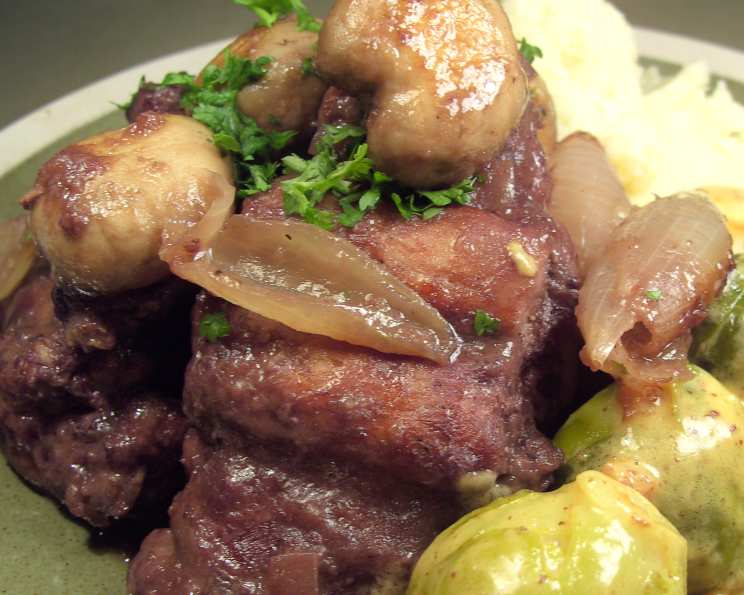
Poor Man’s Rabbit: A Hearty Stew for Any Season
The aroma of slow-cooked rabbit always takes me back to my grandmother’s kitchen. She wasn’t a fancy chef, but she had a magic touch when it came to simple, rustic dishes. I remember sitting at her worn wooden table, watching the steam rise from a bowl of rabbit stew, the rich scent of red wine and herbs filling the air. Each bite was a comforting hug, a taste of home that warmed me from the inside out. She always said the key was patience – letting the rabbit simmer until it was fall-off-the-bone tender, the flavors melding into something truly special. While I may have fancied up the name and the ingredients, this recipe is an homage to her and the simple elegance of a well-prepared, rustic meal.
Recipe Overview
- Prep Time: 30 minutes
- Cook Time: 2 hours
- Total Time: 2 hours 30 minutes
- Servings: 4
- Yield: 4 servings
- Dietary Type: Gluten-Free (if served without flour-based sides)
Ingredients
- 1 large rabbit, cut into 6 pieces, with liver
- ½ cup flour
- Salt, to taste
- Fresh ground black pepper, to taste
- 4 tablespoons olive oil
- 1 large onion, finely chopped
- 2 garlic cloves, minced
- 2 cups red wine (a dry red, such as Cabernet Sauvignon or Merlot, works well)
- 1 bouquet garni (bay leaf, savory, and thyme, wrapped in cheesecloth)
- 1 ½ cups veal stock (brown) (chicken or beef stock can be substituted)
- 1 cup white pearl onions
- 2 cups mushrooms, cleaned whole (cremini, button, or a mix)
Equipment Needed
- Large saucepan or Dutch oven
- Small pot for blanching onions
- Strainer or fine-mesh sieve
- Cheesecloth
Instructions
-
Begin by preparing the rabbit. Dredge each piece, including the liver, in flour, ensuring they are lightly coated. Shake off any excess flour to prevent a gummy sauce. Season each piece generously with salt and freshly ground black pepper.
-
In a large saucepan or Dutch oven, heat 2 tablespoons of olive oil over medium heat. Once the oil is shimmering, carefully place the rabbit pieces in the pan, ensuring not to overcrowd it. Brown the rabbit on all sides until golden brown and slightly crispy. This browning process is crucial for developing deep, rich flavors. Remove the browned rabbit from the pan and set aside.
-
Add 1 tablespoon of olive oil to the same pan. Reduce the heat to medium and add the finely chopped onion and minced garlic. Sauté the onion and garlic until softened and translucent, about 5-7 minutes. Be careful not to burn the garlic, as it can become bitter.
-
Pour ½ cup of the red wine into the pan. Increase the heat to high and cook until most of the wine has evaporated. This deglazing process will lift any browned bits from the bottom of the pan, adding depth and complexity to the sauce. Scrape the bottom of the pan with a wooden spoon while stirring to loosen these flavorful bits.
-
Add the remaining 1 ½ cups of red wine, the bouquet garni (ensure it’s securely wrapped in cheesecloth), and the veal stock to the pan. Stir to combine all the ingredients. Bring the mixture to a simmer.
-
Return the browned rabbit pieces to the pan, nestling them into the simmering liquid. Ensure the rabbit is mostly submerged in the sauce. Cover the pan tightly with a lid, reduce the heat to low, and simmer gently for 1 ½ – 1 ¾ hours, or until the rabbit is very tender and easily pierced with a fork. The cooking time may vary depending on the size and age of the rabbit.
-
While the rabbit is simmering, prepare the pearl onions and mushrooms. In a small pot, bring water to a boil. Add the pearl onions and blanch them for 1 minute. This will loosen the skins, making them easier to peel. Drain the onions immediately and run them under cold water to stop the cooking process.
-
Peel the blanched pearl onions by cutting off the root ends and squeezing the onions out of their skins. This can be a bit tedious, but it’s worth the effort for the sweet, delicate flavor they add to the stew.
-
In a separate pan, heat the remaining 1 tablespoon of olive oil over medium heat. Add the whole, cleaned mushrooms and peeled pearl onions. Sauté until golden brown and tender, about 15 minutes. Season to taste with salt and pepper. Set aside.
-
Once the rabbit is cooked and tender, remove it from the pan and set aside, keeping it warm. Discard the bouquet garni from the sauce.
-
Mash the rabbit liver into the sauce. This will thicken the sauce and add richness. (If you prefer a smoother sauce, you can omit this step or use an immersion blender to puree a small amount of the sauce instead.)
-
Strain the sauce through a fine-mesh sieve, pushing as many of the solids as possible through the strainer to extract maximum flavor. This will create a smooth, velvety sauce.
-
Return the strained sauce to the pan. Add the cooked rabbit, mushrooms, and pearl onions. Simmer gently for 5 minutes to heat everything through, allowing the flavors to meld together beautifully.
-
Serve hot, garnished with fresh herbs such as parsley or thyme, if desired.
Expert Tips & Tricks
- Browning is Key: Don’t skip the step of browning the rabbit. It’s essential for developing a deep, rich flavor in the final dish. Make sure the pan is hot enough and don’t overcrowd it, or the rabbit will steam instead of brown.
- Wine Selection: Use a dry red wine that you would enjoy drinking. The flavor of the wine will be concentrated as it cooks, so choose one you like.
- Bouquet Garni: A bouquet garni is a classic French technique for infusing flavor into stews and soups. You can customize the herbs to your liking, but bay leaf, thyme, and savory are a good starting point.
- Make-Ahead Tip: This stew can be made a day or two in advance. The flavors will actually improve as it sits. Reheat gently before serving.
- Thickening the Sauce: If your sauce is too thin after straining, you can thicken it by simmering it uncovered for a few minutes, allowing it to reduce. Alternatively, you can mix a teaspoon of cornstarch with a tablespoon of cold water and whisk it into the simmering sauce.
Serving & Storage Suggestions
Serve Poor Man’s Rabbit hot in bowls, garnished with fresh parsley or thyme. It’s delicious on its own or served with crusty bread for soaking up the flavorful sauce. Mashed potatoes, polenta, or rice also make excellent accompaniments.
Leftovers can be stored in an airtight container in the refrigerator for up to 3 days. Reheat gently on the stovetop over low heat or in the microwave. The flavors will continue to develop as it sits, making it even more delicious the next day. The stew can also be frozen for up to 2 months. Thaw completely in the refrigerator before reheating.
Nutritional Information
| Nutrient | Amount per Serving | % Daily Value |
|---|---|---|
| Calories | 450 kcal | 23% |
| Total Fat | 25g | 38% |
| Saturated Fat | 5g | 25% |
| Cholesterol | 150mg | 50% |
| Sodium | 300mg | 13% |
| Total Carbohydrate | 15g | 5% |
| Dietary Fiber | 3g | 12% |
| Sugars | 5g | – |
| Protein | 35g | 70% |
Note: Nutritional information is an estimate and may vary depending on specific ingredients and portion sizes.
Variations & Substitutions
- Chicken Substitution: If rabbit is unavailable, you can substitute chicken thighs or legs. Adjust cooking time accordingly.
- Vegetarian Option: Replace the rabbit with hearty vegetables like butternut squash, parsnips, and celery root for a vegetarian version. Use vegetable broth instead of veal stock.
- Different Herbs: Experiment with different herbs in the bouquet garni, such as rosemary, sage, or marjoram.
- Spice it Up: Add a pinch of red pepper flakes for a subtle kick.
- Beer Braised: Substitute the red wine with a dark beer, such as a stout or porter, for a richer, maltier flavor.
FAQs (Frequently Asked Questions)
Q: Can I use frozen rabbit for this recipe?
A: Yes, you can use frozen rabbit. Thaw it completely in the refrigerator before cooking. Pat it dry with paper towels to remove excess moisture.
Q: What if I can’t find veal stock?
A: Chicken or beef stock can be substituted for veal stock. The flavor will be slightly different, but the stew will still be delicious.
Q: Can I make this in a slow cooker?
A: Yes, you can adapt this recipe for a slow cooker. Brown the rabbit and sauté the onions and garlic on the stovetop first. Then, transfer everything to the slow cooker and cook on low for 6-8 hours, or on high for 3-4 hours.
Q: How can I prevent the pearl onions from falling apart during cooking?
A: Blanching the pearl onions briefly before peeling them helps to set their shape and prevent them from becoming mushy.
Q: Is it necessary to strain the sauce?
A: Straining the sauce is optional, but it will result in a smoother, more refined texture. If you prefer a more rustic stew, you can skip this step.
Final Thoughts
I hope this recipe inspires you to create your own comforting memories in the kitchen. Don’t be intimidated by the “Poor Man’s” moniker; this dish is rich in flavor and history. Feel free to experiment with the variations and substitutions to make it your own. Share your creations with loved ones, and don’t hesitate to leave a comment with your feedback or questions. Pair this hearty stew with a robust red wine and enjoy the warmth and satisfaction of a truly unforgettable meal.