
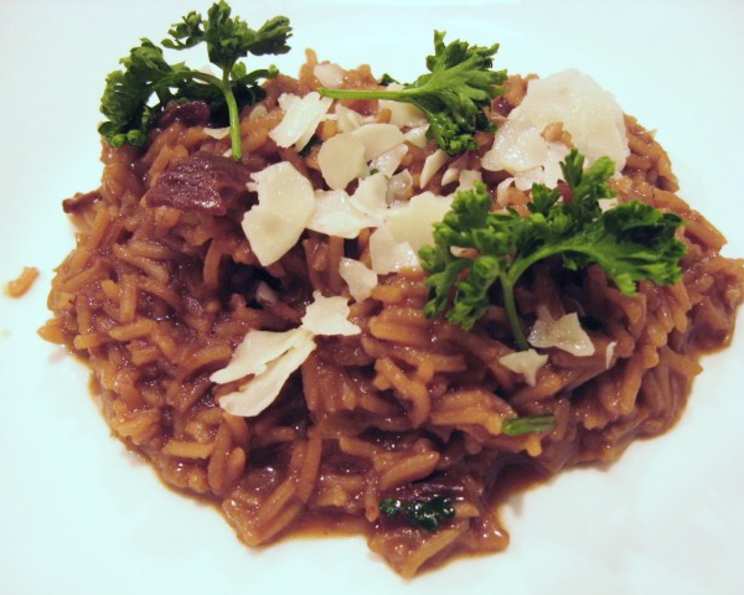
The Ultimate Creamy Porcini Risotto: A Chef’s Guide
The first time I tasted truly transcendent risotto, I was a stagiaire in a small trattoria nestled in the hills of Tuscany. The aroma alone – earthy mushrooms mingled with warm wine and Parmesan – was enough to transport me. But the texture! Each grain of rice was perfectly al dente, suspended in a creamy, almost ethereal sauce. That day, I knew I needed to master this iconic dish, and the Porcini Risotto has become a personal favorite, a taste of Italy I can recreate anywhere.
Recipe Overview
- Prep Time: 40 minutes
- Cook Time: 30 minutes
- Total Time: 70 minutes
- Servings: 4
- Dietary Type: Vegetarian
Ingredients
- 400 g risotto rice (Carnaroli, Arborio, or Vialone Nano)
- 60 g dried porcini mushrooms
- 125 ml white wine (or Prosecco)
- 500 ml vegetable broth, simmering
- 2 shallots, chopped
- 2 garlic cloves, minced
- 2-3 tablespoons parmesan cheese, grated (or Pecorino Romano)
- 2 tablespoons butter
- 1 tablespoon olive oil
- 2 tablespoons parsley, chopped (or 1 tablespoon sage, or thyme)
- Salt and pepper to taste
Equipment Needed
- Large skillet or saucepan
- Medium saucepan
- Fine-mesh sieve or coffee filter
- Ladle
- Wooden spoon or spatula
Instructions
- Begin by hydrating the dried porcini mushrooms. Place them in a bowl and cover with about 150 ml of boiling water. Let them soak for approximately 30 minutes, allowing them to fully rehydrate and release their intense flavor.
- Once the mushrooms have soaked, carefully strain the soaking liquid through a fine-mesh sieve or even a coffee filter. This crucial step removes any grit or sand that may have accumulated in the dried mushrooms. Reserve this precious liquid for later use; it will add depth and earthiness to the risotto.
- Coarsely chop the rehydrated porcini mushrooms.
- In a large skillet or saucepan, heat the olive oil over medium heat. Add the minced garlic, chopped porcini mushrooms, and chopped shallots. Sauté until the shallots are translucent and softened, about 5-7 minutes. Be careful not to burn the garlic.
- Add the risotto rice to the skillet. Stir continuously to coat the grains with the oil and mushroom mixture. Let the rice toast for about 2 to 3 minutes, stirring constantly, until it becomes slightly translucent around the edges. This toasting step is essential for developing the nutty flavor of the risotto.
- Pour in the white wine (or Prosecco) and stir frequently until the wine is completely absorbed by the rice. The alcohol will evaporate, leaving behind a subtle acidity and aroma.
- Now comes the heart of risotto making: the gradual addition of liquid. Alternately add the hot (!) vegetable broth and the reserved porcini soaking water, one ladle at a time, to the rice. Stir constantly until the liquid has been absorbed by the rice before adding the next ladle. This slow and deliberate process allows the rice to release its starch, creating the signature creamy texture of risotto.
- Continue adding the liquid and stirring frequently for about 15-20 minutes, or until the rice is cooked through but still retains a slight bite – al dente. The risotto should have a creamy, almost flowing consistency. The exact amount of broth and soaking liquid you’ll need is bound to vary according to the type/brand of rice you’ll use.
- Once the rice is cooked to your liking, remove the skillet from the heat. Incorporate the butter and grated Parmesan cheese (or Pecorino Romano), stirring vigorously until they are melted and evenly distributed throughout the risotto. This final step adds richness and a velvety texture.
- Stir in the chopped parsley (or sage or thyme).
- Season with salt and pepper to taste.
Expert Tips & Tricks
- Warm Broth is Key: Always keep your broth simmering gently in a separate saucepan. Adding cold broth will lower the temperature of the rice and prevent it from cooking evenly.
- Don’t Overcrowd the Pan: Use a large enough skillet or saucepan to allow the rice to cook evenly.
- Taste as You Go: Regularly taste the rice as it cooks to ensure it reaches the perfect al dente texture.
- Vegan Variation: Replace butter with plant-based butter or olive oil, and parmesan with nutritional yeast or a vegan parmesan alternative.
Serving & Storage Suggestions
Serve the Porcini Risotto immediately while it’s hot and creamy. You can garnish it with extra Parmesan shavings and a sprinkle of fresh parsley for an elegant presentation. For a heartier meal, pair it with a grilled chicken breast or a simple green salad.
Leftover risotto can be stored in an airtight container in the refrigerator for up to 2 days. To reheat, add a splash of broth or water to loosen it up, and heat gently in a saucepan over low heat, stirring frequently, or microwave in 30-second intervals, stirring in between. Reheated risotto will not be as creamy as freshly made, but it will still be delicious. Freezing risotto is not recommended as it can change the texture of the rice.
Nutritional Information
| Nutrient | Amount per Serving | % Daily Value |
|---|---|---|
| Calories | 450 kcal | 23% |
| Total Fat | 18g | 28% |
| Saturated Fat | 10g | 50% |
| Cholesterol | 30mg | 10% |
| Sodium | 200mg | 8% |
| Total Carbohydrate | 60g | 20% |
| Dietary Fiber | 3g | 12% |
| Sugars | 2g | 4% |
| Protein | 10g | 20% |
Variations & Substitutions
- Truffle Risotto: Add a drizzle of truffle oil or a shaving of fresh truffle at the end for a luxurious twist.
- Seasonal Mushrooms: Experiment with other types of mushrooms, such as cremini, shiitake, or oyster mushrooms, in addition to or in place of the porcini.
- Vegetable Medley: Add other vegetables like asparagus, peas, or zucchini for a vibrant and flavorful risotto.
- Seafood Risotto: Incorporate shrimp, scallops, or mussels for a decadent seafood risotto.
FAQs (Frequently Asked Questions)
Q: Can I use regular rice instead of risotto rice?
A: No, risotto rice (Carnaroli, Arborio, or Vialone Nano) is essential for achieving the creamy texture of risotto. These varieties have a high starch content that is released during the cooking process.
Q: Can I use water instead of vegetable broth?
A: While you can use water in a pinch, vegetable broth adds a depth of flavor that is crucial for a delicious risotto.
Q: How do I know when the risotto is done?
A: The risotto is done when the rice is cooked through but still retains a slight bite (al dente). It should have a creamy, almost flowing consistency.
Q: Can I make risotto ahead of time?
A: Risotto is best served immediately after cooking. If you need to prepare it in advance, cook it until it is slightly underdone, then spread it out on a baking sheet to cool quickly. When ready to serve, add a splash of broth and finish cooking over low heat, stirring frequently.
Q: My risotto is too thick. What should I do?
A: Add a little more hot broth or water, one tablespoon at a time, until you reach the desired consistency.
Final Thoughts
Risotto, especially this creamy porcini version, may seem intimidating, but with a little patience and attention to detail, it’s surprisingly simple to make. The key is constant stirring and gradual addition of liquid. This dish is more than just a meal; it’s an experience. So, gather your ingredients, pour yourself a glass of wine, and enjoy the process of creating this comforting and elegant Italian classic. Don’t be afraid to experiment with variations and substitutions to make it your own. Buon appetito!