
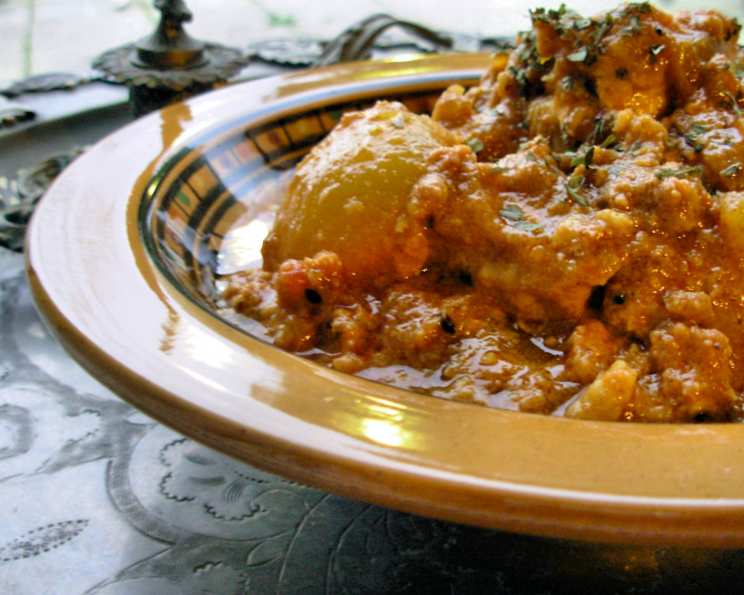
Pork and Apricot Curry: A Taste of Nostalgia
I can almost smell the familiar aroma now: a rich, savory scent punctuated by the sweet tang of apricots. It takes me back to my student days, huddled with friends in a cozy, low-lit pub, where this unexpected curry was a constant fixture on the menu. The tender pork, simmered in a fragrant sauce, was the perfect antidote to a chilly evening, and the vibrant flavors sparked countless conversations. Recreating this recipe is like revisiting those cherished memories, a comforting reminder of laughter, friendship, and the joy of sharing good food.
Recipe Overview
- Prep Time: 20 minutes
- Cook Time: 2 hours 30 minutes
- Total Time: 2 hours 50 minutes
- Servings: 4-5
- Yield: 4-5 servings
- Dietary Type: Not Gluten-Free (contains soy sauce and bouillon), Dairy-Free
Ingredients
- 2 lbs pork shoulder, 1-inch cubed
- 2 medium onions, chopped
- 3 large garlic cloves, crushed
- 3 tablespoons sunflower oil
- 4 tablespoons Madras curry powder (choose a high-quality brand)
- 3 cardamom pods
- 2 tablespoons tomato puree
- 2 tablespoons chicken bouillon powder
- 1/4 teaspoon fresh ground black pepper
- 1 tablespoon dark soy sauce
- 2 tablespoons coconut cream
- 1 (14 ounce) can apricot halves in light syrup
- 1 tablespoon lemon juice (if needed)
- 1 tablespoon fresh coriander, chopped
- Salt, to taste
Equipment Needed
- Large, heavy-bottomed pan or Dutch oven
- Stirring spoon
- Measuring spoons and cups
- Cutting board
- Knife
Instructions
- Begin by preparing your ingredients. Chop the onions and crush the garlic. Cube the pork shoulder into 1-inch pieces, if it’s not already prepared.
- Heat the sunflower oil in a large, heavy-bottomed pan or Dutch oven over medium-high heat. Once the oil is shimmering, add the chopped onions.
- Fry the onions until they are deeply golden in color, stirring occasionally to prevent burning. This step is crucial for developing a rich flavor base for the curry.
- Add the cubed pork to the pan and fry for a further 3 minutes, stirring continuously to ensure the pork browns evenly on all sides.
- Introduce the crushed garlic to the pan and fry for another 2 minutes, stirring constantly. Be careful not to burn the garlic, as it can become bitter.
- Now, add the Madras curry powder and cardamom pods to the pan. Continue stirring until the spices in the powder release their fragrant aroma, typically about 1-2 minutes. This process is called “blooming” the spices, and it enhances their flavor.
- Stir in the tomato puree, ensuring it’s well combined with the other ingredients.
- Add enough water to cover all the ingredients in the pan.
- Add ¾ of the can of apricot halves (reserve the remaining apricots for later) and all the syrup from the can. Then, add the chicken bouillon powder, black pepper, and dark soy sauce. Stir well to combine.
- Bring the curry to a simmer, then reduce the heat to low, cover the pan, and simmer for 1 1/2 to 2 hours, or until the pork is meltingly tender. Stir occasionally to prevent sticking. The cooking time will vary depending on the size of the pork cubes and the heat of your stove.
- After simmering for the specified time, add the remaining apricot halves and the coconut cream.
- Cook for a further 30 minutes, uncovered, until the sauce has thickened to your desired consistency.
- Taste the curry and add salt if necessary. If the curry is too sweet for your liking, add lemon juice to balance the flavors. Remember, this curry should be savory with a hint of sweetness, not overly sweet.
- Remove from heat. Serve hot, garnished with fresh coriander.
Expert Tips & Tricks
- Spice Level: Adjust the amount of curry powder to your preference. For a milder curry, start with 3 tablespoons. For a spicier curry, use 5 tablespoons or add a pinch of chili flakes.
- Pork Shoulder: Pork shoulder is ideal for slow cooking as it becomes incredibly tender and flavorful. However, you can also use pork loin or leg, but reduce the cooking time accordingly.
- Make Ahead: This curry tastes even better the next day! Prepare it a day in advance and store it in the refrigerator. The flavors will meld together, creating a richer and more complex taste.
- Cardamom Pods: Lightly crush the cardamom pods before adding them to the curry to release their aroma. Remember to remove them before serving.
- Apricot Variation: You can also use fresh apricots or peaches when they are in season. Peel and chop them before adding them to the curry.
Serving & Storage Suggestions
Serve the Pork and Apricot Curry hot, garnished with fresh coriander. It pairs perfectly with basmati rice, finely sliced onion rings soaked in sweet vinegar, and a refreshing side of fresh mint and diced fresh tomatoes sprinkled with lemon pepper.
Leftover curry can be stored in an airtight container in the refrigerator for up to 3-4 days. For longer storage, freeze the curry in freezer-safe containers for up to 2-3 months. To reheat, thaw the curry in the refrigerator overnight and then heat it gently in a saucepan over medium heat, stirring occasionally, until heated through.
Nutritional Information
(Estimated values per serving. Actual values may vary based on specific ingredients and portion sizes.)
| Nutrient | Amount per Serving | % Daily Value |
|---|---|---|
| Calories | 650 kcal | 33% |
| Total Fat | 40g | 51% |
| Saturated Fat | 15g | 75% |
| Cholesterol | 120mg | 40% |
| Sodium | 800mg | 33% |
| Total Carbohydrate | 30g | 10% |
| Dietary Fiber | 4g | 16% |
| Sugars | 20g | – |
| Protein | 45g | 90% |
Variations & Substitutions
- Fresh Fruit: As the original recipe suggests, feel free to experiment with other fruits. Fresh peaches, plums, or even pineapple can be delicious substitutes for apricots. Adjust the amount of lemon juice to balance the sweetness.
- Vegetarian/Vegan Option: Substitute the pork shoulder with firm tofu or chickpeas. Use vegetable bouillon powder instead of chicken bouillon powder.
- Gluten-Free: Substitute the dark soy sauce with tamari, a gluten-free soy sauce alternative. Double-check the label on your curry powder to ensure it is gluten-free.
- Spice Level: Add a chopped chili pepper or a pinch of cayenne pepper for an extra kick.
- Creaminess: For a richer and creamier curry, use full-fat coconut milk instead of coconut cream.
FAQs (Frequently Asked Questions)
Q: Can I use a different cut of pork?
A: Yes, while pork shoulder is recommended for its tenderness, you can use pork loin or leg. However, be sure to adjust the cooking time accordingly to prevent the pork from drying out.
Q: Can I make this curry in a slow cooker?
A: Absolutely! Sear the pork as instructed in the recipe, then transfer all the ingredients to a slow cooker. Cook on low for 6-8 hours or on high for 3-4 hours, or until the pork is very tender.
Q: How do I know when the pork is cooked through?
A: The pork is cooked through when it is easily pierced with a fork and is very tender. It should almost fall apart.
Q: Can I use dried apricots instead of canned?
A: Yes, you can use dried apricots. Soak them in hot water for about 30 minutes to soften them before adding them to the curry. You may also need to add a little extra water to the curry, as dried apricots will absorb some of the liquid.
Q: What is Madras curry powder?
A: Madras curry powder is a blend of spices commonly used in Indian cuisine. It typically includes coriander, turmeric, cumin, fenugreek, chili powder, and other spices. It has a distinctive flavor that is slightly sweet, slightly spicy, and very aromatic.
Final Thoughts
This Pork and Apricot Curry is more than just a recipe; it’s a journey of flavors and a comforting reminder of simpler times. It’s a dish that invites experimentation and encourages you to make it your own. So, gather your ingredients, embrace the process, and create a culinary masterpiece that will warm your heart and tantalize your taste buds. I encourage you to share your creations and feedback, and to pair this delightful curry with your favorite sides and drinks. Bon appétit!