
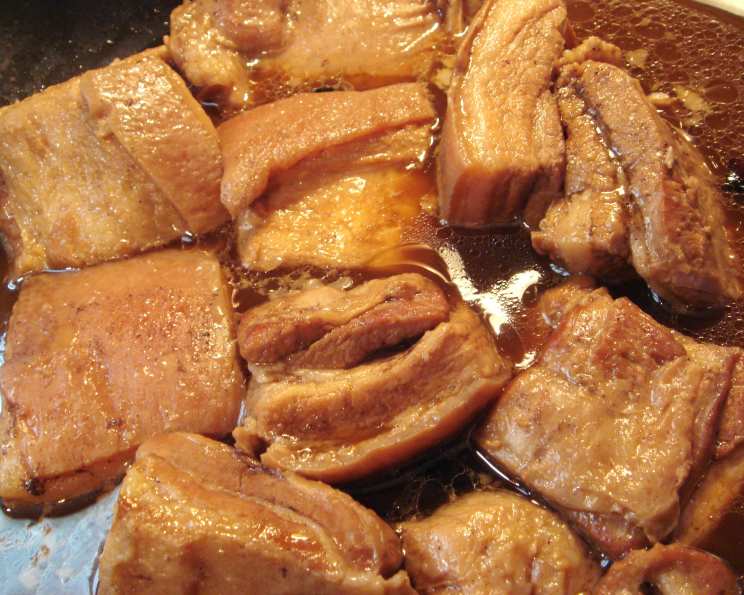
Braised Pork Belly: A Taste of Home
The aroma alone transports me back to my grandmother’s kitchen, a haven of warmth and delicious smells. I remember sitting at her worn wooden table, steam rising from a bowl of glistening, mahogany-colored pork belly, its savory fragrance mingling with the sweet scent of rice. Each bite was a revelation: tender, melt-in-your-mouth meat, infused with the complex flavors of soy sauce, wine, and spices, all clinging to a bed of fluffy white rice. It was more than just a meal; it was love on a plate. And now, I’m excited to share this cherished recipe with you, a taste of my childhood and a journey into the heart of comfort food.
Recipe Overview
- Prep Time: 15 minutes
- Cook Time: 50-60 minutes
- Total Time: 65-75 minutes
- Servings: 6
- Yield: About 6 servings
- Dietary Type: Not Vegetarian, Not Vegan, Gluten-Free (check soy sauce ingredients)
Ingredients
- 5 tablespoons grapeseed oil
- 2 lbs raw pork belly, cut into chunks (about 1 in x 2 in)
- 6 cups Chinese rice wine (cooking michiu)
- ½ cup aged soy sauce
- 2 tablespoons brown sugar
- 3 garlic cloves
- 2 teaspoons Chinese five-spice powder
- 1 teaspoon anise extract
- 3 small red chili peppers (optional)
Equipment Needed
- Non-stick skillet
- Soup pot
Instructions
- In a non-stick skillet, heat grapeseed oil over medium heat. The oil is ready when it shimmers slightly.
- When the oil is hot, pan-fry both sides of the pork belly chunks until they are lightly browned. This step is crucial for developing flavor and rendering some of the excess fat. Work in batches to avoid overcrowding the pan, which can lower the oil temperature and result in steamed, rather than browned, pork. Don’t worry about cooking the pork all the way through at this stage; you’re just looking for color.
- Transfer the browned pork belly to a soup pot.
- Add the remaining ingredients to the pot: Chinese rice wine (michiu), aged soy sauce, brown sugar, garlic cloves, Chinese five-spice powder, anise extract, and red chili peppers (if using).
- Ensure the rice wine covers the meat by about 1 inch. If not, add more michiu or a little water to reach the desired level. The liquid is essential for braising the pork to tender perfection.
- Turn the heat to high and bring the mixture to a boil. Watch carefully to prevent it from boiling over.
- Once boiling, reduce the heat to medium-low, cover the pot, and simmer until the pork belly becomes very tender, about 50-60 minutes. Check for tenderness by piercing a piece of pork with a fork. It should yield easily. If it’s still firm, continue simmering for a bit longer, checking every 15 minutes.
- Serve hot with steamed rice. The rich, savory sauce is perfect for soaking into the rice.
Expert Tips & Tricks
- Achieving the Perfect Tenderness: The key to truly melt-in-your-mouth pork belly is low and slow cooking. Resist the urge to crank up the heat, as this can make the pork tough.
- Adjusting the Sweetness: If you prefer a less sweet stew, reduce the amount of brown sugar. Taste the sauce towards the end of cooking and adjust accordingly.
- Adding Depth of Flavor: For an even richer flavor, consider adding a few slices of ginger to the stew during the simmering process.
- Fat Management: If you find the stew too fatty after cooking, you can skim off some of the excess fat from the surface with a spoon before serving.
- Making it Ahead: This stew is even better the next day! The flavors meld and deepen as it sits. Prepare it a day in advance and reheat before serving.
Serving & Storage Suggestions
Serve the braised pork belly hot over a bed of freshly steamed rice. Garnish with chopped scallions or cilantro for a pop of color and freshness. You can also serve it with stir-fried vegetables, such as bok choy or gai lan.
Leftovers can be stored in an airtight container in the refrigerator for up to 3-4 days. For longer storage, freeze the stew in individual portions for up to 2 months. Reheat gently on the stovetop or in the microwave until heated through.
Nutritional Information
| Nutrient | Amount per Serving | % Daily Value |
|---|---|---|
| Calories | 1232.9 kcal | N/A |
| Calories from Fat | 824 g | 67% |
| Total Fat | 91.7 g | 141% |
| Saturated Fat | 30.4 g | 151% |
| Cholesterol | 109.1 mg | 36% |
| Sodium | 1395.4 mg | 58% |
| Total Carbohydrate | 18.1 g | 6% |
| Dietary Fiber | 0.2 g | 0% |
| Sugars | 5 g | 19% |
| Protein | 17.9 g | 35% |
Variations & Substitutions
- Spicy Pork Belly: Increase the number of red chili peppers or add a dash of chili oil for a spicier kick.
- Vegetable Additions: Add mushrooms, daikon radish, or carrots to the stew for added texture and nutrients.
- Soy Sauce Alternatives: If you’re sensitive to soy, you can try using coconut aminos as a substitute, though the flavor will be slightly different.
- Wine Substitutions: While Chinese rice wine (michiu) is traditional, you can substitute dry sherry or even a light-bodied red wine in a pinch.
- Slow Cooker Version: For a hands-off approach, transfer the ingredients to a slow cooker and cook on low for 6-8 hours.
FAQs (Frequently Asked Questions)
Q: Can I use a different cut of pork?
A: While pork belly is the ideal cut for this recipe due to its high fat content, which renders during cooking and creates a succulent, flavorful stew, you can use pork shoulder as a substitute. However, the cooking time may need to be adjusted, and the end result will be slightly less rich.
Q: Do I need to use Chinese rice wine (michiu)?
A: While michiu is traditional and contributes a unique flavor, you can substitute dry sherry or a light-bodied red wine if you don’t have it on hand.
Q: Can I make this stew in a pressure cooker?
A: Yes, you can adapt this recipe for a pressure cooker. Reduce the cooking time to about 20-25 minutes on high pressure, followed by a natural pressure release.
Q: How do I know when the pork belly is cooked through?
A: The pork belly is cooked through when it is very tender and easily pierced with a fork. It should almost fall apart.
Q: Can I add other vegetables to the stew?
A: Absolutely! Mushrooms, daikon radish, carrots, and potatoes are all great additions to this stew. Add them about halfway through the cooking time to ensure they don’t become mushy.
Final Thoughts
This braised pork belly recipe is more than just a dish; it’s a journey into flavor, tradition, and comfort. I hope you’ll give it a try and experience the simple joy of a lovingly prepared meal. Don’t hesitate to experiment with variations and substitutions to make it your own. And, most importantly, share it with the people you love! I’d suggest pairing this with a light and crisp lager to cut through the richness of the stew. Let me know what you think!