
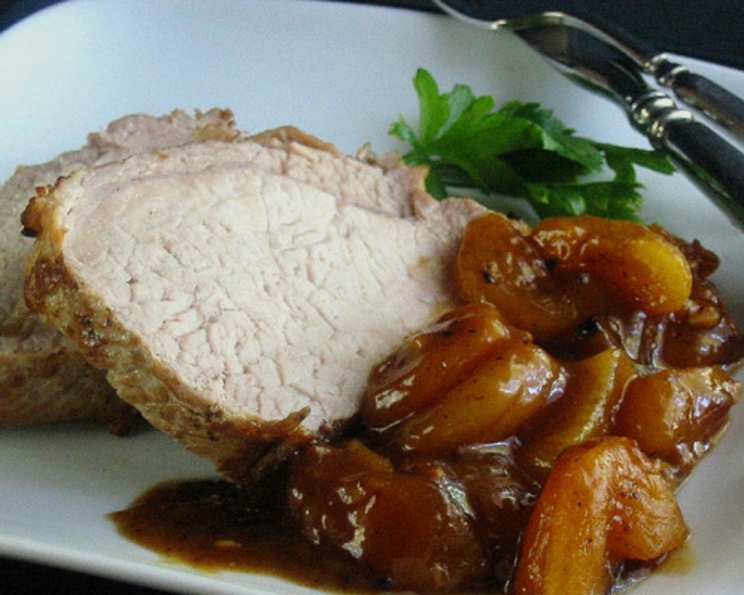
Pork Braised In Riesling With Apricots: A Taste of Autumn
I still remember the first time I tried this dish. It was late October, and the air was crisp with the promise of winter. My grandmother, a woman who could coax flavor from the simplest ingredients, had prepared a braised pork dish infused with the sweetness of apricots and the subtle tang of Riesling. The aroma alone, a blend of savory pork, sweet fruit, and fragrant wine, was enough to transport me to a cozy autumn afternoon, surrounded by loved ones and the warmth of a crackling fireplace. This recipe is my attempt to recapture that feeling, a tribute to her culinary magic.
Recipe Overview
- Prep Time: 15 minutes
- Cook Time: 1 hour 30 minutes
- Total Time: 1 hour 45 minutes
- Servings: 4
- Yield: 4 servings
- Dietary Type: Not specified
Ingredients
- 1 lb lean boneless pork loin
- 1/4 teaspoon salt
- 1/4 teaspoon pepper
- Vegetable oil cooking spray
- 2/3 cup Riesling wine (or 2/3 cup dry white wine)
- 12 dried apricot halves
Equipment Needed
- Large nonaluminum saucepan
- Meat thermometer
- Serving platter
Instructions
- Begin by trimming any excess fat from the pork loin. This step is crucial for rendering a tender and flavorful dish.
- In a small bowl, combine the salt and pepper. Then, evenly sprinkle this mixture over all sides of the pork loin, ensuring it’s well seasoned. Set the seasoned pork aside.
- Lightly coat a large nonaluminum saucepan with vegetable oil cooking spray. Place the saucepan over medium-high heat and allow it to heat until it’s hot, but not smoking.
- Carefully place the seasoned pork loin in the hot saucepan. Cook the roast on all sides until it is nicely browned, which should take about 5-7 minutes per side. Browning the pork creates a delicious crust and adds depth of flavor to the braise.
- Remove the browned pork roast from the saucepan and set it aside on a clean plate.
- Using a paper towel, carefully wipe out any drippings from the saucepan. This prevents the braising liquid from becoming overly greasy.
- Insert a meat thermometer into the thickest portion of the pork roast. This is essential for ensuring the pork is cooked to a safe and optimal internal temperature.
- Return the pork roast to the saucepan. Add the Riesling wine (or your chosen dry white wine) to the pan.
- Cover the saucepan tightly with a lid, reduce the heat to low, and cook for 1 hour. Maintaining a gentle simmer is key to a tender braise.
- After 1 hour, add the dried apricot halves to the saucepan.
- Cover the saucepan again and continue to cook for an additional 30 minutes, or until the meat thermometer registers 160 degrees Fahrenheit (71 degrees Celsius). At this point, the pork should be cooked through but still moist and tender.
- Remove the pork roast and apricots from the saucepan and transfer them to a warm serving platter. Keep them warm while you prepare the sauce.
- Increase the heat to medium-high and bring the cooking liquid in the saucepan to a boil. Cook, uncovered, for about 10 minutes, or until the liquid has reduced to approximately 1/4 cup. This reduction concentrates the flavors of the wine and apricots into a delicious sauce.
- Serve the reduced sauce over the sliced pork roast and apricots.
Expert Tips & Tricks
- For an even richer flavor, try searing the pork in a combination of vegetable oil and a tablespoon of butter. The butter adds a nutty, caramelized note that complements the sweetness of the apricots.
- If you prefer a thicker sauce, whisk a teaspoon of cornstarch with a tablespoon of cold water and add it to the boiling liquid during the last few minutes of cooking.
- To enhance the apricot flavor, consider soaking the dried apricots in warm Riesling for 30 minutes before adding them to the braise.
- Don’t overcrowd the pan when browning the pork. If necessary, sear the pork in two batches to ensure even browning.
- If you don’t have Riesling, a dry Gewürztraminer or a crisp Pinot Grigio will also work well in this recipe.
Serving & Storage Suggestions
This Pork Braised in Riesling with Apricots is delicious served with creamy mashed potatoes, roasted root vegetables, or a simple green salad. The sweetness of the apricots pairs beautifully with earthy flavors.
To store leftovers, allow the pork, apricots, and sauce to cool completely. Transfer them to an airtight container and refrigerate for up to 3 days.
To reheat, gently warm the pork, apricots, and sauce in a saucepan over low heat, adding a splash of water or wine if needed to prevent sticking. You can also reheat it in the microwave, but be careful not to overcook the pork, as it can become dry.
Nutritional Information
| Nutrient | Amount per Serving | % Daily Value |
|---|---|---|
| Calories | 338.8 kcal | N/A |
| Calories from Fat | 149 g | 44% |
| Total Fat | 16.7 g | 25% |
| Saturated Fat | 6.1 g | 30% |
| Cholesterol | 92.9 mg | 30% |
| Sodium | 213.3 mg | 8% |
| Total Carbohydrate | 8.2 g | 2% |
| Dietary Fiber | 0.8 g | 3% |
| Sugars | 5.6 g | 22% |
| Protein | 31.1 g | 62% |
Variations & Substitutions
- For a richer sauce: Add a tablespoon of heavy cream or crème fraîche during the last few minutes of cooking.
- Add herbs: Incorporate fresh thyme, rosemary, or sage sprigs to the braising liquid for added depth of flavor.
- Use different fruits: Substitute the dried apricots with dried cranberries, cherries, or figs for a unique twist.
- Make it a one-pot meal: Add sliced onions, carrots, and celery to the saucepan along with the pork for a complete meal. Brown the vegetables before searing the pork.
- Spice it up: Add a pinch of red pepper flakes to the braising liquid for a subtle kick.
FAQs (Frequently Asked Questions)
Q: Can I use fresh apricots instead of dried?
A: While dried apricots are recommended for their concentrated sweetness and chewy texture, you can use fresh apricots if they are in season. Use about 1 pound of halved and pitted fresh apricots, adding them to the pan during the last 30 minutes of cooking.
Q: Can I make this dish ahead of time?
A: Absolutely! In fact, the flavors often meld together even better when made a day or two in advance. Simply store the pork, apricots, and sauce in an airtight container in the refrigerator and reheat before serving.
Q: What’s the best way to slice the pork roast?
A: For the most tender slices, let the pork rest for about 10 minutes after cooking before slicing it against the grain. This allows the juices to redistribute, resulting in a more moist and flavorful result.
Q: Can I use a different cut of pork?
A: While pork loin is recommended for its lean texture, you can also use pork shoulder or pork butt. However, these cuts will require a longer braising time (about 2-3 hours) to become tender.
Q: The sauce is too thin. How can I thicken it?
A: If the sauce is too thin, you can thicken it by simmering it for a few more minutes to reduce it further, or by whisking in a slurry of cornstarch and cold water (as mentioned in the tips).
Final Thoughts
I hope this recipe brings as much joy to your table as it has to mine. Don’t be afraid to experiment with different herbs and spices to personalize the dish to your liking. This Pork Braised in Riesling with Apricots is a versatile and comforting meal that’s perfect for any occasion. So gather your ingredients, pour yourself a glass of Riesling, and enjoy the process of creating something truly special. Bon appétit!