
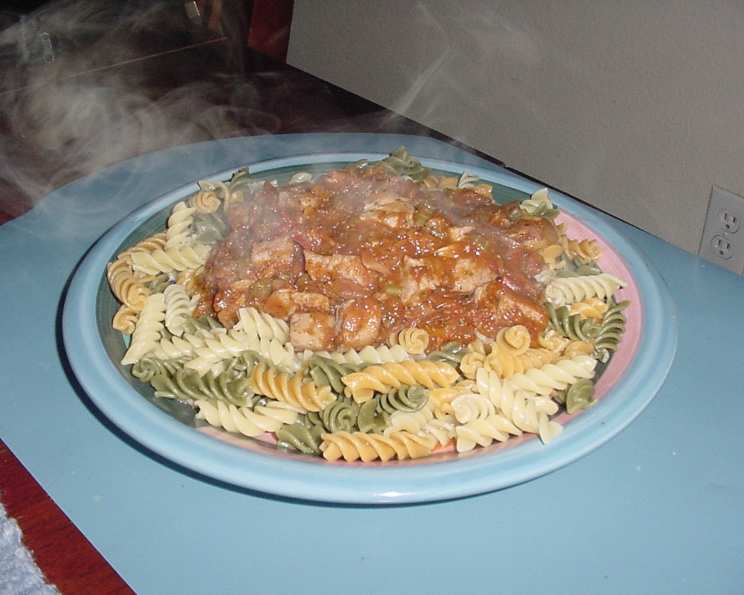
Rustic Pork Cacciatore: A Taste of the Italian Countryside
The aroma of Pork Cacciatore instantly transports me back to a small trattoria nestled in the Tuscan hills. I remember the sun-drenched patio, the laughter of families sharing a meal, and the comforting scent of tomatoes, herbs, and slow-cooked meat wafting from the kitchen. That simple, rustic dish, served with crusty bread for soaking up every last drop of sauce, captured the essence of Italian hospitality and the joy of simple, flavorful food. This recipe is my attempt to recreate that magic, bringing the taste of the Italian countryside to your table.
Recipe Overview
- Prep Time: 15 minutes
- Cook Time: 25 minutes
- Total Time: 40 minutes
- Servings: 4
- Dietary Type: Gluten-Free (naturally, but verify ingredients to be certain)
Ingredients
- 1 lb boneless pork leg, cubed
- Salt and pepper
- 2 tablespoons olive oil
- 1 medium onion, chopped
- 2 garlic cloves, smashed
- 1 celery stalk, finely chopped
- 1 carrot, shredded
- 1/4 lb mushrooms, sliced
- 1 (16 ounce) can crushed tomatoes
- 1/3 cup dry red wine (or 1/3 cup beef broth)
- 2 tablespoons rosemary, crushed
- 1/4 teaspoon dry basil
- 1/4 teaspoon oregano leaves
Equipment Needed
- Large heavy frypan (cast iron preferred)
Instructions
-
Begin by preparing the pork. Sprinkle the pork cubes generously with salt and pepper, ensuring each piece is seasoned well. This initial seasoning is crucial for developing a rich, savory flavor.
-
In a large, heavy frypan (a cast iron pan works particularly well for even heat distribution), heat the olive oil over medium-high heat. The oil should shimmer, but not smoke.
-
Add the seasoned pork to the hot pan. Brown the pork on all sides, working in batches if necessary to avoid overcrowding the pan. Overcrowding will steam the pork instead of browning it. Browning adds depth of flavor, so don’t skip this step! Once browned, remove the pork from the pan and set it aside.
-
Now it’s time to build the flavor base. Add the chopped onion, smashed garlic, finely chopped celery, and shredded carrot to the pan. Cook, stirring occasionally, until the onions are softened and translucent, about 5 minutes. This process, known as sweating the vegetables, releases their natural sweetness and creates a foundation for the sauce.
-
Return the browned pork to the pan with the vegetables.
-
Add the remaining ingredients: the sliced mushrooms, the can of crushed tomatoes, the dry red wine (or beef broth), the crushed rosemary, the dry basil, and the oregano leaves.
-
Stir all the ingredients well to combine, ensuring the pork is submerged in the sauce.
-
Cover the pan tightly and reduce the heat to low. Simmer for 10 to 15 minutes, or until the pork is cooked through and tender. The simmering time will depend on the size of your pork cubes, so check for doneness by inserting a fork into a piece of pork – it should be easy to pierce and the juices should run clear.
Expert Tips & Tricks
- Browning is key: Don’t rush the browning of the pork. A good sear adds a tremendous amount of flavor to the finished dish.
- Deglaze the pan: After browning the pork and before adding the vegetables, you can deglaze the pan with a splash of red wine or beef broth. Scrape up any browned bits from the bottom of the pan – these are packed with flavor!
- Add a touch of heat: For a spicier cacciatore, add a pinch of red pepper flakes along with the other herbs.
- Fresh herbs: While the recipe calls for dried herbs, feel free to substitute with fresh. Use about 1 tablespoon of fresh rosemary, chopped, and 1 teaspoon each of fresh basil and oregano, chopped. Add fresh herbs towards the end of the cooking time to preserve their flavor.
- Slow cooker adaptation: This recipe can easily be adapted for a slow cooker. Simply brown the pork as directed, then transfer all the ingredients to a slow cooker. Cook on low for 6-8 hours, or on high for 3-4 hours, or until the pork is very tender.
Serving & Storage Suggestions
Pork Cacciatore is traditionally served over a bed of polenta, creamy mashed potatoes, pasta (like pappardelle or fettuccine), or even nestled in a squeezed-open baked potato alongside some broccoli spears, as was suggested to me years ago. A sprinkle of freshly grated Parmesan cheese and a drizzle of olive oil adds a final touch of elegance. Serve with crusty bread for soaking up the delicious sauce.
Leftovers can be stored in an airtight container in the refrigerator for up to 3-4 days. To reheat, gently warm on the stovetop over low heat, or in the microwave. You may need to add a splash of broth or water to prevent it from drying out. Pork Cacciatore also freezes well. Store in an airtight container in the freezer for up to 2-3 months. Thaw overnight in the refrigerator before reheating.
Nutritional Information
| Nutrient | Amount per Serving | % Daily Value |
|---|---|---|
| Calories | 386 kcal | N/A |
| Calories from Fat | 218 kcal | N/A |
| Total Fat | 24.3g | 37% |
| Saturated Fat | 7g | 35% |
| Cholesterol | 76mg | 25% |
| Sodium | 234.6mg | 9% |
| Total Carbohydrate | 14.8g | 4% |
| Dietary Fiber | 3.7g | 14% |
| Sugars | 2.8g | N/A |
| Protein | 24.9g | 49% |
Note: Nutritional information is an estimate and may vary based on specific ingredients and portion sizes.
Variations & Substitutions
- Chicken Cacciatore: Substitute the pork with chicken thighs or chicken drumsticks.
- Vegetarian Cacciatore: Omit the pork and add more mushrooms or other vegetables like bell peppers or eggplant. Use vegetable broth instead of beef broth or red wine.
- Spicy Cacciatore: Add a pinch of red pepper flakes or a finely chopped chili pepper to the sauce.
- Tomato Paste: For a richer, more concentrated tomato flavor, add 1-2 tablespoons of tomato paste along with the crushed tomatoes.
- Different Herbs: Experiment with different herbs like thyme or bay leaf.
- Wine Preference: While dry red wine is classic, a dry white wine will also work.
FAQs (Frequently Asked Questions)
Q: Can I use pork shoulder instead of pork leg?
A: Yes, you can. Pork shoulder is a fattier cut of meat, which will result in a richer, more flavorful sauce. However, it may require a longer cooking time to become tender.
Q: Can I make this dish ahead of time?
A: Absolutely! Pork Cacciatore is even better the next day, as the flavors have time to meld and deepen. Simply refrigerate the cooked dish and reheat before serving.
Q: What if I don’t have red wine?
A: You can substitute the red wine with beef broth or chicken broth. The wine adds a depth of flavor, but the broth will still provide moisture and savory notes.
Q: Can I add other vegetables?
A: Yes, feel free to add other vegetables like bell peppers, zucchini, or eggplant. Add them along with the onions, garlic, celery, and carrot.
Q: How do I know when the pork is cooked through?
A: The pork is cooked through when it is tender and easily pierced with a fork. The internal temperature should reach 145°F (63°C).
Final Thoughts
This Pork Cacciatore is more than just a recipe; it’s an invitation to experience the simple joys of Italian cooking. The combination of tender pork, aromatic herbs, and rich tomato sauce creates a truly comforting and satisfying meal. Don’t be afraid to experiment with different variations and substitutions to make it your own. I encourage you to gather your loved ones, share this delicious dish, and create memories that will last a lifetime. Buon appetito!