
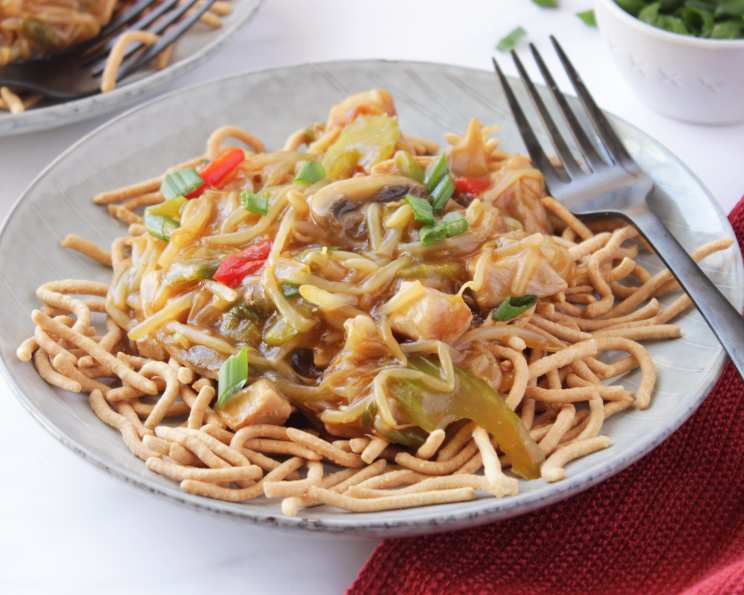
Pork Chow Mein in 30 Minutes: A Weeknight Wonder
I can still picture my mom, apron on, humming along to the radio as she stirred a bubbling concoction on the stovetop. It was usually a weeknight, and the aroma filling our little kitchen was unmistakable: savory soy sauce, a hint of sweetness, and the comforting scent of cooked pork. It meant Pork Chow Mein was on the menu, a dish that always felt like a warm hug after a long day. This recipe is my tribute to those simple, delicious meals, a way to bring that same comfort to your table in just 30 minutes.
Recipe Overview
- Prep Time: 10 minutes
- Cook Time: 20 minutes
- Total Time: 30 minutes
- Servings: 4-6
- Dietary Type: Adaptable
Ingredients
- 2-3 cups cooked pork roast, cubed
- 1 medium onion, sliced
- 2 cups celery, sliced diagonally
- 3 tablespoons vegetable oil
- 1 (6 ounce) can sliced mushrooms
- 1 (16 ounce) can bean sprouts, drained
- 2 tablespoons chopped pimiento
- 1 (10 ounce) can condensed chicken broth (1 1/4 cups)
- 1/4 cup soy sauce
- 3 tablespoons cornstarch
- 2 (3 ounce) cans chow mein noodles
Equipment Needed
- Large skillet or wok
- Measuring cups and spoons
- Knife
- Cutting board
Instructions
-
Begin by preparing your vegetables. Slice the onion and celery as indicated in the ingredients list. Having everything prepped and ready to go will ensure this dish comes together quickly.
-
Heat the vegetable oil in a large skillet or wok over medium-high heat. Make sure the oil is shimmering but not smoking.
-
Add the cubed pork roast, sliced onion, and celery to the skillet. Cook and stir until the onion is tender and translucent, about 5-7 minutes. Stir frequently to prevent sticking and ensure even cooking.
-
Stir in the canned mushrooms (including the liquid from the can – this adds extra flavor!), drained bean sprouts, and chopped pimiento. Cook for another 2-3 minutes, stirring occasionally, until the vegetables are heated through.
-
In a small bowl, whisk together the soy sauce and cornstarch until smooth. This mixture will act as a thickening agent for the sauce.
-
Pour the condensed chicken broth into the skillet with the vegetable mixture.
-
Slowly add the soy sauce and cornstarch mixture to the skillet, stirring constantly to prevent lumps from forming.
-
Continue to cook, stirring constantly, until the mixture thickens and comes to a boil. This should take about 2-3 minutes.
-
Once the mixture is boiling, boil and stir for 1 minute. This ensures the cornstarch is fully cooked and the sauce reaches the desired consistency.
-
Serve the pork chow mein immediately over the chow mein noodles. The noodles will soften slightly as they absorb the sauce.
Expert Tips & Tricks
- Pre-cubed pork: To save even more time, look for pre-cubed or sliced cooked pork in the deli section of your grocery store.
- Vegetable variations: Feel free to add other vegetables you enjoy, such as shredded carrots, snow peas, or water chestnuts.
- Sauce adjustments: If you prefer a thicker sauce, add an additional tablespoon of cornstarch. For a thinner sauce, add a splash of water or chicken broth.
- Flavor boost: A dash of sesame oil added at the end of cooking will enhance the flavor of the dish.
- Make-ahead tip: You can prepare the vegetable and pork mixture ahead of time and store it in the refrigerator for up to 24 hours. Simply reheat it before adding the soy sauce and cornstarch mixture.
Serving & Storage Suggestions
Serve your Pork Chow Mein hot and fresh over crispy chow mein noodles. A sprinkle of sesame seeds or chopped green onions adds a nice finishing touch.
Leftovers can be stored in an airtight container in the refrigerator for up to 3 days. Reheat gently on the stovetop or in the microwave until heated through. Add a little water or chicken broth if the sauce has thickened too much during storage. Chow mein is best consumed immediately, but refrigeration will keep it safe to eat for a few days. I would not recommend freezing the leftovers, as the noodles can become soggy.
Nutritional Information
| Nutrient | Amount per Serving | % Daily Value |
|---|---|---|
| Calories | 582 kcal | N/A |
| Total Fat | 29g | 44% |
| Saturated Fat | 5g | 24% |
| Cholesterol | 79mg | 26% |
| Sodium | 1860mg | 77% |
| Total Carbohydrate | 44g | 14% |
| Dietary Fiber | 6g | 22% |
| Sugars | 8g | N/A |
| Protein | 39g | 78% |
Note: Nutritional information is an estimate and may vary based on specific ingredients and portion sizes.
Variations & Substitutions
- Vegetarian Chow Mein: Substitute the pork with firm tofu, tempeh, or extra vegetables. Use vegetable broth instead of chicken broth.
- Chicken Chow Mein: Replace the pork roast with cooked chicken breast or thigh meat.
- Gluten-Free Chow Mein: Use gluten-free chow mein noodles and gluten-free soy sauce (tamari).
- Spicy Chow Mein: Add a pinch of red pepper flakes or a drizzle of sriracha to the sauce for a spicy kick.
- Different Proteins: Shrimp or beef also work great in this recipe.
- Add a touch of fresh ginger: Grated ginger adds a bright, fresh flavor dimension.
FAQs (Frequently Asked Questions)
Q: Can I use fresh noodles instead of canned chow mein noodles?
A: Yes, you can use fresh or dried lo mein or yakisoba noodles. Cook them according to package directions and add them to the skillet at the end, tossing to coat with the sauce.
Q: Can I make this dish ahead of time?
A: Yes, you can prepare the pork and vegetable mixture ahead of time and store it in the refrigerator for up to 24 hours. Add the cornstarch slurry just before cooking.
Q: I don’t have pimiento; can I substitute it with something else?
A: Yes, you can substitute pimiento with diced red bell pepper for a similar flavor and color.
Q: Can I use low-sodium soy sauce?
A: Absolutely. Using low-sodium soy sauce will help control the sodium content of the dish. You may need to adjust the seasoning to taste.
Q: My sauce isn’t thickening. What should I do?
A: Make sure you are using fresh cornstarch. If the sauce still isn’t thickening, mix another tablespoon of cornstarch with 2 tablespoons of cold water and add it to the skillet, stirring constantly, until the sauce thickens.
Final Thoughts
This Pork Chow Mein recipe is more than just a quick and easy weeknight meal; it’s a taste of home, a reminder of simple pleasures, and a chance to create new memories around the dinner table. I encourage you to give it a try, experiment with different variations, and make it your own. Don’t hesitate to share your feedback and creations! Serve with a side of steamed rice or a crisp green salad for a complete and satisfying meal. Enjoy!