
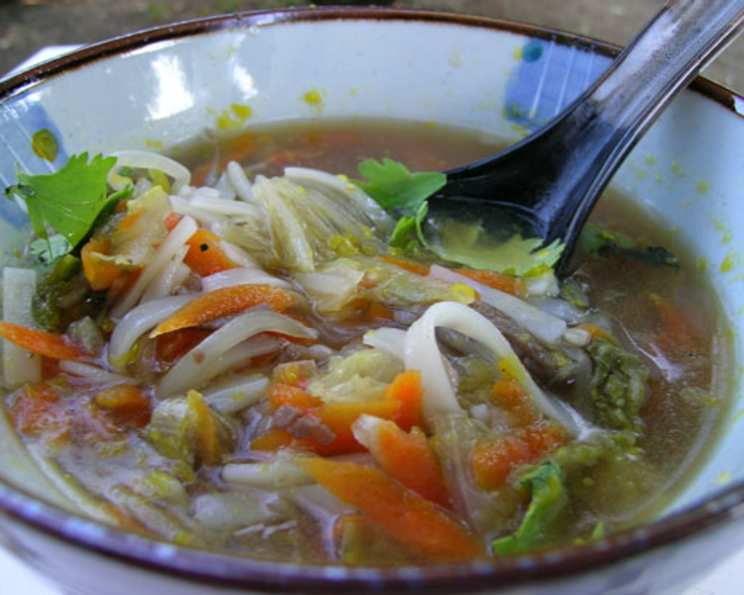
Pork Ginger Udon Soup Made Simple
The first time I had a truly soul-warming bowl of udon soup was at a tiny, unassuming ramen shop tucked away in Kyoto. It was raining, I was soaked and shivering, and the fragrant steam rising from the dark broth promised instant comfort. I remember the gentle slurp of noodles, the subtle sweetness of the broth, and the delicate heat from the ginger that chased away the chill. It was a revelation, and ever since I’ve been chasing that perfect bowl, trying to recreate the magic in my own kitchen. This Pork Ginger Udon Soup is my attempt to capture that memory, using readily available ingredients and a simplified approach.
Recipe Overview
- Prep Time: 15 minutes
- Cook Time: 10 minutes
- Total Time: 25 minutes
- Servings: 2
- Yield: About 6 cups
- Dietary Type: Not Gluten-Free
Ingredients
- ¼ lb pork, cut into extra thin bite-size pieces
- Salt and pepper
- ½ tablespoon cornstarch
- 1 carrot, skinned and cut into large julienne size
- ½ bunch spinach, washed and cut into bite-size pieces
- ¼ napa cabbage, washed and cut into bite-size pieces
- 2 ½ cups cooked udon noodles (Dry or fresh, prepared per package instructions and rinsed well if dry)
- 3 cups homemade vegetable broth (Swanson ok, see description) or 3 cups homemade chicken broth (Swanson ok, see description)
- 1 tablespoon sake
- 1 tablespoon oyster sauce
- 1 tablespoon soy sauce
- 1 ½ tablespoons cornstarch
- 1 tablespoon water
- 1 tablespoon grated ginger, paste form
Equipment Needed
- Large saucepan
- Small bowl or cup
- Cutting board
- Knife
Instructions
-
Begin by preparing the pork. Lightly salt and pepper the pork slices. Sprinkle ½ tablespoon cornstarch over the pork and lightly mix to coat. This will help tenderize the pork and give it a nice texture when cooked.
-
In a small cup or bowl, prepare a thickening slurry. Mix 1 ½ tablespoons cornstarch with 1 tablespoon water. Stir until smooth and set aside. This will thicken the soup later on.
-
In a large saucepan, combine 3 cups vegetable broth or chicken broth with 1 tablespoon sake. Heat the mixture over medium-high heat until it comes to a boil. Then, reduce the heat to medium to maintain a simmer. Tip: If using store-bought broth, especially chicken broth, consider diluting it with 50% water to prevent it from being too overpowering.
-
Add the napa cabbage and carrots to the simmering broth. Cook for 3-4 minutes, or until the vegetables have softened slightly.
-
Add the prepared pork slices to the saucepan. Continue to cook for another 2-3 minutes, or until the pork is cooked through and no longer pink.
-
Add the 2 ½ cups cooked udon noodles, 1 tablespoon oyster sauce, and 1 tablespoon soy sauce to the saucepan. Then, pour in the cornstarch/water mixture (the thickening slurry). Lightly combine all the ingredients in the saucepan, stirring gently to distribute the noodles and sauces evenly.
-
Add the ½ bunch of spinach to the soup. Cook until the spinach has softened a bit, but be careful not to overcook it, about 30 seconds should suffice. The spinach should still have a vibrant green color.
-
Divide the udon soup into 2 bowls. Top each bowl with 1 tablespoon grated ginger paste. Serve immediately.
Expert Tips & Tricks
-
Pork Preparation: Ensure the pork is sliced thinly for quick and even cooking. If you can’t find thinly sliced pork, partially freeze the pork for about 30 minutes before slicing; this makes it easier to cut into thin pieces.
-
Broth Enhancement: For a deeper flavor, consider adding a small piece of kombu (dried kelp) to the broth while it simmers. Remove the kombu before serving.
-
Noodle Choice: While udon is traditional, you could experiment with other types of noodles like ramen or soba if you prefer. Just adjust cooking times accordingly.
-
Vegetable Variations: Feel free to add other vegetables like mushrooms, bok choy, or bean sprouts for added texture and flavor.
-
Ginger Intensity: Adjust the amount of grated ginger to your liking. If you prefer a milder flavor, start with ½ tablespoon and add more as needed.
-
Make-Ahead Tip: You can prep the vegetables and pork ahead of time and store them separately in the refrigerator. The broth can also be made in advance and reheated when ready to assemble the soup.
Serving & Storage Suggestions
Serve the Pork Ginger Udon Soup hot, garnished with a sprinkle of sesame seeds or a few thinly sliced green onions, if desired. The ginger paste adds a delightful kick, so be sure to include it!
Leftovers can be stored in an airtight container in the refrigerator for up to 2 days. To reheat, gently warm the soup in a saucepan over medium heat, stirring occasionally. You may need to add a splash of water or broth if the noodles have absorbed too much liquid. It is not recommended to freeze this soup, as the noodles can become mushy upon thawing.
Nutritional Information
| Nutrient | Amount per Serving | % Daily Value |
|---|---|---|
| Calories | 450 kcal | 23% |
| Total Fat | 20g | 31% |
| Saturated Fat | 7g | 35% |
| Cholesterol | 75mg | 25% |
| Sodium | 1200mg | 50% |
| Total Carbohydrate | 45g | 15% |
| Dietary Fiber | 5g | 20% |
| Sugars | 8g | N/A |
| Protein | 25g | 50% |
Note: Nutritional information is an estimate and can vary based on specific ingredients and portion sizes.
Variations & Substitutions
-
Vegetarian Version: Substitute the pork with firm tofu, cubed and pan-fried until golden brown. Use vegetable broth.
-
Spicy Kick: Add a dash of chili oil or a pinch of red pepper flakes to the soup for a spicy kick.
-
Gluten-Free Option: Use gluten-free udon noodles (made from rice flour) and tamari (gluten-free soy sauce). Be sure to check the oyster sauce label as some brands may contain gluten.
-
Chicken Udon Soup: Use chicken instead of pork, following the same preparation method.
-
Seafood Udon Soup: Substitute the pork with shrimp or scallops for a seafood variation.
-
Seasonal Twist: In the fall, add some sliced shiitake mushrooms and a splash of mirin for a deeper umami flavor. In the spring, add some asparagus or snap peas.
FAQs (Frequently Asked Questions)
Q: Can I use dried udon noodles instead of fresh?
A: Yes, you can definitely use dried udon noodles. Just cook them according to the package instructions, making sure to rinse them thoroughly in cold water after cooking to remove any excess starch.
Q: Can I make this soup ahead of time?
A: You can prepare the broth and the vegetables ahead of time and store them separately in the refrigerator. Add the cooked noodles and spinach just before serving to prevent them from becoming soggy.
Q: What can I use if I don’t have sake?
A: If you don’t have sake, you can substitute it with a dry sherry or a little bit of rice vinegar mixed with water. The sake adds a subtle sweetness and complexity to the broth.
Q: Can I use a different type of broth?
A: While vegetable or chicken broth is recommended, you can also use dashi (Japanese fish stock) for a more authentic flavor.
Q: Can I add other toppings to the soup?
A: Absolutely! Feel free to add other toppings like a soft-boiled egg, sliced green onions, sesame seeds, or a sprinkle of nori (dried seaweed).
Final Thoughts
This Pork Ginger Udon Soup is more than just a recipe; it’s an invitation to create your own comforting memories in the kitchen. With its simple ingredients and straightforward steps, it’s a dish that’s easy to master and endlessly customizable. Don’t be afraid to experiment with different vegetables, proteins, or toppings to create your perfect bowl. I encourage you to give it a try, share your feedback, and maybe even pair it with a crisp, dry sake for the full experience. Happy cooking!