
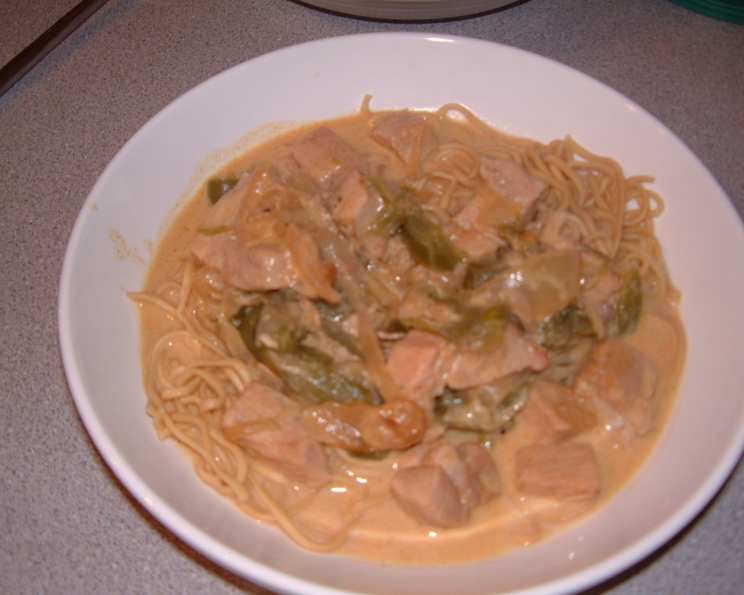
A Hearty Bowl of Nostalgia: Pork Paprikash
The scent alone transports me back to my childhood. I remember chilly autumn evenings, the aroma of simmering paprika and sweet peppers permeating our cozy kitchen. My grandmother, her hands stained with the vibrant spice, would hum softly as she stirred a pot of something magical. That something, more often than not, was her legendary paprikash, a comforting stew that warmed both body and soul. This version, adapted for pork, offers the same depth of flavor and heartwarming satisfaction, a true testament to the power of simple ingredients and time-honored techniques.
Recipe Overview
- Prep Time: 20 minutes
- Cook Time: 1 hour 5 minutes
- Total Time: 1 hour 25 minutes
- Servings: 4
- Yield: About 6 cups
- Dietary Type: Not Gluten-Free, Dairy-Free Option Available
Ingredients
- 3 tablespoons cooking oil or 3 tablespoons bacon fat
- 1 1/2 lbs pork tenderloin, cut into 1 1/2 inch cubes
- 1 tablespoon flour
- 1 3/4 teaspoons salt
- 1/2 teaspoon fresh ground black pepper
- 1 onion, cut into thin slices
- 2 large green bell peppers, cut into thin strips
- 4 teaspoons paprika (Hungarian sweet paprika is recommended for the best flavor)
- 1 1/2 cups low-sodium chicken stock or 1 1/2 cups homemade chicken stock
- 3/4 cup sour cream (or dairy-free sour cream substitute)
- 3/4 lb egg noodles
Equipment Needed
- Large pot or Dutch oven
- Large pot for cooking noodles
Instructions
- In a large pot or Dutch oven, heat 1 tablespoon of the bacon fat (or cooking oil) over moderately high heat.
- In a medium bowl, toss the pork with the flour, 1/2 teaspoon of the salt, and 1/4 teaspoon of the black pepper. Ensure the pork is evenly coated.
- Add about half the pork to the pot, being careful not to overcrowd it. Brown the pork for about 3 minutes, turning to get color on all sides. This browning process is crucial for developing deep, rich flavors. Remove the browned pork from the pot and set aside.
- Repeat the browning process with the remaining pork and an additional tablespoon of bacon fat (or cooking oil). Again, brown the pork for about 3 minutes, then remove and set aside.
- Reduce the heat to moderately low and add the remaining tablespoon of bacon fat (or cooking oil) to the pan.
- Add the onion and green bell peppers. Cook, covered, stirring occasionally, for 7 minutes, or until the vegetables are softened and slightly translucent. This step is important for releasing the natural sweetness of the vegetables.
- Stir in the remaining 1 1/4 teaspoons salt, 1/4 teaspoon black pepper, and the paprika. Be generous with the paprika; it’s the star of the dish.
- Cook, stirring constantly, for 30 seconds. This brief bloom of the spices enhances their aroma and flavor.
- Add the pork back to the pot, along with any accumulated juices. Also, add the chicken broth to the pot.
- Bring the mixture to a boil, then reduce the heat to low. Simmer, partially covered, until the pork is just done and very tender, about 10 to 15 minutes. Check for doneness by inserting a fork into the pork; it should be easily pierced.
- Reduce the heat to very low. Gently whisk in the sour cream. Be careful not to boil the mixture after adding the sour cream, as it can curdle. If using a dairy-free substitute, be sure it’s designed for cooking at high temperatures.
- While the paprikash is simmering, cook the egg noodles. In a large pot of boiling, salted water, cook the egg noodles until just done, about 7 minutes, or according to package directions. Drain the noodles well.
- Remove 1/2 cup of the sauce from the stew and toss with the drained noodles. This ensures the noodles are coated in flavor.
- Serve the paprikash stew over the sauced noodles. Garnish with a dollop of extra sour cream or a sprinkle of fresh parsley, if desired.
Expert Tips & Tricks
- Browning the Pork: Don’t skip the browning step! This adds a depth of flavor that’s essential to the dish. Work in batches to avoid overcrowding the pot, which can steam the meat instead of browning it.
- Paprika Perfection: Use high-quality paprika, preferably Hungarian sweet paprika, for the most authentic flavor. Avoid using old paprika, as it loses its potency.
- Sour Cream Savvy: To prevent curdling, temper the sour cream before adding it to the hot stew. Mix a spoonful of the hot sauce into the sour cream to gradually warm it before adding the mixture to the pot.
- Noodle Know-How: Don’t overcook the noodles! They should be al dente, with a slight chew. Overcooked noodles will become mushy in the stew.
Serving & Storage Suggestions
Serve pork paprikash hot, garnished with a dollop of extra sour cream or a sprinkle of fresh parsley. A side of crusty bread is perfect for soaking up the flavorful sauce.
Leftovers can be stored in an airtight container in the refrigerator for up to 3 days. To reheat, gently warm the paprikash in a saucepan over low heat, stirring occasionally. You may need to add a splash of broth or water if the sauce has thickened too much.
For longer storage, the paprikash can be frozen for up to 2 months. Thaw overnight in the refrigerator before reheating. Be aware that the texture of the sour cream may change slightly after freezing and thawing.
Nutritional Information
| Nutrient | Amount per Serving | % Daily Value |
|---|---|---|
| Calories | 748 kcal | N/A |
| Calories from Fat | 261 kcal | N/A |
| Total Fat | 29 g | 44% |
| Saturated Fat | 9.4 g | 47% |
| Cholesterol | 205 mg | 68% |
| Sodium | 1164 mg | 48% |
| Total Carbohydrate | 72 g | 23% |
| Dietary Fiber | 5.6 g | 22% |
| Sugars | 6.5 g | N/A |
| Protein | 50 g | 99% |
Note: Nutritional information is an estimate and may vary based on specific ingredients and cooking methods.
Variations & Substitutions
- Chicken Paprikash: Substitute chicken thighs or breasts for the pork tenderloin. Adjust cooking time as needed.
- Vegetarian Paprikash: Use hearty vegetables like mushrooms, potatoes, and carrots in place of the meat. Consider adding a can of drained and rinsed chickpeas or white beans for protein.
- Dairy-Free Paprikash: Use a dairy-free sour cream substitute made from cashews, coconut, or soy. Be sure to choose one that’s designed for cooking at high temperatures.
- Gluten-Free Paprikash: Use gluten-free flour to coat the pork and serve the paprikash over gluten-free noodles or rice.
- Spicy Paprikash: Add a pinch of cayenne pepper or a few dashes of hot sauce to the stew for a little extra kick.
FAQs (Frequently Asked Questions)
Q: Can I make this ahead of time?
A: Yes, paprikash is a great make-ahead dish! The flavors actually develop and deepen as it sits. Prepare the stew up to 2 days in advance and store it in the refrigerator. Reheat gently before serving.
Q: What’s the best type of paprika to use?
A: Hungarian sweet paprika is the most authentic choice and offers the best flavor. Smoked paprika can also be used for a slightly different flavor profile.
Q: Can I use a different cut of pork?
A: Pork shoulder or pork loin can be used as substitutes for pork tenderloin. These cuts may require a longer simmering time to become tender.
Q: How do I prevent the sour cream from curdling?
A: Tempering the sour cream before adding it to the hot stew is crucial. Mix a spoonful of the hot sauce into the sour cream to gradually warm it before adding the mixture to the pot. Also, avoid boiling the stew after adding the sour cream.
Q: Can I freeze pork paprikash?
A: Yes, pork paprikash freezes well. Store it in an airtight container for up to 2 months. Thaw overnight in the refrigerator before reheating. Be aware that the texture of the sour cream may change slightly after freezing and thawing.
Final Thoughts
Pork Paprikash is more than just a recipe; it’s a journey back to simpler times, a reminder of family traditions, and a celebration of hearty, comforting food. Don’t be intimidated by the ingredient list or the simmering time. This dish is surprisingly easy to make, and the results are well worth the effort. I encourage you to gather your ingredients, put on some music, and immerse yourself in the process. Share this heartwarming stew with loved ones, and let the flavors transport you to a place of warmth, comfort, and pure culinary bliss. Consider serving with a light, crisp white wine to complement the rich flavors of the paprikash. Enjoy!