
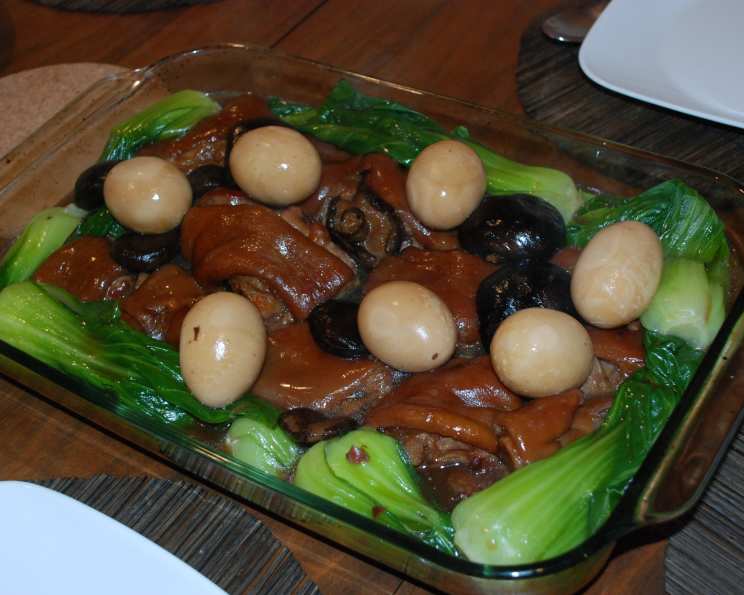
Pork Patatim: A Filipino-Chinese Culinary Embrace
The aroma of soy sauce, star anise, and sweet brown sugar instantly transports me back to bustling family gatherings. I remember standing on a stool next to my Lola (grandmother), mesmerized as she transformed humble pork knuckles into something truly extraordinary. The glossy, mahogany-colored sauce, the melt-in-your-mouth tenderness of the pork, and the vibrant green of the bok choy – it was a feast for the senses and a symbol of warmth and connection that continues to resonate with me to this day. This Pork Patatim recipe is my attempt to capture that essence and share a piece of my heart with you.
Recipe Overview
- Prep Time: 30 minutes
- Cook Time: 2 hours 45 minutes
- Total Time: 3 hours 15 minutes
- Servings: 6-10
- Yield: 1 large casserole dish
- Dietary Type: Not specified (contains pork, soy)
Ingredients
- 3-4 lbs pork legs (pata), pre-cut preferred
- 2 pieces star anise (or anise extract)
- 1/2 cup soy sauce
- 2 tablespoons hoisin sauce (optional)
- Oyster sauce (optional)
- 6 cups water
- 1 cup brown sugar
- 1/2 cup rice wine (optional)
- Sake (optional)
- 1 teaspoon peppercorns
- 1 teaspoon sesame oil
- 1 tablespoon cornstarch
- 5 pieces baby bok choy
- 8 pieces dried shiitake mushrooms
- Optional: Hard-boiled eggs for Humba Eggs
Equipment Needed
- Oven
- Large Casserole Dish or Dutch Oven
- Large Pot or Stockpot
- Small Bowl
Instructions
- Preheat your oven to 450°F (232°C). Place the pork pata in the oven and bake until the skin turns brown. This crucial step helps to prevent the skin from breaking down during the stewing process. This browning process usually takes around 45 minutes to 1 hour, keep a close eye to avoid burning.
- While the pork pata is baking, prepare the dried shiitake mushrooms. Soak them in hot water until they are rehydrated and pliable, usually about 20-30 minutes. Once softened, remove the stems (they can be tough) and slice the caps.
- Once the pork pata is browned, transfer it to a large casserole dish or Dutch oven. Add 6 cups of water, 1/2 cup of soy sauce, 2 tablespoons of hoisin sauce (if using), 1 cup of brown sugar, and 1 teaspoon of peppercorns. Bring the mixture to a boil.
- Add the 2 pieces of star anise (or a few drops of anise extract) and 1 teaspoon of sesame oil. Reduce the heat to low, cover the pot, and simmer for at least an hour, or until the pork is incredibly tender and the meat almost falls off the bone. This may take longer depending on the size and cut of the pork legs. Check for tenderness every 30 minutes after the initial hour.
- In a small bowl, mix 1 tablespoon of cornstarch with 1/4 cup of cold water to create a slurry. This will be used to thicken the sauce.
- Pour the cornstarch slurry into the pot with the pork. Continue to simmer gently, stirring occasionally, until the sauce thickens to your desired consistency. This usually takes about 5-10 minutes.
- While the sauce is thickening, prepare the baby bok choy. Bring a pot of water to a boil and season it with a pinch of garlic salt (optional). Blanch the bok choy in the boiling water for just a minute or two, until it turns bright green but is still slightly crisp-tender. Immediately remove the bok choy and plunge it into ice water to stop the cooking process and preserve its vibrant color. Drain well.
- To serve, carefully remove the pork pata from the casserole dish and place it in the center of a large serving platter. Arrange the blanched bok choy around the pork. Pour the luscious sauce generously over the pata and vegetables.
- Optional: For a richer, more decadent version, add hard-boiled eggs to the stew during the last 30 minutes of simmering. These become “humba eggs,” infused with the flavors of the patatim sauce.
- Serve hot and enjoy!
Expert Tips & Tricks
- Browning is Key: Don’t skip the browning step in the oven! It not only adds flavor but also helps to keep the pork skin intact during the long simmering process.
- Adjust Sweetness: The amount of brown sugar can be adjusted to your preference. Start with 1 cup and add more if you prefer a sweeter sauce.
- Bone-In Cuts are Best: Using pork legs (pata) with the bone adds more flavor and richness to the stew.
- Make Ahead: This dish is even better the next day! The flavors meld and deepen overnight. You can prepare the patatim a day ahead and simply reheat it before serving.
- Thickening the Sauce: If your sauce isn’t thickening enough with the cornstarch slurry, you can continue to simmer it uncovered for a longer period, allowing the liquid to reduce naturally.
Serving & Storage Suggestions
Pork Patatim is best served hot with freshly steamed rice. The rice soaks up the flavorful sauce beautifully. Alternatively, you can serve it with steamed bao buns for a more indulgent experience.
Leftovers can be stored in an airtight container in the refrigerator for up to 3-4 days. To reheat, gently warm the patatim in a saucepan over low heat, stirring occasionally, until heated through. You can also reheat it in the microwave, but be careful not to overcook the pork.
Freezing is possible, although the texture of the bok choy may change slightly upon thawing. Freeze in an airtight container for up to 2-3 months. Thaw overnight in the refrigerator before reheating.
Nutritional Information
(Estimated values, may vary based on specific ingredients used)
| Nutrient | Amount per Serving | % Daily Value |
|---|---|---|
| Calories | 650 kcal | 33% |
| Total Fat | 40g | 51% |
| Saturated Fat | 14g | 70% |
| Cholesterol | 150mg | 50% |
| Sodium | 1300mg | 54% |
| Carbohydrates | 35g | 12% |
| Fiber | 1g | 4% |
| Sugar | 30g | N/A |
| Protein | 40g | 80% |
Variations & Substitutions
- Gluten-Free: To make this dish gluten-free, use tamari instead of soy sauce. Ensure your hoisin sauce and oyster sauce are also gluten-free.
- Spice it Up: Add a pinch of chili flakes or a sliced chili pepper to the stew for a touch of heat.
- Vegetable Variations: Feel free to add other vegetables to the stew, such as carrots, potatoes, or green beans.
- Sweetness Alternatives: Use coconut sugar or honey instead of brown sugar. Adjust quantities according to your preference.
- Pork Cut Substitutions: If you can’t find pork legs (pata), you can use pork shoulder or pork belly instead, though the cooking time may need to be adjusted. Pork hocks are another popular option.
FAQs (Frequently Asked Questions)
Q: Why do I need to brown the pork in the oven first?
A: Browning the pork helps to develop flavor and prevent the skin from breaking down during the long simmering process, resulting in a more appealing texture.
Q: Can I use a slow cooker for this recipe?
A: Yes, you can adapt this recipe for a slow cooker. Brown the pork first, then transfer it to the slow cooker with the other ingredients. Cook on low for 6-8 hours, or until the pork is very tender.
Q: What if I don’t have rice wine?
A: Rice wine adds a subtle complexity to the flavor, but you can omit it if you don’t have it on hand. You can also substitute it with dry sherry or cooking sake.
Q: How do I prevent the sauce from being too salty?
A: Use low-sodium soy sauce or reduce the amount of soy sauce slightly. You can also add a touch more brown sugar to balance the saltiness.
Q: Can I add other meats to the stew?
A: While traditionally made with pork, you can add other meats like chicken or beef for added flavor and texture complexity. Adjust cooking times according to the type of meat.
Final Thoughts
I hope this recipe inspires you to create your own memories with this beloved Filipino-Chinese dish. Pork Patatim is more than just a stew; it’s a testament to the power of food to connect us to our past, our culture, and our loved ones. Gather your family and friends, share a bowl of this comforting dish, and savor the warmth and joy it brings. Don’t hesitate to experiment with the variations and find what you and your family love. And most importantly, enjoy the process! Mabuhay!