
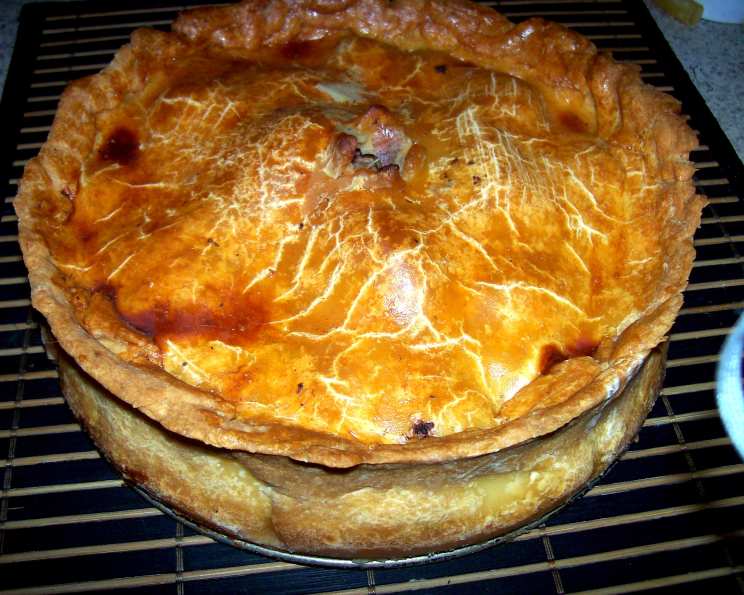
A Slice of History: Mastering the Traditional Raised Pork Pie
The scent of warm lard pastry and savory pork always transports me back to bustling market days in rural England. As a young culinary student, I was captivated by the sight of these golden, sturdy pies, each a testament to time-honored techniques. The first time I bit into a slice, the rich, savory filling and perfectly crisp crust sparked a passion that has lasted to this day. It wasn’t just food; it was edible history. Now, I’m thrilled to share the secrets of this iconic dish with you, so you can create your own slice of history.
Recipe Overview
- Prep Time: 45 minutes
- Cook Time: 3 hours
- Total Time: 3 hours 45 minutes
- Servings: 6-8
- Yield: 1 pie
- Dietary Type: Not Gluten-Free
Ingredients
For the Hot Water Crust Pastry:
- 1 lb (2 cups) flour
- 5 ounces lard (or vegetable shortening)
- 1/4 pint milk
- 1/4 pint water (mixed with the milk)
- Salt
For the Pork Filling:
- 2 lbs boneless pork leg (or boneless pork shoulder), cubed
- 1 teaspoon salt
- 1/2 teaspoon pepper
- 1/4 teaspoon cayenne pepper
- 1/4 teaspoon ground ginger
- 1/4 teaspoon ground mace
- 1/4 teaspoon dried sage
- 1/4 teaspoon dried marjoram
For the Jelly Stock:
- 3-4 small veal bones (or 2 teaspoons gelatine)
- 1 bay leaf
- 1 small onion, roughly chopped
- 4 black peppercorns
- 4 Tbsp of the meat stock from the pie (reserved)
For Glazing:
- 1 beaten egg
Equipment Needed
- Saucepan
- Strainer
- Mixing bowl
- 8-inch springform pan
- Rolling pin
- Baking sheet
- Aluminum foil
Instructions
- Prepare the Jelly Stock: Place the veal bones, bay leaf, onion, and black peppercorns in a saucepan. Cover with water. Bring to a simmer and cook for 20 minutes. Then, boil to reduce the liquid to about half to three-quarters of a cup. Strain the stock and set aside to cool. If you don’t have bones, proceed to step 2 and prepare a stock cube instead for the meat mixture, then use the gelatine instead of bone stock for the jelly later.
- Prepare the Pork Filling: In a large bowl, mix the cubed pork with the salt, pepper, cayenne pepper, ground ginger, ground mace, dried sage, and dried marjoram. Ensure the spices are evenly distributed throughout the meat.
- Make the Hot Water Crust Pastry: In a saucepan, bring the milk, water, lard, and a pinch of salt to a boil. Once boiling, immediately remove from the heat.
- Combine Wet and Dry Ingredients: Gradually beat the hot liquid into the flour and salt in a large mixing bowl. Use a wooden spoon or spatula, being careful as the mixture will be hot.
- Knead the Dough: Once the dough has cooled slightly, knead it on a lightly floured surface for 3-4 minutes until it forms a smooth, pliable ball.
- Prepare the Pie Case: Divide the pastry into two portions, with one portion being approximately two-thirds of the dough. Roll out the larger portion of the pastry and line the bottom and sides of an 8-inch springform pan. Press the pastry firmly against the sides of the pan.
- Fill the Pie: Add the meat mixture to the pie case, ensuring it’s evenly distributed. Then, add 4 tablespoons of the reserved meat stock to the pie case.
- Create the Pie Lid: Roll out the remaining dough to form a lid for the pie. Seal the edges of the lid to the pie case with a little water, crimping the edges to ensure a good seal.
- Vent the Pie: Make a hole in the center of the pie lid to allow steam to escape during baking. This prevents the crust from becoming soggy.
- Glaze the Pie: Brush the top of the pie with the beaten egg to give it a golden-brown finish.
- Bake the Pie: Bake the pie in a preheated oven at 425 degrees Fahrenheit (220 degrees Celsius) for 30 minutes.
- Continue Baking: Cover the pie loosely with aluminum foil to prevent the crust from burning. Reduce the oven temperature to 350 degrees Fahrenheit (175 degrees Celsius) and bake for a further two and a half hours.
- Cool the Pie: Remove the pie from the oven and allow it to cool completely in the pan. This helps the pie to set and prevents it from collapsing.
- Add the Jelly: Gently warm the remaining jellied stock. Then, pour the warm stock into the center hole in the pie. The stock will seep down into the pie, adding moisture and flavor.
- Chill the Pie: Chill the pie in the refrigerator for at least 4 hours, or preferably overnight, to allow the jelly to set completely.
- Serve: Carefully remove the pie from the springform pan and serve in wedges.
Expert Tips & Tricks
- Hot Water Crust Mastery: The key to a perfect hot water crust is to work quickly while the dough is still warm and pliable. If the dough cools too much, it will become difficult to handle and may crack.
- Preventing a Soggy Bottom: To avoid a soggy bottom crust, you can blind-bake the pastry case for a short period before adding the filling. This helps to set the pastry and create a barrier against the moisture from the meat.
- Meat Quality: Use high-quality pork for the best flavor. Pork leg or shoulder both work well, but ensure the meat is well-trimmed.
- Spice Balance: Adjust the spices to your personal preference. If you like a bit more heat, add a pinch more cayenne pepper.
- Make-Ahead: The pork pie can be made a day or two in advance, allowing the flavors to meld and the jelly to set properly. This makes it a perfect dish for entertaining.
- Alternative Meat: Other meats can be incorporated into the recipe in addition to the pork, such as cooked ham or chicken.
Serving & Storage Suggestions
Serve the raised pork pie cold or at room temperature, cut into wedges. It’s traditionally enjoyed with a side of piccalilli or Branston pickle, and a fresh green salad.
To store, wrap the pie tightly in plastic wrap and keep it in the refrigerator. It will last for up to 3-4 days. The pie is best enjoyed cold and is not suitable for reheating, as this can make the pastry soggy. Freezing is not recommended, as it can affect the texture of the pastry and jelly.
Nutritional Information
| Nutrient | Amount per Serving | % Daily Value |
|---|---|---|
| Calories | 897 kcal | N/A |
| Calories from Fat | 501 kcal | N/A |
| Total Fat | 55.8 g | 85% |
| Saturated Fat | 20.6 g | 102% |
| Cholesterol | 137.8 mg | 45% |
| Sodium | 471.5 mg | 19% |
| Total Carbohydrate | 60.1 g | 20% |
| Dietary Fiber | 2.4 g | 9% |
| Sugars | 0.7 g | 2% |
| Protein | 35.1 g | 70% |
Note: Nutritional information is an estimate and may vary based on specific ingredients and portion sizes.
Variations & Substitutions
- Gluten-Free: While a traditional hot water crust relies on gluten for its structure, you can experiment with gluten-free flour blends. However, be aware that the texture may be different.
- Vegetarian Option: Create a vegetarian version by substituting the pork with a mixture of finely diced vegetables such as mushrooms, carrots, and celery, seasoned with herbs and spices.
- Different Meats: For a twist, use a combination of pork and game meats like venison or pheasant for a richer, more complex flavor.
- Flavored Jelly: Infuse the jelly stock with different herbs and spices, such as thyme or rosemary, for added flavor.
FAQs (Frequently Asked Questions)
Q: Why is it called a “raised” pork pie?
A: The name comes from the traditional method of shaping the pie, where the pastry is raised up around a mold or by hand, creating the distinctive tall sides.
Q: Can I use a regular pie dish instead of a springform pan?
A: While you can use a regular pie dish, a springform pan makes it much easier to remove the pie cleanly after it has cooled and set.
Q: How do I know when the pork pie is fully cooked?
A: The pastry should be golden brown and firm to the touch. A meat thermometer inserted into the center of the filling should register at least 160 degrees Fahrenheit (71 degrees Celsius).
Q: My pastry is cracking. What am I doing wrong?
A: The pastry is likely too dry. Make sure you are working with it while it’s still warm and pliable. You can also add a little more liquid (milk or water) to the dough.
Q: Can I freeze the leftover pork pie?
A: It is not recommended, freezing can affect the texture of the pastry and jelly.
Final Thoughts
Creating a raised pork pie might seem like a daunting task, but the results are well worth the effort. From the savory aroma filling your kitchen to the satisfying crunch of the pastry, this dish is a testament to the enduring appeal of classic British cuisine. So, gather your ingredients, embrace the process, and prepare to impress your friends and family with a truly unforgettable culinary experience. Don’t be afraid to add your own personal touches and share your creations with the world! Perhaps pair it with a crisp apple cider for the ultimate British experience.