
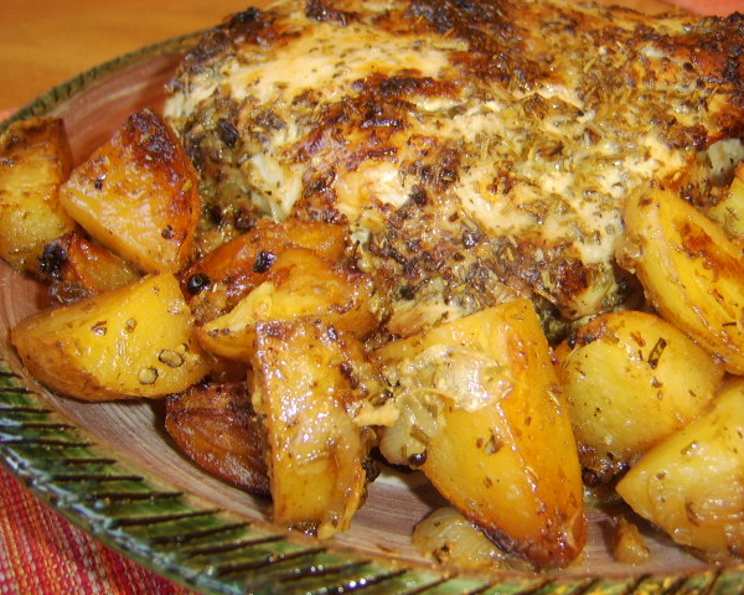
The Sunday Supper: Slow-Roasted Pork Shoulder with Rosemary Potatoes
I can still smell it now, the aroma that would fill my grandmother’s kitchen every Sunday. It was a symphony of savory pork, sweet onions, and earthy rosemary, all mingling together in a slow-baked perfection. She’d pull that magnificent pork shoulder from the oven, its crust a deep mahogany, the meat practically falling apart with a gentle tug. The potatoes, nestled around the roast, were infused with all the delicious drippings. It wasn’t just a meal; it was a ritual, a gathering, a memory I cherish with every bite of this dish. I’m thrilled to share this updated version, which honors her original recipe.
Recipe Overview
- Prep Time: 20 minutes
- Cook Time: 2 hours 30 minutes
- Total Time: 2 hours 50 minutes
- Servings: 4-6
- Yield: 1 roast with potatoes
- Dietary Type: Gluten-Free, Dairy-Optional
Ingredients
- 2-3 lbs pork shoulder or 2-3 lbs pork butt
For the Marinade:
- 1 medium onion, sliced thick
- 4 garlic cloves
- 1 tablespoon oregano
- 1 teaspoon cumin
- 2 teaspoons kosher salt
- 1 teaspoon black peppercorns
- 1 tablespoon olive oil
- 2 tablespoons rosemary
- 1/2 orange, juice and zest of
- 1/2 lemon, juice and zest of
- 2 teaspoons Dijon mustard
- 1/4 cup white wine
For the Potatoes:
- 4 large Yukon Gold potatoes
- 2 tablespoons butter or 2 tablespoons olive oil (for a dairy-free option)
- 1 teaspoon kosher salt or 1 teaspoon sea salt
- 1 teaspoon rosemary, chopped
Equipment Needed
- Glass roasting pan
- Sharp knife
- Food processor
- Medium mixing bowl
Instructions
- Prepare the Pork: If your pork roast has a thick layer of fat on top, trim off any excessive amounts. Score the top of the fat in a checkerboard pattern using a sharp knife. This helps the fat render and creates a beautiful crust.
- Make Incisions: Using your sharp knife, make several shallow cuts about 1/2 inch deep on each side of the pork shoulder.
- Infuse with Garlic: Slice 3 of the garlic cloves into spears. Insert these garlic spears into half of the cuts you made on the pork. This will infuse the meat with garlic flavor from the inside out.
- Create the Base: Spread the sliced onion on the bottom of your glass roasting pan. This will act as a bed for the pork, preventing it from sticking and adding flavor to the drippings.
- Prepare the Marinade: Place the remaining garlic clove, oregano, cumin, kosher salt, black peppercorns, olive oil, rosemary, orange juice and zest, lemon juice and zest, Dijon mustard, and white wine in a food processor. Process until you have a smooth paste.
- Marinate the Pork: Rub the pork shoulder all over with the marinade mixture, ensuring that it goes into all the cuts you made. This will allow the flavors to penetrate deep into the meat.
- Rest and Refrigerate: Place the pork on top of the onion slices in the roasting pan. Cover the pan tightly with plastic wrap and place it in the refrigerator for at least 4 hours. Turn the roast at least once during this time to ensure even marination. Overnight marination is even better!
- Preheat the Oven: Preheat your oven to 450 degrees F (232 degrees C).
- Prepare the Potatoes: While the oven is preheating, cut the Yukon Gold potatoes into your desired size – wedges or chunks both work well.
- Season the Potatoes: In a medium mixing bowl, toss the potatoes with the melted butter (or olive oil), salt, and chopped rosemary. Make sure the potatoes are evenly coated.
- Arrange Around the Pork: Lay the seasoned potatoes around the pork roast in the roasting pan.
- Initial High Heat Roast: Place the roasting pan in the preheated oven, making sure the fat side of the pork is facing up. Cook at 450 degrees F (232 degrees C) for 30 minutes. This initial high heat helps to sear the outside of the pork and start the rendering process of the fat.
- Lower the Heat and Continue Roasting: After 30 minutes, lower the oven temperature to 325 degrees F (163 degrees C) and continue roasting for 2 more hours.
- Baste Regularly: During the 2-hour roasting time, baste the pork with its own juices every 30 minutes. This will keep the pork moist and add to the depth of flavor.
- Check for Doneness: Check the internal temperature of the pork after 1 and 1/2 hours at 325 degrees F (163 degrees C). Use a meat thermometer inserted into the thickest part of the roast, avoiding bone.
- Cook to Temperature: Continue cooking until the internal temperature reaches 190-205 degrees F. A higher temp is better for breaking down the tough connective tissue to result in a more tender, pullable product.
- Rest Before Carving: Remove the pork shoulder roast from the oven and let it rest, covered loosely with foil, for at least 15 minutes before cutting or pulling. This allows the juices to redistribute, resulting in a more tender and flavorful roast.
- Optional Potato Browning: If you want your potatoes to be extra crispy, you can remove the pork after it has rested and increase the oven temperature to 400 degrees F (200 degrees C). Place the potatoes back in the oven for another 10-15 minutes, or until they are browned to your liking.
Expert Tips & Tricks
- Scoring the Fat: Scoring the fat cap allows for better rendering and crisping during the roasting process. Don’t cut too deep – just through the fat layer.
- Don’t Skip the Rest: Resting the pork is crucial! It allows the muscle fibers to relax and reabsorb the juices, resulting in a much more tender and flavorful roast. If you skip this step, the juices will run out when you carve it, leaving you with dry meat.
- Temperature is Key: Don’t rely on timing alone. A meat thermometer is your best friend when roasting any meat. Aim for an internal temperature of 190-205 degrees F for a truly tender, pull-apart pork shoulder.
- Wine Substitution: If you don’t have white wine on hand, chicken broth or even apple cider vinegar can be used in the marinade as a substitute.
- Spice It Up: Add a pinch of red pepper flakes to the marinade for a touch of heat.
Serving & Storage Suggestions
Serve the slow-roasted pork shoulder hot, right from the roasting pan. The meat should be so tender that it easily pulls apart with a fork. Spoon the rosemary potatoes alongside the pork, and don’t forget to drizzle the pan juices over everything!
Leftovers can be stored in an airtight container in the refrigerator for up to 3-4 days. For longer storage, you can freeze the cooked pork shoulder for up to 2-3 months. To reheat, thaw the pork in the refrigerator overnight and then reheat in a low oven (around 300 degrees F) with a little broth or water to prevent it from drying out. You can also reheat it in a skillet or microwave.
Nutritional Information
| Nutrient | Amount per Serving | % Daily Value |
|---|---|---|
| Calories | 790.9 kcal | N/A |
| Calories from Fat | 454 g | 57% |
| Total Fat | 50.5 g | 77% |
| Saturated Fat | 18.4 g | 91% |
| Cholesterol | 176.3 mg | 58% |
| Sodium | 1980.5 mg | 82% |
| Total Carbohydrate | 37.9 g | 12% |
| Dietary Fiber | 4.4 g | 17% |
| Sugars | 4.4 g | N/A |
| Protein | 42.9 g | 85% |
Note: Nutritional information is an estimate and may vary based on specific ingredients and portion sizes.
Variations & Substitutions
- Spicy Pork Shoulder: Add a diced chipotle pepper in adobo sauce to the marinade for a smoky, spicy kick.
- Mexican-Inspired: Use orange juice, lime juice, oregano, cumin, and chili powder in the marinade for a delicious carnitas-style pork shoulder. Serve with warm tortillas, salsa, and your favorite toppings.
- Apple Cider Glaze: During the last 30 minutes of roasting, brush the pork shoulder with an apple cider glaze made from apple cider, brown sugar, and Dijon mustard.
- Root Vegetable Medley: Substitute or add other root vegetables to the potatoes, such as carrots, parsnips, or sweet potatoes.
FAQs (Frequently Asked Questions)
Q: Can I use a different cut of pork?
A: While pork shoulder or pork butt (Boston butt) are recommended for this recipe due to their higher fat content which results in a more tender and flavorful roast, you could use a pork loin roast in a pinch. However, be mindful that pork loin is leaner and tends to dry out more easily, so reduce the cooking time accordingly and baste frequently.
Q: How do I know when the pork is done?
A: The best way to tell if the pork is done is to use a meat thermometer. Insert it into the thickest part of the roast, avoiding bone. The internal temperature should reach 190-205 degrees F for optimal tenderness.
Q: Can I make this recipe in a slow cooker?
A: Yes! Sear the pork shoulder in a skillet first, then place it in a slow cooker with the marinade and potatoes. Cook on low for 8-10 hours or on high for 4-6 hours, or until the pork is very tender.
Q: Can I prepare the pork shoulder ahead of time?
A: Absolutely. Marinating the pork shoulder overnight will enhance the flavor. You can also roast the pork shoulder a day ahead of time and then reheat it before serving.
Q: What should I serve with this pork shoulder?
A: This pork shoulder is delicious served with roasted vegetables, mashed potatoes, cornbread, or a simple green salad.
Final Thoughts
I hope this recipe for slow-roasted pork shoulder with rosemary potatoes brings as much joy to your table as it has to mine. It’s a simple, hearty dish that’s perfect for a Sunday supper or any special occasion. Don’t be afraid to experiment with different variations and make it your own. And most importantly, enjoy the process of cooking and sharing this delicious meal with the people you love. Happy cooking!