
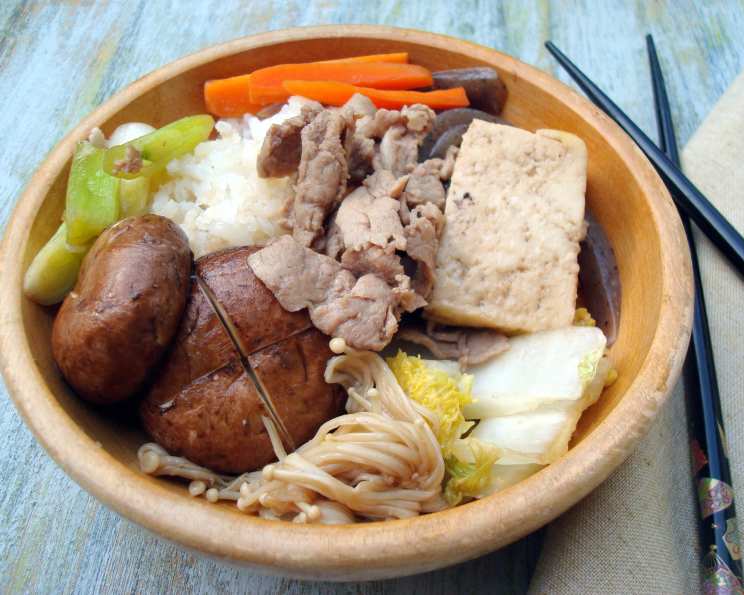
Pork Sukiyaki: A Culinary Journey to Japan
The first time I tasted Sukiyaki, I was a wide-eyed culinary student on an exchange program in Kyoto. The communal pot bubbled with a sweet, savory aroma, a symphony of soy, sake, and the earthy scent of mushrooms. Dipping each morsel of tender pork and vegetable into a raw egg yolk – a custom that initially seemed strange but quickly became addictive – created an unforgettable experience, a true celebration of shared food and conversation that transcended language barriers. That memory, the warmth of the bubbling pot, the laughter, and the exquisite flavor, forever cemented Sukiyaki as one of my all-time favorite dishes.
Recipe Overview
- Prep Time: 30 minutes
- Cook Time: 35 minutes
- Total Time: 1 hour 5 minutes
- Servings: 4-6
- Dietary Type: None Specified
Ingredients
- 1 1/2 lbs. thinly sliced pork loin
- 12 ounces crimini mushrooms
- 6-8 ounces enoki mushrooms
- 2 bunched large green onions, greens removed and cut into 1-inch pieces
- 1/2 head napa cabbage, roughly chopped
- 1 1/2 cups baby carrots, cut into quarters
- 12 ounces firm tofu, cut into cubes
- 9 ounces konnyaku noodles
- 1 tablespoon oil
Sauce:
- 2/3 cup shoyu (soy sauce)
- 6 tablespoons sake
- 2/3 cup brown sugar
- 1 1/2 cups water
Equipment Needed
- Large skillet or Sukiyaki pan
- Knife
- Cutting board
Instructions
-
Flash freeze the pork for 30 minutes. This makes it slightly firm and much easier to slice very thin without the meat moving around too much. It needs to be very thinly sliced for this dish, about 1/8th of an inch if possible.
-
Prepare all the vegetables. Trim the ends of the crimini mushrooms. For a more decorative touch (as is often done in Japan), you can cut small “X” designs into the top of each mushroom using a paring knife. This is purely aesthetic, but adds a nice touch! Slice the mushrooms in half or quarters, depending on size. Trim the root ends of the enoki mushrooms. Cut the green onions into 1-inch pieces. Roughly chop the napa cabbage. Cut the baby carrots into quarters. Cut the firm tofu into cubes approximately 1-inch in size.
-
Mix the Sukiyaki sauce in a bowl. Combine the shoyu (soy sauce), sake, brown sugar, and water. Whisk until the brown sugar is dissolved. Set aside.
-
Heat a large skillet or a traditional Sukiyaki pan to medium-high heat. Add the oil.
-
Add a few pieces of pork to the hot skillet. Stir the meat around, ensuring the oil coats the bottom of the pan. Be careful not to overcrowd the pan; work in batches to ensure even cooking and browning.
-
Pour about 1/3 inch of the prepared sauce into the skillet. Allow the sauce to heat up and begin to simmer gently.
-
Pile the meat, tofu, konnyaku noodles, and vegetables (including crimini mushrooms, enoki mushrooms, green onions, napa cabbage, and baby carrots) into the skillet. Arrange them attractively around the meat, creating a visually appealing presentation.
-
Allow the ingredients to cook down for several minutes, stirring occasionally. Cook until the meat is cooked through and no longer pink, and the vegetables are tender-crisp. Adjust the heat as needed to maintain a gentle simmer. It usually takes around 5-7 minutes for the ingredients to cook thoroughly.
-
Remove the cooked sukiyaki from the skillet and serve immediately over freshly cooked sticky rice (sushi-style rice is ideal).
-
Repeat steps 5 through 9 with the rest of the ingredients until all of the sukiyaki has been cooked. Add more sauce as needed to keep the mixture moist and flavorful.
Expert Tips & Tricks
- Achieve Paper-Thin Pork: The flash freezing is crucial for getting that melt-in-your-mouth texture. If you can find pre-sliced pork at an Asian market labeled “sukiyaki cut,” even better!
- Don’t Overcrowd the Pan: Cooking in batches prevents the temperature from dropping too low, ensuring the meat browns properly and the vegetables cook evenly.
- Adjust Sweetness: The sweetness of the sauce can be adjusted to your preference. Start with the recommended amount of brown sugar and add more to taste, if desired. A touch of mirin can also enhance the sweetness and add a subtle complexity.
- Embrace the Egg: While optional, serving sukiyaki with a side of lightly beaten raw egg is a traditional Japanese custom. The egg adds a creamy richness that complements the savory-sweet flavors of the dish. Be sure to use pasteurized eggs if you’re concerned about raw egg consumption.
- Tofu Tip: Pressing the tofu before cutting it into cubes helps remove excess water, allowing it to absorb more of the delicious sukiyaki sauce.
Serving & Storage Suggestions
Serve the pork sukiyaki hot, directly from the skillet or sukiyaki pan, over freshly cooked sticky rice. Garnish with extra green onions for a pop of color. As mentioned, a side of lightly beaten raw egg is a traditional accompaniment.
Leftovers can be stored in an airtight container in the refrigerator for up to 3 days. To reheat, gently warm the sukiyaki in a skillet over medium heat, adding a splash of water or broth if needed to prevent it from drying out. Microwaving is also an option, but it may affect the texture of the ingredients.
Nutritional Information
| Nutrient | Amount per Serving | % Daily Value |
|---|---|---|
| Calories | 480 kcal | 24% |
| Total Fat | 18g | 28% |
| Saturated Fat | 6g | 30% |
| Cholesterol | 75mg | 25% |
| Sodium | 1800mg | 75% |
| Total Carbohydrate | 45g | 15% |
| Dietary Fiber | 5g | 20% |
| Sugars | 20g | – |
| Protein | 30g | 60% |
Note: Nutritional information is an estimate and may vary based on specific ingredients and preparation methods.
Variations & Substitutions
- Beef Sukiyaki: Substitute thinly sliced beef (such as ribeye or sirloin) for the pork.
- Chicken Sukiyaki: Use thinly sliced chicken thighs or chicken breast.
- Vegetarian Sukiyaki: Omit the meat and add more tofu or other vegetables, such as shiitake mushrooms, shirataki noodles, or snow peas.
- Gluten-Free Sukiyaki: Use tamari instead of soy sauce to make the sauce gluten-free.
- Spicy Sukiyaki: Add a pinch of red pepper flakes or a drizzle of chili oil to the sauce for a spicy kick.
- Seasonal Vegetables: Feel free to adjust the vegetables based on what’s in season. Spinach, bok choy, or winter squash would all be delicious additions.
FAQs (Frequently Asked Questions)
Q: Can I make the sauce ahead of time?
A: Yes! The sukiyaki sauce can be made up to 2 days in advance and stored in an airtight container in the refrigerator. This allows the flavors to meld together even more.
Q: What kind of rice is best for Sukiyaki?
A: Short-grain Japanese rice, often labeled as “sushi rice” or “sticky rice,” is the ideal choice. Its stickiness helps it soak up the delicious sukiyaki sauce.
Q: Can I use frozen vegetables?
A: While fresh vegetables are preferred for their texture and flavor, you can use frozen vegetables in a pinch. Just be sure to thaw them completely before adding them to the skillet.
Q: Do I have to use konnyaku noodles?
A: Konnyaku noodles, also known as shirataki noodles, are a traditional ingredient in sukiyaki. However, if you can’t find them, you can substitute with other types of noodles, such as glass noodles or udon noodles.
Q: Is it safe to eat raw eggs with Sukiyaki?
A: Eating raw eggs carries a small risk of salmonella. If you’re concerned, use pasteurized eggs or skip the egg altogether.
Final Thoughts
Pork Sukiyaki is more than just a meal; it’s an experience, a chance to gather around a table with loved ones and share in the joy of cooking and eating together. I urge you to try this recipe, to adapt it to your own tastes and preferences, and to create your own unforgettable Sukiyaki memories. Don’t be afraid to experiment with different vegetables, sauces, or serving suggestions. The beauty of sukiyaki lies in its versatility. And, most importantly, I’d love to hear your thoughts and feedback! What did you love? What did you change? What would you do differently next time? Enjoy!