
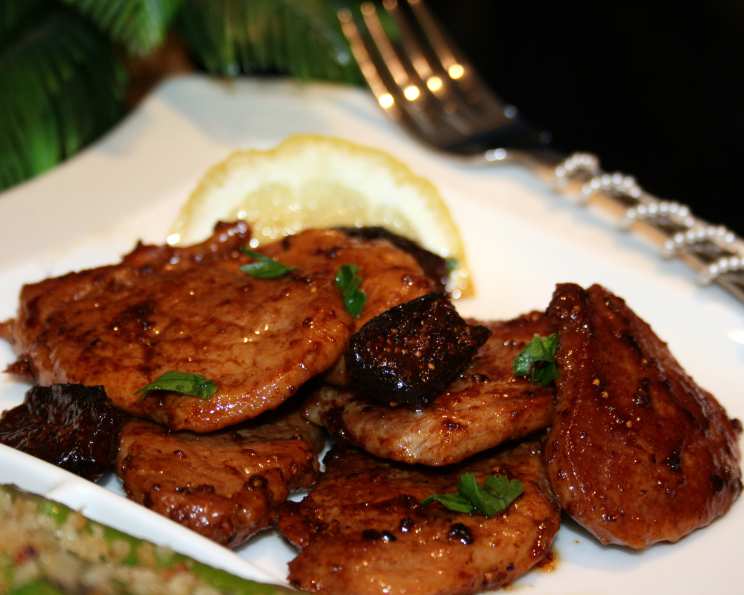
Pork Tenderloin Medallions With Fresh Figs
I’ll never forget the first time I tasted this dish. It was at a tiny trattoria tucked away on a cobblestone street in Florence, Italy. The aroma alone – the savory pork mingling with the sweet, earthy figs and the bright, herbaceous wine – transported me. I remember thinking, “This is it. This is the flavor of autumn, bottled and served on a plate.” It’s a dish that encapsulates the simple elegance of Italian cooking and has since become a personal favorite to make at home, bringing back those delicious memories with every bite.
Recipe Overview
- Prep Time: 10 minutes
- Cook Time: 15 minutes
- Total Time: 25 minutes
- Servings: 4
- Dietary Type: Pescatarian
Ingredients
- Olive oil
- Kosher salt and black pepper
- 1 lb pork tenderloin, cut into medallions
- 1 pint fresh figs, trimmed and cut in half (Black Mission, Green Kadota, or Brown Turkish varieties work well)
- 1 cup white wine
Equipment Needed
- Large cast iron or other heavy skillet
- Platter
- Foil
Instructions
- Place a large cast iron or other heavy skillet over medium-high heat. Coat the bottom with olive oil, about 2 tablespoons. Ensure the skillet is adequately heated before adding the pork to achieve a good sear.
- Season the pork medallions liberally with salt and pepper. Generously seasoning is key to enhancing the natural flavors of the pork.
- Place the seasoned medallions in the preheated skillet. Sear on both sides until well browned, about 3 minutes per side, or until the internal temperature reaches 145 degrees Fahrenheit (63 degrees Celsius). Using a meat thermometer ensures the pork is cooked to a safe and optimal doneness.
- Remove the seared pork from the pan to a platter and cover loosely with foil. This helps retain the heat while you prepare the fig sauce.
- Add the halved figs to the pan, adding a pinch more salt and pepper, and additional oil if needed. The residual heat from the pan will help the figs caramelize slightly.
- Cook the figs for 3 minutes, then add the white wine to the pan. The wine will deglaze the pan, lifting up all the flavorful browned bits left from the pork.
- Stir gently to scrape up the bits on the bottom of the pan. This is crucial for creating a rich and flavorful sauce.
- Allow the wine to come to a boil and reduce slightly, about 3 minutes. Reducing the wine concentrates the flavor and creates a syrupy consistency.
- Return the pork to the pan with any juices that may have accumulated on the platter. The juices add extra depth of flavor to the sauce.
- Coat the pork with the sauce and allow just to heat through. Avoid overcooking the pork at this stage to prevent it from becoming dry.
- Turn the pork and figs onto the platter with all of the sauce. This creates an elegant presentation and ensures every bite is coated in the delicious sauce.
Expert Tips & Tricks
- For extra depth of flavor, marinate the pork tenderloin in a mixture of olive oil, garlic, herbs (such as rosemary or thyme), salt, and pepper for at least 30 minutes before cooking.
- Don’t overcrowd the pan when searing the pork. Work in batches if necessary to ensure each medallion gets a good sear.
- If the sauce becomes too thick, add a splash of chicken broth or water to thin it out.
- A dry white wine, such as Pinot Grigio or Sauvignon Blanc, works best in this recipe.
- To get a perfect sear on the pork, make sure your skillet is hot before adding the meat. You can test this by flicking a few drops of water into the pan – if they sizzle and evaporate quickly, the pan is ready.
Serving & Storage Suggestions
This dish is best served immediately while the pork is tender and the sauce is warm. Spoon the sauce generously over the pork and figs. It pairs perfectly with buttered or seasoned egg noodles, creamy polenta, or roasted vegetables like asparagus or Brussels sprouts.
Leftovers can be stored in an airtight container in the refrigerator for up to 3 days. Reheat gently in a skillet over medium heat, adding a splash of broth or water if needed to prevent the pork from drying out. You can also reheat it in the microwave, but be careful not to overcook it. Freezing is not recommended as the texture of the figs can change.
Nutritional Information
| Nutrient | Amount per Serving | % Daily Value |
|---|---|---|
| Calories | 320 kcal | 16% |
| Total Fat | 18g | 28% |
| Saturated Fat | 4g | 20% |
| Cholesterol | 90mg | 30% |
| Sodium | 150mg | 7% |
| Total Carbohydrate | 12g | 4% |
| Dietary Fiber | 2g | 8% |
| Sugars | 9g | |
| Protein | 25g | 50% |
Note: Nutritional information is an estimate and may vary based on specific ingredients and portion sizes.
Variations & Substitutions
- Balsamic Glaze: Drizzle a balsamic glaze over the finished dish for an extra layer of sweetness and tanginess.
- Different Fruit: If figs aren’t available, try using other seasonal fruits like plums, peaches, or cherries.
- Herbs: Experiment with different herbs like thyme, rosemary, or sage to enhance the flavor of the sauce.
- Spicy Kick: Add a pinch of red pepper flakes to the sauce for a touch of heat.
- Vegetarian Option: Substitute the pork tenderloin with thick slices of halloumi cheese or portobello mushrooms for a vegetarian-friendly alternative.
FAQs (Frequently Asked Questions)
Q: Can I use dried figs instead of fresh figs?
A: While fresh figs are preferred for their texture and flavor, you can use dried figs in a pinch. Soak them in warm water for about 30 minutes to plump them up before adding them to the pan.
Q: What if I don’t have white wine?
A: You can substitute the white wine with chicken broth or apple cider vinegar. These will still deglaze the pan and add flavor to the sauce, although the taste will be slightly different.
Q: How do I know when the pork is cooked through?
A: The best way to check the doneness of pork is to use a meat thermometer. Insert it into the thickest part of the medallion; it should read 145 degrees Fahrenheit (63 degrees Celsius).
Q: Can I make this ahead of time?
A: While it’s best served fresh, you can prepare the sauce ahead of time and store it in the refrigerator for up to 2 days. Reheat the sauce and add the cooked pork just before serving.
Q: What’s the best way to trim the pork tenderloin?
A: Trim any excess silver skin or fat from the pork tenderloin before cutting it into medallions. This will ensure a more tender and even cook.
Final Thoughts
Pork Tenderloin Medallions with Fresh Figs is a dish that beautifully marries savory and sweet flavors, creating a delightful culinary experience. Don’t be intimidated by the perceived elegance of the dish; it’s surprisingly easy to make at home. Whether you’re looking to impress guests or simply elevate a weeknight meal, this recipe is sure to become a new favorite. I encourage you to try it, experiment with different variations, and share your feedback! And to truly complete the experience, pair it with a crisp glass of Italian Pinot Grigio. Buon appetito!