
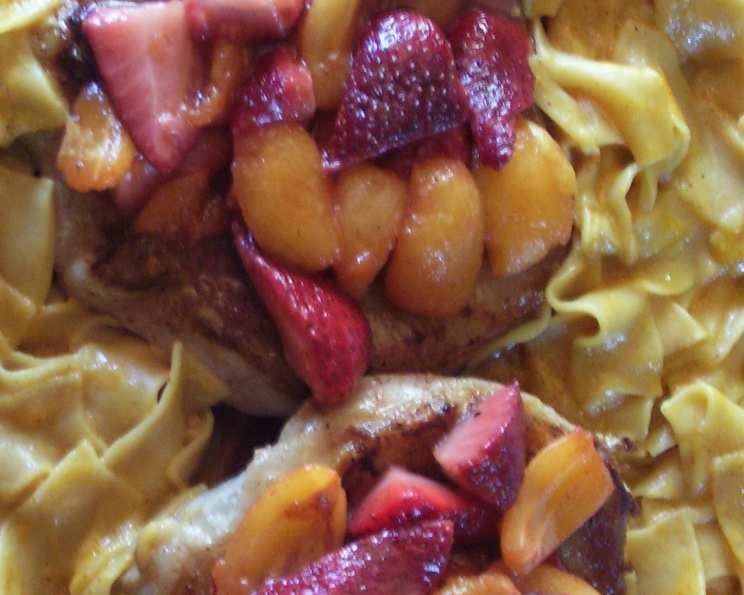
Pork Tenderloin With Strawberry Loquat Sauce
The aroma still takes me back. My grandmother had a sprawling loquat tree in her backyard, its branches heavy with golden, plum-like fruit each spring. She would always make a simple compote with them, sometimes adding other seasonal fruits like strawberries, and serve it alongside grilled pork tenderloin. It wasn’t fancy, but the sweet and tangy sauce combined with the savory pork was a taste of pure, unadulterated joy – a memory I cherish every time I recreate this dish.
Recipe Overview
- Prep Time: 15 minutes
- Cook Time: 35 minutes
- Total Time: 50 minutes
- Servings: 4
- Dietary Type: Gluten-Free (check Madeira label)
Ingredients
- 1 lb pork tenderloin (trimmed of excess fat)
- Salt, to taste
- Fresh ground black pepper, to taste
- 1 1/2 teaspoons mild olive oil
- 1 1/2 teaspoons unsalted butter
- 1/2 cup loquats (peeled, seeded & quartered)
- 1/2 cup fresh strawberries (hulled & quartered)
- 1 teaspoon sugar (or Splenda)
- 1/4 cup Madeira wine
Equipment Needed
- Medium-sized skillet
- Meat thermometer
- Wooden spoon
- Warmed serving platter
Instructions
-
Begin by preparing the pork tenderloin. Cut the tenderloin in half to ensure it fits comfortably in your medium-sized skillet. This also helps with even cooking.
-
Season the pork generously with salt and freshly ground black pepper to your liking. Don’t be shy – this is your opportunity to build flavor.
-
Heat the olive oil and half of the butter (1/2 tablespoon) in the skillet over medium heat. Allow the butter to melt completely and the oil to shimmer before adding the pork.
-
Carefully place the tenderloin in the hot skillet. Brown it on all sides for about 2 minutes per side, creating a beautiful sear. This step is crucial for developing a rich, flavorful crust.
-
Once the pork is nicely browned, cover the skillet and reduce the heat to low. This allows the pork to cook gently and evenly without burning.
-
Continue to cook the tenderloin until it registers 150°F (65°C) on a meat thermometer. Insert the thermometer into the thickest part of the tenderloin, being careful not to touch any bones. The internal temperature is the most reliable indicator of doneness.
-
Remove the cooked tenderloin from the skillet and cover it loosely with foil to keep it warm while you prepare the sauce. Allowing the meat to rest is essential for retaining its juices.
-
Carefully drain any excess fat from the skillet, leaving behind only a thin layer. This ensures that the sauce isn’t greasy.
-
Add the quartered loquats, quartered strawberries, and sugar (or Splenda) to the skillet. Sauté the fruits over medium heat just until they begin to soften, about 30 seconds. Be careful not to overcook them – you want them to retain some of their shape and texture.
-
Stir in the Madeira wine with a wooden spoon, making sure to scrape up any browned bits (fond) from the bottom of the skillet. These browned bits are packed with flavor and will add depth to your sauce.
-
Add any accumulated meat juices from the resting tenderloin to the skillet. These juices are liquid gold and will enhance the flavor of the sauce even further.
-
Simmer the sauce for 1 minute, allowing the flavors to meld together.
-
Add the remaining butter (1 teaspoon) to the skillet and stir until it is completely melted and incorporated into the sauce. This adds richness and a silky texture to the sauce.
-
Remove the skillet from the heat.
-
Slice the rested tenderloin into 1/4-inch thick slices.
-
Arrange the sliced pork artfully on a warmed serving platter.
-
Spoon the luscious fruit sauce generously over the sliced pork.
-
Serve immediately and enjoy!
Expert Tips & Tricks
- Don’t skip the searing step: Searing the pork is crucial for developing flavor and a beautiful crust.
- Use a meat thermometer: A meat thermometer is the best way to ensure that your pork is cooked to the correct internal temperature. Overcooked pork can be dry and tough.
- Rest the pork: Allowing the pork to rest after cooking is essential for retaining its juices.
- Adjust sweetness: Taste the sauce and adjust the amount of sugar to your liking. If your loquats and strawberries are particularly sweet, you may need less sugar.
- Deglaze the pan properly: Scraping the bottom of the pan ensures all the flavor gets incorporated into the sauce.
- Wine Substitution: If you don’t have Madeira wine on hand, you can use a dry sherry or a port wine as a substitute.
Serving & Storage Suggestions
Serve the Pork Tenderloin with Strawberry Loquat Sauce immediately for the best flavor and texture. It pairs beautifully with roasted vegetables like asparagus or green beans, or a simple side of rice or quinoa.
Leftovers can be stored in an airtight container in the refrigerator for up to 3 days. Reheat gently in a skillet over low heat, or in the microwave. The sauce may thicken upon refrigeration, so you may need to add a splash of water or broth to thin it out. I do not recommend freezing this dish as the fruit sauce’s texture may degrade upon thawing.
Nutritional Information
| Nutrient | Amount per Serving | % Daily Value |
|---|---|---|
| Calories | 300 kcal | 15% |
| Total Fat | 12g | 18% |
| Saturated Fat | 4g | 20% |
| Cholesterol | 90mg | 30% |
| Sodium | 75mg | 3% |
| Total Carbohydrate | 10g | 3% |
| Dietary Fiber | 1g | 4% |
| Sugars | 7g | – |
| Protein | 30g | 60% |
Nutritional information is an estimate and may vary based on specific ingredients and preparation methods.
Variations & Substitutions
- Other Fruits: Feel free to experiment with other fruits in the sauce, such as peaches, plums, or raspberries.
- Herbs: Add a sprig of fresh thyme or rosemary to the skillet while cooking the sauce for an extra layer of flavor.
- Spice: A pinch of red pepper flakes will add a touch of heat to the sauce.
- Gluten-Free: Ensure the Madeira wine you use is certified gluten-free, as some brands may contain gluten.
- Vegetarian: Substitute portobello mushrooms for the pork tenderloin. Marinate sliced portobellos in balsamic vinegar and olive oil, then sear them in the skillet before proceeding with the sauce recipe.
FAQs (Frequently Asked Questions)
Q: Can I use frozen loquats or strawberries?
A: While fresh is best, frozen fruits can be used in a pinch. Thaw them completely and drain any excess liquid before adding them to the skillet.
Q: How do I know when the pork is cooked properly?
A: Use a meat thermometer! The pork should register 150°F (65°C) in the thickest part. Remember that the temperature will continue to rise slightly as the pork rests.
Q: What if I don’t have Madeira wine?
A: A dry sherry or port wine can be used as a substitute. You can also use chicken broth or apple juice for a non-alcoholic option, though the flavor will be different.
Q: Can I make the sauce ahead of time?
A: Yes, the sauce can be made ahead of time and stored in the refrigerator for up to 2 days. Reheat gently before serving.
Q: Is this recipe suitable for freezing?
A: Freezing is not recommended as the sauce’s texture may suffer. It’s best enjoyed fresh.
Final Thoughts
This Pork Tenderloin with Strawberry Loquat Sauce is more than just a recipe; it’s a taste of nostalgia and a celebration of simple, fresh ingredients. I hope you’ll give it a try and experience the delightful combination of sweet and savory flavors. Feel free to experiment with different fruits and herbs to create your own unique twist. And don’t hesitate to share your feedback and any variations you discover! Pair this dish with a crisp white wine or a light-bodied red for a truly memorable meal. Happy cooking!