
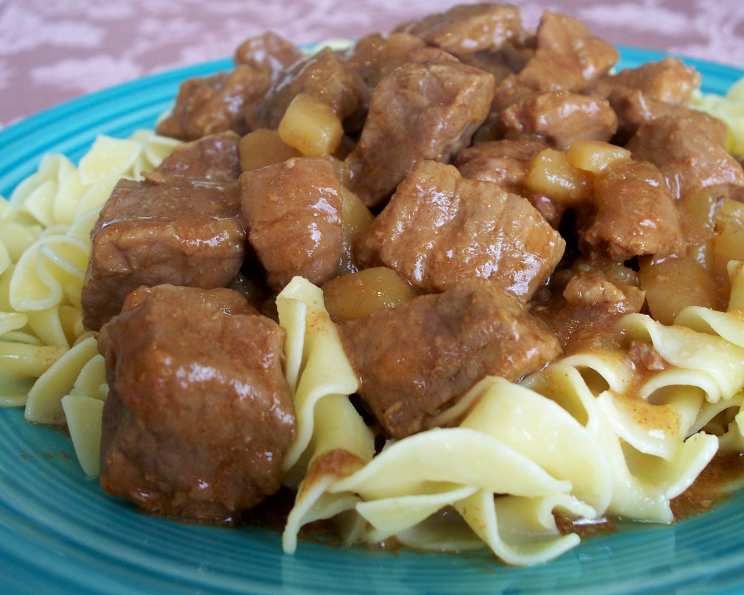
A Taste of Home: My Pörkölt Story
The aroma always hit me first. A deep, savory scent, a heady mix of onions, paprika, and slow-cooked beef that permeated every corner of my grandmother’s kitchen. It was the smell of Pörkölt, a dish that represented warmth, family, and the heart of Hungarian cooking. I remember sitting at her worn wooden table, a small child watching with fascination as she stirred the bubbling stew, her hands moving with the practiced grace of generations. Each spoonful was a journey back to our roots, a taste of history, and a reminder of the love that nourished us all. This recipe is my attempt to capture that feeling, to share a piece of my heritage with you.
Recipe Overview
- Prep Time: 20 minutes
- Cook Time: 1 hour 45 minutes
- Total Time: 2 hours 5 minutes
- Servings: 4
- Dietary Type: Generally Dairy-Free (check stock ingredients)
Ingredients
- 800 g stewing beef, cubed
- Salt, to taste
- Pepper, to taste
- 800 g onions, chopped
- 1 medium potato, peeled and chopped
- 4 tablespoons vegetable oil
- 1 tablespoon sweet paprika
- 1 teaspoon hot paprika
- 1/2 teaspoon cumin
- 2 tablespoons tomato puree
- 1/2 liter beef stock
Equipment Needed
- Large, heavy-bottomed pot or Dutch oven
- Cutting board
- Sharp knife
- Wooden spoon or spatula
Instructions
-
Begin by seasoning the cubed stewing beef generously with salt and pepper. Ensure all sides of the meat are evenly coated for optimal flavor.
-
In a large, heavy-bottomed pot or Dutch oven, heat the vegetable oil over medium heat. Once the oil is shimmering, add the chopped onions. Glaze the onions, stirring frequently, until they become translucent and softened, about 8-10 minutes. Avoid browning them at this stage, as this will affect the final flavor of the dish.
-
Add the seasoned beef to the pot with the softened onions. Brown the beef on all sides, working in batches if necessary to avoid overcrowding the pot. Overcrowding can lower the temperature and prevent proper browning, which is crucial for developing a rich, deep flavor.
-
Once the beef is nicely browned, add the sweet paprika, hot paprika, cumin, chopped potato, and tomato puree to the pot. Stir well to combine, ensuring that the spices and tomato puree coat the beef and onions evenly. Cook for approximately 5 minutes, stirring occasionally, to allow the spices to bloom and release their aromas.
-
Pour in the beef stock, ensuring that the meat is mostly submerged. Bring the mixture to a simmer.
-
Reduce the heat to low, cover the pot, and simmer for at least 1 hour and 30 minutes, or until the beef is tender and easily pierced with a fork. Stir the Pörkölt from time to time to prevent sticking and ensure even cooking. If the sauce becomes too thick during simmering, add a little more beef stock or water to reach the desired consistency.
-
Once the beef is tender and the sauce has thickened, taste and adjust the seasoning with additional salt and pepper as needed.
-
Serve hot with your choice of side dishes, such as boiled potatoes, pasta, or knödel.
Expert Tips & Tricks
- Browning is key: Don’t rush the browning process! Achieving a deep, rich color on the beef is essential for building flavor in the Pörkölt.
- Spice it up: Feel free to adjust the amount of hot paprika to your liking. If you prefer a milder flavor, reduce the amount or omit it altogether.
- Make it ahead: Pörkölt is a dish that actually improves with time. Making it a day ahead allows the flavors to meld and deepen. Simply refrigerate after cooking and reheat gently before serving.
- Tenderize tough cuts: If your stewing beef is particularly tough, consider marinating it overnight in a mixture of red wine vinegar and water before cooking. This will help to break down the fibers and make the meat more tender.
- Deglaze for extra flavor: After browning the beef, deglaze the pot with a splash of red wine or beef broth before adding the spices. This will help to loosen any browned bits stuck to the bottom of the pot, adding even more depth of flavor to the dish.
Serving & Storage Suggestions
Serve Pörkölt hot, garnished with a dollop of sour cream or a sprinkle of fresh parsley (optional). It pairs perfectly with boiled potatoes, egg noodles (pasta), or traditional Hungarian dumplings called nokedli or galuska (knödel).
Leftover Pörkölt can be stored in an airtight container in the refrigerator for up to 3-4 days. It can also be frozen for longer storage (up to 2-3 months). Thaw frozen Pörkölt in the refrigerator overnight before reheating. Reheat gently on the stovetop over low heat, stirring occasionally, until heated through. You may need to add a little extra beef stock or water if the sauce has thickened too much during storage.
Nutritional Information
| Nutrient | Amount per Serving | % Daily Value |
|---|---|---|
| Calories | 685 kcal | 34% |
| Total Fat | 45g | 69% |
| Saturated Fat | 18g | 90% |
| Cholesterol | 150mg | 50% |
| Sodium | 600mg | 25% |
| Total Carbohydrate | 35g | 12% |
| Dietary Fiber | 6g | 24% |
| Sugars | 10g | – |
| Protein | 48g | 96% |
Note: Nutritional information is an estimate and may vary based on specific ingredients and preparation methods.
Variations & Substitutions
- Spicy Pörkölt: Increase the amount of hot paprika or add a pinch of cayenne pepper for a spicier kick.
- Vegetarian Pörkölt: Substitute the beef with mushrooms and hearty root vegetables like carrots and parsnips. Use vegetable broth instead of beef stock.
- Chicken Pörkölt: Replace the beef with boneless, skinless chicken thighs. Reduce the cooking time accordingly, as chicken cooks faster than beef.
- Slow Cooker Pörkölt: Adapt this recipe for the slow cooker by browning the beef and onions in a skillet before transferring them to the slow cooker with the remaining ingredients. Cook on low for 6-8 hours or on high for 3-4 hours.
- Wine-infused Pörkölt: Add a cup of dry red wine to the pot along with the beef stock for a richer, more complex flavor.
FAQs (Frequently Asked Questions)
Q: Can I use a different cut of beef?
A: Yes, while stewing beef is traditional, you can also use chuck roast or brisket, cut into cubes. These cuts are well-marbled and become very tender when slow-cooked.
Q: Why is my Pörkölt sauce too thin?
A: If your sauce is too thin after the cooking time, remove the lid and simmer for an additional 15-30 minutes to allow the liquid to evaporate and the sauce to thicken. You can also thicken it with a cornstarch slurry (1 tablespoon cornstarch mixed with 2 tablespoons cold water) added during the last 15 minutes of cooking.
Q: Can I add other vegetables to the Pörkölt?
A: Absolutely! Carrots, parsnips, and bell peppers are all great additions to Pörkölt. Add them along with the potato for the last 45 minutes to an hour of cooking.
Q: What is the difference between Pörkölt and Goulash?
A: While both are Hungarian stews featuring meat and paprika, Pörkölt is generally a simpler dish with fewer ingredients and a thicker, more concentrated sauce. Goulash often includes more vegetables and is more of a soup-like consistency.
Q: Can I freeze Pörkölt?
A: Yes, Pörkölt freezes very well. Allow it to cool completely before transferring it to an airtight container or freezer bag. It can be frozen for up to 2-3 months. Thaw overnight in the refrigerator before reheating.
Final Thoughts
More than just a recipe, Pörkölt is a story on a plate, a taste of history and heritage. It’s a dish meant to be shared, savored, and enjoyed with loved ones. I encourage you to try this recipe and create your own memories around this comforting and flavorful stew. Don’t be afraid to experiment with variations and make it your own. And please, let me know how it turns out! I’d love to hear your stories and experiences with this classic Hungarian dish.