
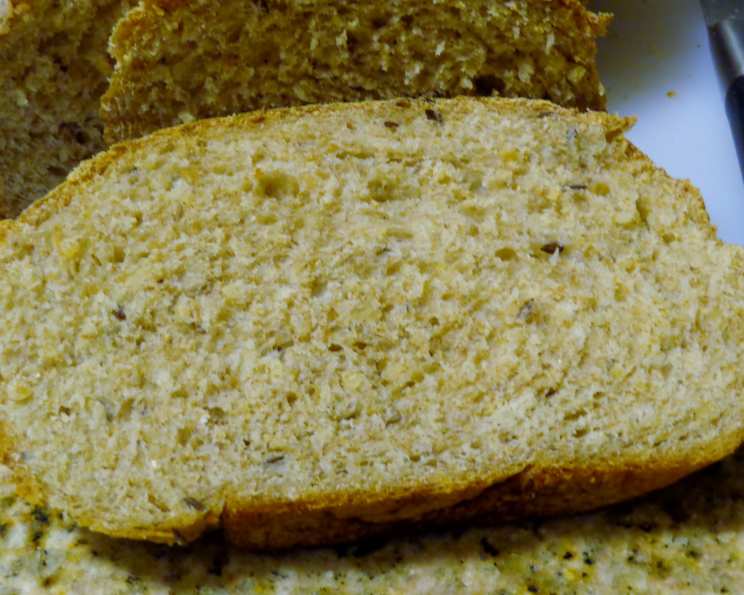
Porridge Bread: A Hearty Loaf from King Arthur Baking
My grandmother, a woman who believed in the simple joys of life, had a knack for transforming humble ingredients into something truly special. I remember the aroma of baking bread that always filled her cozy kitchen. While this specific recipe wasn’t hers, the memory of her warmth and hospitality rushes back with every slice of this hearty Porridge Bread. It evokes the same feeling of comfort and nourishment I experienced as a child, a reminder that the best things in life are often the simplest.
Recipe Overview
- Prep Time: 20 minutes
- Cook Time: 40-45 minutes
- Total Time: 2 hours 50 minutes to 3 hours 5 minutes (includes rising time)
- Servings: 10
- Yield: 1 loaf
- Dietary Type: Vegetarian (easily adaptable to vegan by using vegan butter)
Ingredients
- 2 tablespoons sugar
- 2 teaspoons instant yeast
- 1 1/4 cups lukewarm water
- 1 cup cooked oats (steel-cut or Irish oats recommended, King Arthur Pompanoosuc Porridge Oats preferred)
- 2 cups unbleached white whole wheat flour
- 2 cups bread flour
- 2 teaspoons salt
- 2 tablespoons softened butter (or vegan butter alternative)
Equipment Needed
- Large mixing bowl
- Measuring cups and spoons
- Floured work surface
- Oiled bowl
- Greased baking sheet
- Clean kitchen towel
- Sharp knife or lame
- Wire cooling rack
Instructions
- In a large mixing bowl, combine the sugar, instant yeast, and lukewarm water. Let stand for 5-10 minutes, or until the yeast begins to foam, indicating it’s active.
- Add the cooked oats, white whole wheat flour, bread flour, salt, and softened butter to the yeast mixture.
- Mix all ingredients together until a soft, smooth dough forms. You can use a stand mixer with a dough hook attachment or mix by hand.
- Turn the dough onto a lightly floured work surface and knead for 3-4 minutes.
- Let the dough rest for 5-10 minutes. This allows the gluten to relax, making it easier to knead.
- Knead the dough again for another 3-4 minutes. The dough should be smooth and elastic.
- Place the dough in a lightly oiled bowl, turning to coat all sides.
- Cover the bowl with a clean kitchen towel or plastic wrap.
- Let the dough rise in a warm place until it has doubled in bulk, approximately 1 1/2 to 2 hours. The exact time will depend on the temperature of your environment.
- Punch down the dough to release the air.
- Turn the dough onto a lightly floured surface and knead briefly to redistribute the air.
- Shape the dough into a round or oval loaf.
- Place the shaped loaf on a greased baking sheet.
- Cover the loaf with a clean kitchen towel or plastic wrap.
- Let the loaf rise for 1 hour, or until it is slightly less than doubled in bulk. The dough should spring back slowly when gently pressed. If it springs back immediately, it needs more time to rise.
- Preheat your oven to 350°F (175°C).
- Use a sharp knife or lame to slash the top of the loaf. This allows the bread to expand properly during baking and prevents it from cracking unevenly. A single long slash down the center or a few diagonal slashes will work well.
- Bake in the preheated oven for 40-45 minutes, or until the interior temperature reaches 190°F (88°C). Use an instant-read thermometer to check the internal temperature. The loaf should also be golden brown on top.
- Remove the loaf from the baking sheet and cool completely on a wire rack before slicing and serving. This prevents the bread from becoming soggy.
Expert Tips & Tricks
- For a richer flavor: Toast the oats lightly in a dry skillet before cooking them. This will enhance their nutty taste.
- Adjusting hydration: If your dough seems too wet, add flour, one tablespoon at a time, until it reaches the desired consistency. Conversely, if it’s too dry, add water, one teaspoon at a time. Remember that humidity can affect the dough.
- Oven spring: To maximize oven spring, create a steamy environment in your oven by placing a pan of hot water on the bottom rack during the first 15 minutes of baking.
- Doneness check: If the top of the bread is browning too quickly, tent it loosely with foil during the last 15-20 minutes of baking.
- Make-ahead tip: Prepare the dough through step 7, then refrigerate it overnight. Allow it to come to room temperature before continuing with step 8. This slow, cold fermentation will develop a more complex flavor.
Serving & Storage Suggestions
This Porridge Bread is delicious served warm with butter, jam, or honey. It’s also excellent toasted and used for sandwiches. The hearty texture makes it a perfect accompaniment to soups and stews.
To store leftover bread, wrap it tightly in plastic wrap or place it in an airtight container. It will keep at room temperature for 2-3 days, in the refrigerator for up to a week, or in the freezer for up to 2 months. To reheat, wrap the bread in foil and warm it in a 350°F (175°C) oven for 10-15 minutes, or until heated through. Frozen bread can be thawed overnight in the refrigerator or at room temperature before reheating.
Nutritional Information
| Nutrient | Amount per Serving | % Daily Value |
|---|---|---|
| Calories | 266 | N/A |
| Calories from Fat | 38 | N/A |
| Total Fat | 4.3 g | 6% |
| Saturated Fat | 1.8 g | 9% |
| Cholesterol | 6.1 mg | 2% |
| Sodium | 487.1 mg | 20% |
| Total Carbohydrate | 49.5 g | 16% |
| Dietary Fiber | 5.1 g | 20% |
| Sugars | 2.7 g | N/A |
| Protein | 8.7 g | 17% |
Note: Nutritional information is an estimate and may vary based on specific ingredients and preparation methods.
Variations & Substitutions
- Vegan Porridge Bread: Use your favorite vegan butter alternative in place of the dairy butter. Ensure any milk alternative used when cooking the oats is also vegan.
- Spiced Porridge Bread: Add 1 teaspoon of cinnamon, 1/2 teaspoon of nutmeg, and 1/4 teaspoon of ground cloves to the dry ingredients for a warm, comforting flavor.
- Seeded Porridge Bread: Sprinkle the top of the loaf with sesame seeds, poppy seeds, or sunflower seeds before baking for added texture and flavor.
- Whole Wheat Porridge Bread: Substitute all of the bread flour with whole wheat flour for a denser, more nutritious loaf. You may need to adjust the hydration slightly, as whole wheat flour absorbs more water.
- Sweet Porridge Bread: Increase the sugar to 1/4 cup and add 1/2 cup of raisins or dried cranberries for a sweeter treat.
FAQs (Frequently Asked Questions)
Q: Can I use quick-cooking oats instead of steel-cut or Irish oats?
A: While you can use quick-cooking oats, the texture of the bread will be different. Steel-cut or Irish oats provide a heartier, chewier texture that is characteristic of this recipe.
Q: My dough isn’t rising. What am I doing wrong?
A: Several factors can affect the rising process. Ensure your yeast is fresh and active. The water should be lukewarm, not too hot or too cold. The room temperature should also be warm enough. If your kitchen is cold, try placing the dough in a slightly warmed oven (turned off) or near a warm stovetop.
Q: How do I know when the bread is fully baked?
A: The best way to check for doneness is to use an instant-read thermometer. The internal temperature should reach 190°F (88°C). The loaf should also be golden brown and sound hollow when tapped on the bottom.
Q: Can I freeze the baked loaf?
A: Yes, Porridge Bread freezes well. Allow the loaf to cool completely before wrapping it tightly in plastic wrap and then in foil or placing it in a freezer bag. It can be stored in the freezer for up to 2 months.
Q: What can I serve with Porridge Bread?
A: This bread pairs well with a variety of dishes. It’s delicious with soups, stews, salads, or simply toasted with butter and jam. It also makes excellent sandwiches.
Final Thoughts
This Porridge Bread recipe, inspired by the King Arthur Baking Company, is a testament to the beauty of simple, wholesome ingredients. It’s a hearty, flavorful loaf that’s perfect for any occasion, from a cozy breakfast to a satisfying dinner. I encourage you to try this recipe and experience the joy of baking your own bread. Feel free to experiment with different variations and substitutions to create a loaf that’s uniquely yours. And most importantly, share your creations with friends and family – because good food is always best enjoyed in good company. Bon appétit!