
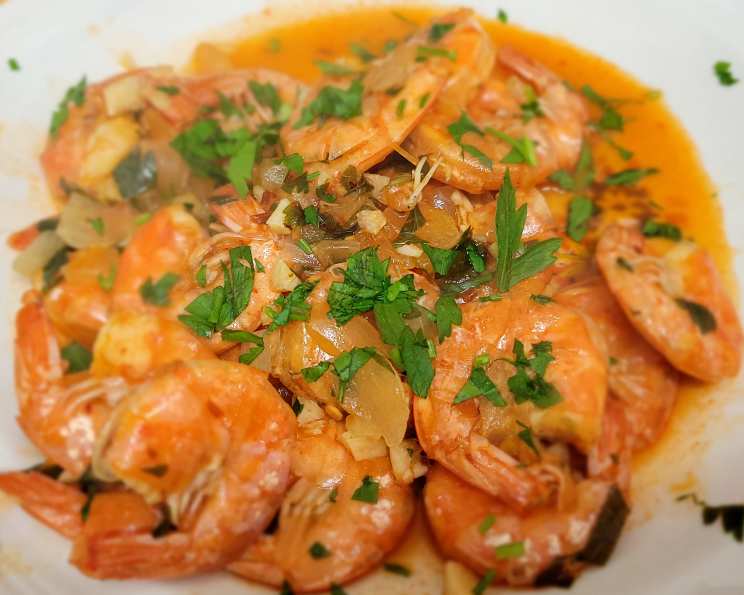
Acorean Shrimp: A Taste of the Islands
The scent of garlic, pimenta, and the briny tang of the sea always transports me back to my grandmother’s tiny kitchen on São Miguel Island. I remember sitting at her weathered wooden table, the air thick with the aroma of this very shrimp dish simmering on the stove. Nonna would ladle out bowls piled high with succulent shrimp, each bite a burst of vibrant flavors that spoke of sun-drenched days and the deep, powerful ocean surrounding our home. Sharing this Acorean Shrimp recipe feels like sharing a piece of my heart, a culinary memory that I hope you’ll savor and create your own memories around.
Recipe Overview
- Prep Time: 10 minutes
- Cook Time: 10-15 minutes
- Total Time: 20-25 minutes
- Servings: 4-6
- Yield: About 4 cups
- Dietary Type: Pescatarian
Ingredients
- 2 tablespoons olive oil
- 1 medium onion, chopped fine
- 3 garlic cloves, chopped fine (or more if you like)
- 2 tablespoons hot ground pepper paste (Pimenta)
- 1 tablespoon red pepper paste
- 2 tablespoons tomato paste
- 8 ounces beer (preferably a lager or 3/4 cup white wine)
- 3 tablespoons chopped fresh parsley
- 1 – 2 cups water
- 1 lb shrimp, 18/20 size peel on (I prefer zipperback headless shrimp, although some prefer the traditional head-on shrimp)
Equipment Needed
- Saucepan
- Slotted spoon
Instructions
-
Place a saucepan on the burner over medium-high heat. Add the olive oil and onions, then sauté until the onions become translucent, approximately 4-5 minutes.
-
Add the garlic, pimenta, and tomato paste to the saucepan. Stir the mixture until all the ingredients are well blended. If the mixture seems too thick, thin it out with a splash of beer or white wine from the measured amount.
-
Add half of the chopped fresh parsley to the saucepan and stir it in.
-
Add the shrimp to the saucepan. Stir the shrimp and sauté for 2-3 minutes, ensuring they are well coated with the tomato and pimenta mixture.
-
Pour the remaining beer or white wine into the saucepan. Add water, just enough to cover the shrimp completely.
-
Reduce the heat to medium and allow the mixture to cook for approximately 10 minutes, or until the shells are easily peeled from the shrimp. Note: The shrimp can remain on the stove for a longer duration, even an hour or more, as long as they are still covered with the cooking liquid. They are surprisingly resilient and don’t easily overcook.
-
Use a slotted spoon to remove the shrimp from the cooking liquid. Serve immediately, sprinkled with the remaining fresh parsley.
-
Hint: Don’t discard the flavorful cooking liquid! It can be reserved for the following purposes:
- Storing leftover shrimp, to be reheated later.
- Cooking white rice, imbuing it with a wonderful flavor.
- Dipping crusty, fresh bread into the sauce for a delightful appetizer.
Expert Tips & Tricks
-
Spice Level: The beauty of this dish is how easily you can tailor the heat. Start with the stated amount of pimenta and red pepper paste, then adjust to your liking. Remember, you can always add more spice, but it’s harder to take it away!
-
Shrimp Quality: Fresh, high-quality shrimp is key. Look for shrimp that smells clean and has a firm texture. Frozen shrimp can also work well; just make sure to thaw it completely before cooking and pat it dry.
-
Deglazing the Pan: When you add the beer or wine, make sure to scrape the bottom of the pan to loosen any browned bits. These bits, known as fond, are packed with flavor and will add depth to the sauce.
-
Simmer, Don’t Boil: Keep the heat at a gentle simmer to prevent the shrimp from becoming rubbery. Boiling them aggressively will toughen the texture.
-
Head-On vs. Headless: Using head-on shrimp adds a richer, more intense flavor to the dish. However, they can be a bit messy to eat. Headless shrimp are perfectly acceptable and often more convenient.
Serving & Storage Suggestions
Acorean shrimp is best served hot, straight from the pan. The vibrant colors and enticing aroma make it a feast for the senses. Arrange the shrimp on a platter and garnish generously with fresh parsley. Serve with crusty bread for dipping into the flavorful sauce, or alongside a bed of fluffy white rice.
Leftover shrimp can be stored in the refrigerator for up to 3 days. To reheat, gently warm the shrimp in the reserved cooking liquid over low heat, or in the microwave in short intervals. You can also enjoy the leftover shrimp cold in salads or sandwiches. It’s best not to freeze cooked shrimp, as it can affect the texture.
Nutritional Information
Please note that the following values are estimates and can vary based on specific ingredients and portion sizes.
| Nutrient | Amount per Serving | % Daily Value |
|---|---|---|
| Calories | 250 kcal | 13% |
| Total Fat | 10g | 15% |
| Saturated Fat | 2g | 10% |
| Cholesterol | 230mg | 77% |
| Sodium | 400mg | 17% |
| Total Carbohydrate | 10g | 4% |
| Dietary Fiber | 2g | 8% |
| Sugars | 3g | – |
| Protein | 28g | 56% |
Variations & Substitutions
- Spicier Version: For extra heat, add a pinch of red pepper flakes along with the pimenta and red pepper paste. You can also use a hotter variety of pimenta.
- Wine Substitution: If you don’t have beer or white wine, you can use chicken broth or vegetable broth instead. The flavor will be slightly different, but still delicious.
- Lemon Zest: For a brighter, more citrusy flavor, add the zest of one lemon to the sauce along with the parsley.
- Seafood Medley: Add other seafood, such as clams or mussels, to the pot along with the shrimp for a more elaborate seafood stew.
- Vegetarian Version: Although this is a shrimp recipe, you can use the same sauce and cooking method with firm tofu or chickpeas for a vegetarian option.
FAQs (Frequently Asked Questions)
Q: What is pimenta?
A: Pimenta is a hot ground pepper paste commonly used in Acorean cuisine. It adds both heat and a unique, complex flavor to dishes. If you can’t find it, you can substitute with a similar chili paste or a combination of hot sauce and paprika.
Q: Can I use frozen shrimp?
A: Yes, frozen shrimp can be used. Make sure to thaw it completely before cooking and pat it dry to remove excess moisture.
Q: How do I know when the shrimp is cooked?
A: The shrimp is cooked when it turns pink and opaque and the shells are easily peeled. Be careful not to overcook the shrimp, as it can become rubbery.
Q: Can I make this dish ahead of time?
A: While it’s best served fresh, you can make the sauce a day in advance and store it in the refrigerator. Add the shrimp just before serving to prevent them from becoming overcooked.
Q: What should I serve with Acorean Shrimp?
A: Acorean Shrimp is delicious served with crusty bread for dipping, fluffy white rice, or a simple green salad. It also pairs well with a crisp white wine or a refreshing beer.
Final Thoughts
This Acorean Shrimp recipe is more than just a dish; it’s a culinary journey to the Azores Islands, a taste of home, and a celebration of family traditions. I encourage you to try it, adapt it to your own preferences, and share it with loved ones. Don’t be afraid to experiment with the spice level and add your own personal touch. I hope this recipe brings you as much joy and satisfaction as it has brought my family for generations. And most importantly, Bom Apetite!