
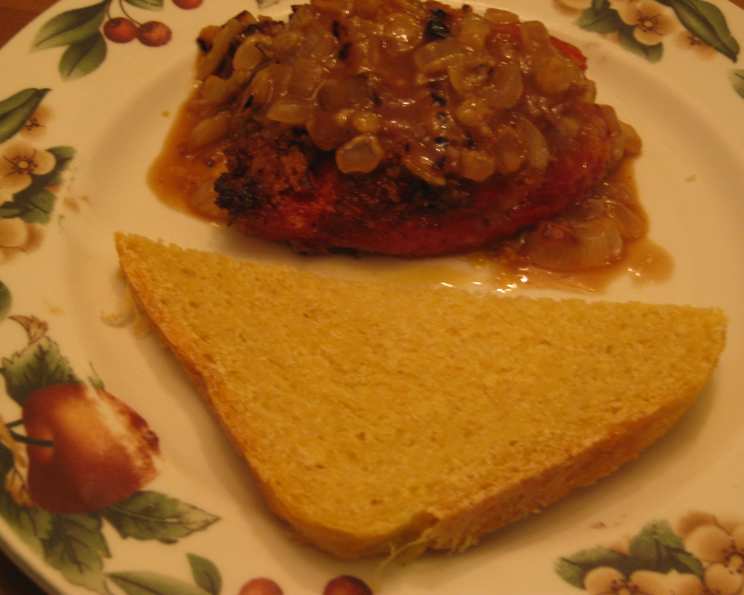
Portuguese Corn Bread for the Bread Machine (Broa)
The scent of freshly baked bread always transports me back to my grandmother’s kitchen. But broa, Portuguese corn bread, evokes a particularly vivid memory. I can almost feel the warmth of the wood-burning oven on my face as I watched her, flour dusting her apron, carefully shaping the dough. The sweet, slightly nutty aroma of the cornmeal mingled with the yeasty tang was intoxicating, a promise of simple pleasures to come. That first bite, the slightly coarse texture yielding to a moist, flavorful crumb, was pure comfort. Now, even with the convenience of a bread machine, I try to capture that same essence of tradition and love in every loaf.
Recipe Overview
- Prep Time: 15 minutes
- Cook Time: 4 hours 10 minutes
- Total Time: 4 hours 25 minutes
- Yields: 1 loaf
- Dietary Type: Vegetarian
Ingredients
- 1 cup yellow cornmeal (1 1/2 cups)
- 1 1/4 cups cold water, divided (1 3/4 cups)
- 1 1/2 teaspoons active dry yeast (2 1/4 teaspoons)
- 1 1/2 cups bread flour (2 1/4 cups)
- 2 teaspoons sugar (1 tablespoon)
- 3/4 teaspoon salt (1 1/4 teaspoons)
- 1 tablespoon olive oil (1 1/2 tablespoons)
Equipment Needed
- Bread machine
- Measuring cups and spoons
Instructions
- In a bowl, stir the cornmeal into 1/2 cup (or 3/4 cup if making the larger loaf) of the cold water until all lumps disappear. This step, called a “scald,” helps to soften the cornmeal and gives the bread a smoother texture.
- Add all ingredients to your bread machine in the order recommended by its manufacturer. This is a crucial step because layering the ingredients correctly ensures the yeast activates properly. Typically, liquids go in first, followed by dry ingredients, with the yeast last, nestled away from the liquid and salt.
- Select the bread cycle on your machine. Note that many bread machines have a basic bread cycle that is much quicker than the 4-hour one referenced in some recipes. Use the appropriate cycle for your machine and loaf size.
Expert Tips & Tricks
- Cornmeal Quality: The quality of your cornmeal significantly impacts the final product. Opt for a stone-ground cornmeal for a richer, more complex flavor.
- Water Temperature: While the recipe calls for cold water, you can use slightly lukewarm water to speed up the rising process, especially in colder environments. However, ensure it’s not too warm, as excessive heat can kill the yeast.
- Dough Consistency: Keep an eye on the dough consistency during the kneading process. If it appears too dry, add a tablespoon of water at a time. If it’s too sticky, add a tablespoon of flour. The ideal dough should be slightly tacky but not stick to your fingers.
- Proofing: While the bread machine takes care of the proofing, you can enhance the flavor by letting the dough rise in a warm place for an extra 30 minutes before baking. This will result in a lighter and airier loaf.
- Scoring: Before baking (if your bread machine allows), consider scoring the top of the loaf with a sharp knife or razor blade. This allows the bread to expand evenly during baking and prevents cracking.
- Oven Baking (Optional): For a crispier crust, you can remove the loaf from the bread machine about 20 minutes before the end of the baking cycle and transfer it to a preheated oven at 375°F (190°C) until it reaches your desired level of browning.
Serving & Storage Suggestions
Portuguese corn bread is incredibly versatile and pairs well with a variety of dishes.
- Serving: Enjoy it fresh, sliced, and spread with butter or a drizzle of olive oil. It’s a fantastic accompaniment to hearty stews, soups, and chili. As suggested by Madge Rosenberg, try it with a spicy stew or thick soup. Smear a fresh or toasted slice with butter or soft avocado and/or tomato, or ladle a fish stew over toasted broa. It’s also delicious toasted and served with cheese or pate.
- Storage:
- Room Temperature: Store the bread in an airtight container at room temperature for up to 2 days.
- Refrigerator: For longer storage, wrap the bread tightly in plastic wrap and store it in the refrigerator for up to a week.
- Freezer: To freeze, slice the bread and wrap each slice individually in plastic wrap, then place them in a freezer bag. Frozen bread will keep for up to 2 months. Thaw at room temperature or in a low oven.
- Reheating: Reheat slices of bread in a toaster, under a broiler, or in a low oven until warmed through.
Nutritional Information
| Nutrient | Amount per Serving | % Daily Value |
|---|---|---|
| Calories | 1295.5 kcal | N/A |
| Calories from Fat | 181 g | 14% |
| Total Fat | 20.2 g | 31% |
| Saturated Fat | 2.8 g | 14% |
| Cholesterol | 0 mg | 0% |
| Sodium | 1802.9 mg | 75% |
| Total Carbohydrate | 247.8 g | 82% |
| Dietary Fiber | 15.6 g | 62% |
| Sugars | 9.7 g | 38% |
| Protein | 31.7 g | 63% |
Note: Nutritional information is an estimate and may vary based on specific ingredients and portion sizes.
Variations & Substitutions
- Gluten-Free Broa: Substitute the bread flour with a gluten-free bread flour blend. You may need to add a binder like xanthan gum to improve the texture.
- Sweet Broa: Add a tablespoon or two of honey or molasses for a sweeter bread. This pairs particularly well with fruit jams and cheeses.
- Spiced Broa: Incorporate spices like cinnamon, nutmeg, or anise for a warm, aromatic twist.
- Herbed Broa: Add chopped fresh herbs like rosemary, thyme, or oregano to the dough for a savory flavor.
- Seed Broa: Add a mix of seeds like sunflower, pumpkin, and sesame seeds for added texture and nutritional value.
- Different Cornmeal: While yellow cornmeal is traditional, you can experiment with white or blue cornmeal for a subtle variation in flavor and color.
FAQs (Frequently Asked Questions)
Q: Why is my bread machine broa so dense?
A: Density in bread machine loaves often stems from insufficient yeast activity or too much flour. Ensure your yeast is fresh and properly measured. Also, double-check the flour measurement; too much can lead to a dense loaf.
Q: Can I make this recipe without a bread machine?
A: Yes, but it requires more hands-on effort. You’ll need to knead the dough by hand or with a stand mixer, let it rise, shape it, and bake it in a preheated oven.
Q: How can I get a crispier crust?
A: As mentioned in the tips, removing the loaf from the bread machine for the last 20 minutes of baking and transferring it to a preheated oven can help achieve a crispier crust. You can also brush the top of the loaf with melted butter or olive oil before baking.
Q: What’s the best way to tell if the bread is fully cooked?
A: The internal temperature of the bread should reach 200-210°F (93-99°C). If you don’t have a thermometer, you can tap the bottom of the loaf; it should sound hollow.
Q: Can I use instant yeast instead of active dry yeast?
A: Yes, you can substitute instant yeast for active dry yeast at a 1:1 ratio. You don’t need to proof instant yeast beforehand; you can add it directly to the dry ingredients.
Final Thoughts
I sincerely hope you’ll give this Portuguese corn bread recipe a try. Whether you’re a seasoned baker or just starting out, the convenience of a bread machine makes it easy to enjoy this traditional treat. Feel free to experiment with variations and find your own personal twist. Share your creations and experiences, and don’t hesitate to pair your broa with a comforting bowl of soup or a hearty stew. Bom apetite!