
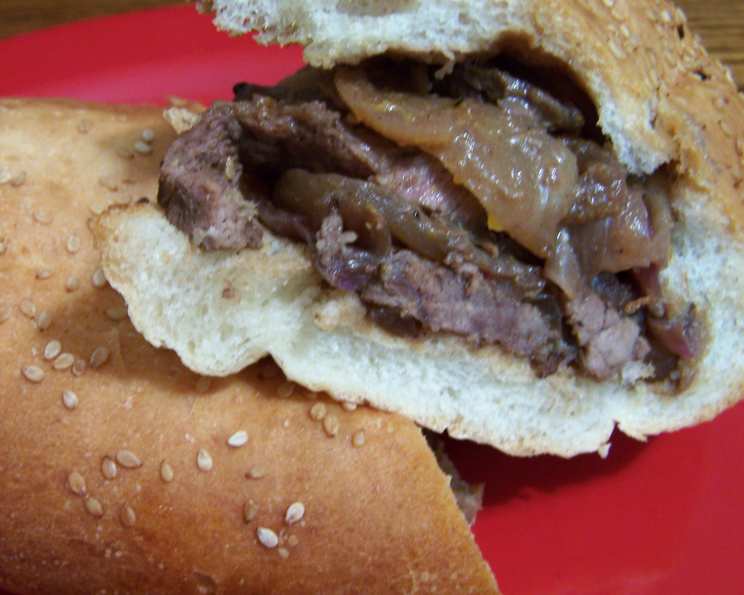
Portuguese Garlic Nailed Steak (Prego No Pão): A Culinary Journey
The aroma alone transports me back to Lisbon. The tiny tascas, or taverns, overflowing with boisterous locals, the clinking of glasses, and the ever-present, irresistible scent of garlic and seared beef. My first Prego No Pão wasn’t in a fancy restaurant, but a humble street-side stall. The simple perfection of the juicy steak, aggressively infused with garlic, nestled in a crusty roll, was a revelation. It was a culinary experience that epitomized Portuguese cuisine – bold, unpretentious, and utterly satisfying.
Recipe Overview
- Prep Time: 10 minutes
- Cook Time: 15 minutes
- Total Time: 25 minutes
- Servings: 2
- Dietary Type: Omnivore
Ingredients
- ½ lb sirloin steak, cut in 1/4-inch thick slices and trimmed of any visible fat
- ¼ cup butter (4 tablespoons)
- 6 garlic cloves, thinly sliced (or to taste)
- 1 large onion, thinly sliced
- ½ cup white wine
- 1 teaspoon coarse salt (to taste)
- ½ teaspoon ground black pepper
- 2 crusty sandwich buns, toasted
Equipment Needed
- Cutting board
- Tenderizing mallet
- Skillet
- Spatula
Instructions
-
Begin by preparing the steak. Lay the sirloin steak slices on a cutting board or other flat surface. This will be your canvas for flavor.
-
Now for the signature technique: “nailing” the garlic. Distribute the thinly sliced garlic cloves over one side of the steaks.
-
Using a tenderizing mallet, gently but firmly pound the garlic slices into the meat. This isn’t just about flattening; it’s about forcing the garlic’s essence deep into the fibers of the steak. Repeat on the reverse side of the steaks, ensuring both sides are generously infused with garlic.
-
Time to sear. Melt 3 tablespoons of the butter in a skillet over medium-high heat. Make sure the skillet is hot before adding the steak; this is key to achieving a beautiful sear.
-
Carefully fry each steak in the butter for just two to three minutes per side, turning once. The goal is a quick sear, leaving the inside juicy and tender. Overcooking will result in a tough steak, so keep a close eye on it.
-
Transfer the seared steaks to a dish and cover to keep them warm. The residual heat will continue to cook the steak slightly.
-
In the same skillet, melt the remaining 1 tablespoon of butter. Don’t wipe out the pan; those browned bits are packed with flavor.
-
Add the thinly sliced onions to the skillet and sauté until they are softened and golden brown, about 5-7 minutes. Stir frequently to prevent burning. Caramelized onions add a touch of sweetness that balances the garlic and beef.
-
Transfer the sautéed onions to the dish holding the steaks, allowing their flavors to meld together.
-
Pour the white wine into the same skillet. This is where we build the sauce.
-
Using the flat edge of a wooden spatula, scrape up the caramelized coating (fond) on the bottom of the pan. This is crucial for adding depth and richness to the sauce.
-
Increase the heat to medium-high and reduce the wine sauce by half. This concentrates the flavors, creating a luscious glaze.
-
Return the onions and beef to the sauce and heat through for just one minute, ensuring everything is nicely coated and warmed.
-
Serve immediately on toasted crusty sandwich buns. A simple salad on the side provides a refreshing contrast, or, for a truly authentic experience, tuck some lettuce and a slice of tomato into the bun for an all-in-one sandwich.
Expert Tips & Tricks
- Steak Selection: While sirloin is traditional, you can experiment with other cuts like ribeye for a richer flavor, or flank steak if you are budget conscious. Just be mindful of cooking times.
- Garlic Intensity: Adjust the amount of garlic to your personal preference. Don’t be afraid to be generous; this is, after all, a garlic-nailed steak.
- Wine Choice: A dry white wine like Vinho Verde or Sauvignon Blanc works beautifully. If you prefer red, a light-bodied red like Pinot Noir can also be used.
- Butter Alternative: For a richer flavor, try using clarified butter (ghee), which has a higher smoke point.
- Don’t overcrowd the pan: Sear the steaks in batches if needed. Overcrowding lowers the pan temperature and leads to steaming rather than searing.
- Room Temperature Matters: Let the steak sit at room temperature for about 20 minutes before cooking. This helps it cook more evenly.
Serving & Storage Suggestions
Serve immediately for the best flavor and texture. The toasted crusty buns provide a satisfying crunch, contrasting with the tender steak and flavorful sauce.
Leftovers can be stored in an airtight container in the refrigerator for up to 3 days. To reheat, gently warm the steak and onions in a skillet over low heat. Avoid microwaving, as this can make the steak tough. Reheat the sauce separately and then combine. You can also freeze the cooked steak and onions for up to 2 months. Thaw overnight in the refrigerator before reheating. The toasted buns are best enjoyed fresh.
Nutritional Information
| Nutrient | Amount per Serving | % Daily Value |
|---|---|---|
| Calories | 550 kcal | 28% |
| Total Fat | 30g | 46% |
| Saturated Fat | 15g | 75% |
| Cholesterol | 90mg | 30% |
| Sodium | 800mg | 33% |
| Total Carbohydrate | 40g | 13% |
| Dietary Fiber | 3g | 12% |
| Sugars | 7g | |
| Protein | 40g | 80% |
Note: Nutritional information is an estimate and may vary based on specific ingredients and preparation methods.
Variations & Substitutions
- Spicy Prego: Add a pinch of red pepper flakes to the onion mixture for a touch of heat.
- Garlic Bread Twist: Use garlic bread instead of plain crusty rolls for an extra dose of garlic.
- Cheese, Please: Add a slice of provolone or mozzarella cheese to the bun for a cheesy indulgence.
- Vegetarian Option: Substitute the steak with portobello mushrooms marinated in balsamic vinegar and herbs.
- Gluten-Free: Use gluten-free bread or serve the steak and onions over a bed of rice.
- Different Cuts: While sirloin is classic, feel free to try flank steak for a chewier bite, or even thinly sliced ribeye for a more luxurious treat.
FAQs (Frequently Asked Questions)
Q: Can I use pre-minced garlic instead of slicing it myself?
A: While convenient, freshly sliced garlic provides a more intense and nuanced flavor. Pre-minced garlic can be used in a pinch, but reduce the quantity slightly as it tends to be stronger.
Q: How do I prevent the steak from becoming tough?
A: Avoid overcooking. The steak should be seared quickly over high heat to retain its juiciness. Also, slicing the steak against the grain after cooking helps to shorten the muscle fibers, making it more tender.
Q: Can I make this dish ahead of time?
A: While the steak is best served fresh, the onions can be sautéed ahead of time and reheated. The wine reduction sauce can also be prepared in advance.
Q: What kind of bread is best for Prego No Pão?
A: A crusty roll with a firm interior is ideal. The bread should be able to hold the juicy steak and sauce without becoming soggy. Portuguese papo secos are the most authentic choice if you can find them.
Q: Can I add other toppings to my Prego?
A: While traditionally simple, some variations include mustard, hot sauce, or even a fried egg. Feel free to experiment and add your favorite toppings!
Final Thoughts
The Prego No Pão is more than just a sandwich; it’s an experience, a taste of Portugal’s vibrant culinary heritage. Don’t be intimidated by the seemingly simple ingredients; the key lies in the technique and the quality of the ingredients. I encourage you to try this recipe, unleash your inner chef, and create your own authentic Prego No Pão experience. Serve it with a crisp green salad and a glass of Vinho Verde for a truly unforgettable meal. And please, let me know how it turns out! I love hearing about your culinary adventures.